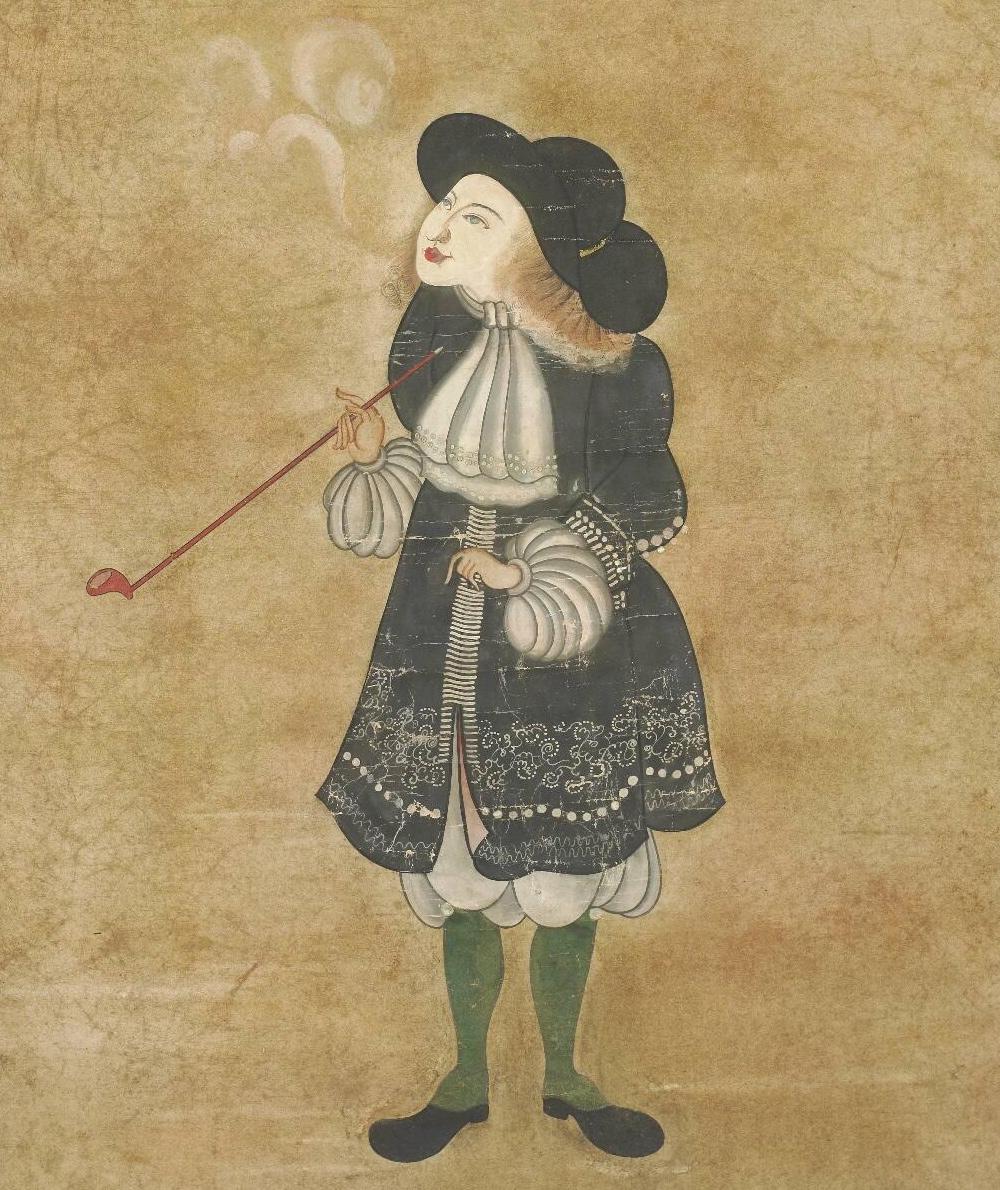
[Museum](https://art.seattleartmuseum.org/objects/15968/dutch-merchant). Paintings, ceramics, and netsuke carvings depicting Nanban (literally, “barbarians from the South”) circulated throughout Japan and reflect changing attitudes toward foreign influences. With stereotypical red, curly hair, this Dutchman wears a short, black embroidered coat and puffs on a long tobacco pipe that produces clouds of smoke. In 1639, the Tokugawa Shogunate forbade the Portuguese from entering Japan and selected the Dutch and Chinese as trade partners instead. At Nagasaki harbor in Kyushu, the authorities built the tiny, fan-shaped island of Dejima and moved Dutch merchants there in 1641. The island connected to the shore by a single bridge to confine foreign access. Through Nagasaki and via China, Japan and the West exchanged goods and information about each other until the middle of the 19th century.

1 Comment
[Museum](https://art.seattleartmuseum.org/objects/15968/dutch-merchant). Paintings, ceramics, and netsuke carvings depicting Nanban (literally, “barbarians from the South”) circulated throughout Japan and reflect changing attitudes toward foreign influences. With stereotypical red, curly hair, this Dutchman wears a short, black embroidered coat and puffs on a long tobacco pipe that produces clouds of smoke. In 1639, the Tokugawa Shogunate forbade the Portuguese from entering Japan and selected the Dutch and Chinese as trade partners instead. At Nagasaki harbor in Kyushu, the authorities built the tiny, fan-shaped island of Dejima and moved Dutch merchants there in 1641. The island connected to the shore by a single bridge to confine foreign access. Through Nagasaki and via China, Japan and the West exchanged goods and information about each other until the middle of the 19th century.