[James Amos](https://en.wikipedia.org/wiki/James_E._Amos), who as butler, bodyguard, and all-purpose “head man”-Roosevelt’s term-had probably spent more time with his boss since 1901 than anyone besides Edith. With TR’s declining health, Amos returned to Sagamore Bay to guard the former president full time. In declining to enter the contest for New York governor in the days after Quentin’s death, Roosevelt told his sister: “Corinne, I have only one fight left in me, and I think I should reserve my strength in case I am needed in 1920.” Corinne, slightly alarmed at this intimation of mortality in her older brother, who had never appeared anything but a paragon of strength and purpose to her, asked if he were really ill. “No,” he replied, “but I am not what I was and there is only one fight left in me.” He was really ill, though, as became apparent in the weeks after the 1918 elections. His malady was diagnosed this time as inflammatory rheumatism but was almost certainly related to the persistent infections that had dogged him since his Amazon trip. Quite likely he harbored parasites that were undetectable by contemporary medical tests.
On the day the armistice was signed in France he returned to the hospital in New York. He remained there until Christmas Eve. Various medications, including morphine, treated his pain; despite both the pain and the painkillers, he managed to keep up his correspondence and see visitors. Most important among the visitors were family members. Edith, of course, came in daily. Wounded Archie had been sent home from France to recuperate, prompting his father to write: “Of our four hawks one has come home, broken-winged, but his soul as high as ever.” He added, “Never did four falcons fly with such daring speed at such formidable quarry.” Quentin’s fiancée Flora remained like one of the family. “Remember, Flora,” Roosevelt told her, “that as long as I live I shall love you as if you were my own daughter.” Various grandchildren dropped in when circumstances and physicians allowed. Roosevelt was now sixty and felt every year. Yet he also felt that his age afforded him a right to a certain measure of infirmity.
“I am glad to be sixty,” he told Kermit, “for it somehow gives me the right to be titularly as old as I feel.” To Corinne he declared, “Well, anyway, no matter what comes, I have kept the promise that I made to myself when I was twenty-one.” “What promise, Theodore?” Corinne asked. “You made many promises to yourself, and I am sure have kept them all.” He answered, “I promised myself that I would work up to the hilt until I was sixty, and I have done it. I have kept my promise, and now, even if I should be an invalid-I should not like to be an invalid—but even if I should be an invalid, or if I should die” —here he gave a snap of the fingers— “what difference would it make?” On Christmas Eve his doctors discharged him to Sagamore Hill. The prognosis was that he would recover, if not rapidly and perhaps not completely. Christmas Day, the first since Quentin’s death, was subdued, although the smallest grandchildren paid no attention to the memory of their missing uncle and, in their merriment, momentarily lifted their grandfather’s spirits. The first days of the new year brought a glimpse of his old energy. He wrote an editorial for the Star and touched up the proofs of an article for the Metropolitan.
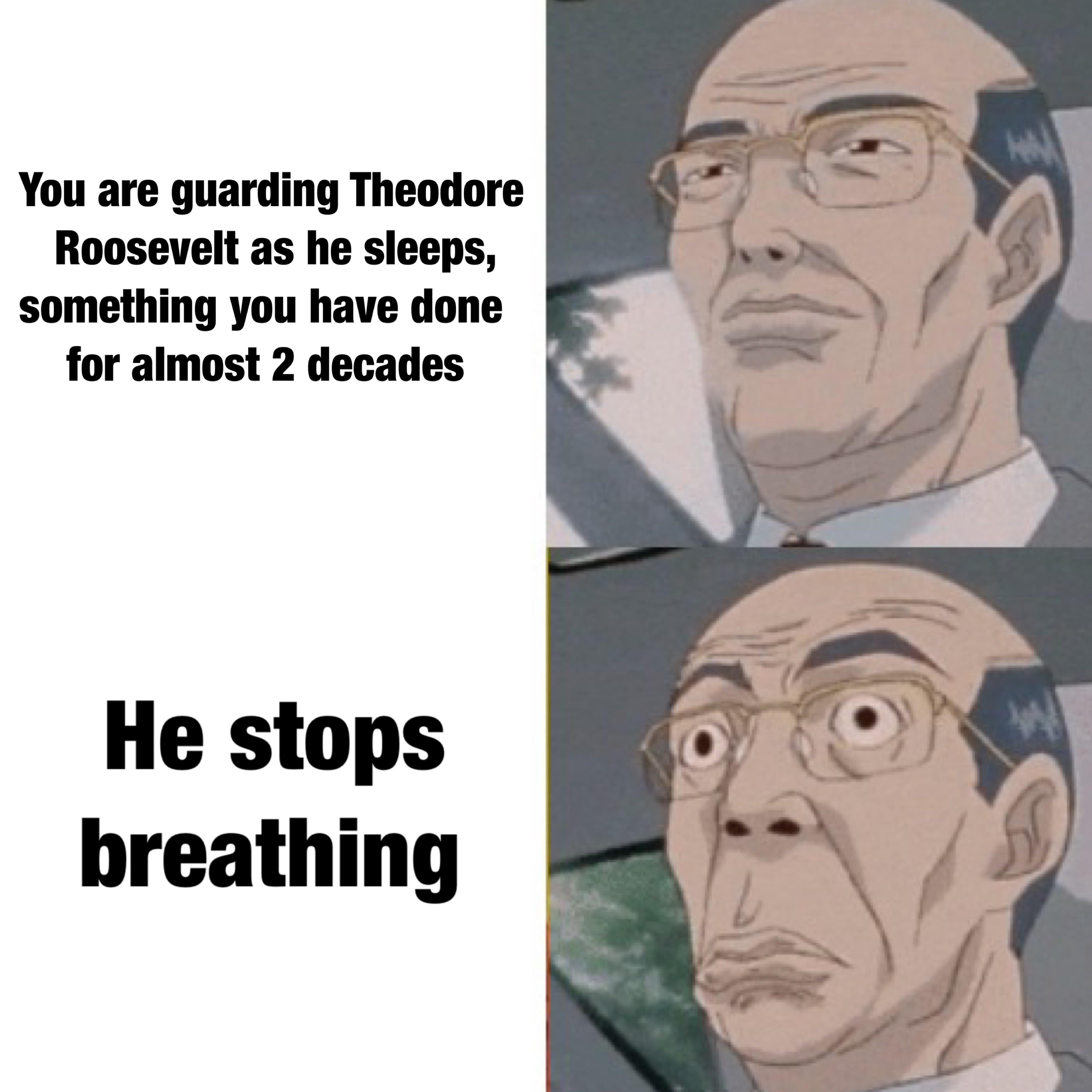
On January 5 he put in more than a full measure of work: eleven hours. Late that evening, however, he told Edith he felt odd, as though his heart or breathing were about to stop. “I know it is not going to happen,” he told her, “but it is such a strange feeling.” A nurse and then a doctor checked his vital signs and reported nothing amiss. To ensure a restful sleep, the nurse administered an injection of morphine, and at midnight he went to bed. “James, will you please put out the light?” he asked Amos, standing the night watch. He drifted off, his regular respiration in the silent house telling Amos that he was sleeping soundly. Edith dropped in once to check on him, then again before going to bed herself. But at about four o’clock Amos was startled by sudden irregularities in the patient’s breathing. It stopped, then started, then stopped again. At 4:15 it stopped and didn’t resume. Amos quickly informed the nurse, who called Edith. She hurried to her husband’s bedside. “Theodore, darling!” she said to the still form. There was little more to say—and that little by Archie, who cabled his brothers across the ocean: “The old lion is dead.”
Source: T.R., The Last Romantic, pages 809-811
WinkSprout22 on
‘The old lion is dead’ is still one of the most chillingly perfect sentences in history.
Perfect_steps on
That’s one way to end a long-standing mission.
Man waited decades just to complete the objective, talk about commitment.
AlexanderCrowely on
Death had to take Roosevelt sleeping, for if he had been awake, there would have been a fight.
UncleRuckusForPres on
I’m gonna miss this meme series man
mightyjush on
I have been following the memes you have been posting about TR, and honestly they are amazing content. You have persuaded me to read about TR starting with Candice Millard’s, The River Of Doubt, so thanks buddy!
FadedVictor on
Is it possible he overdosed on the morphine? Morphine and breathing stopping kind of go hand in hand. I wonder maybe his body was weak enough to succumb to the morphine.

8 Comments
[James Amos](https://en.wikipedia.org/wiki/James_E._Amos), who as butler, bodyguard, and all-purpose “head man”-Roosevelt’s term-had probably spent more time with his boss since 1901 than anyone besides Edith. With TR’s declining health, Amos returned to Sagamore Bay to guard the former president full time. In declining to enter the contest for New York governor in the days after Quentin’s death, Roosevelt told his sister: “Corinne, I have only one fight left in me, and I think I should reserve my strength in case I am needed in 1920.” Corinne, slightly alarmed at this intimation of mortality in her older brother, who had never appeared anything but a paragon of strength and purpose to her, asked if he were really ill. “No,” he replied, “but I am not what I was and there is only one fight left in me.” He was really ill, though, as became apparent in the weeks after the 1918 elections. His malady was diagnosed this time as inflammatory rheumatism but was almost certainly related to the persistent infections that had dogged him since his Amazon trip. Quite likely he harbored parasites that were undetectable by contemporary medical tests.
On the day the armistice was signed in France he returned to the hospital in New York. He remained there until Christmas Eve. Various medications, including morphine, treated his pain; despite both the pain and the painkillers, he managed to keep up his correspondence and see visitors. Most important among the visitors were family members. Edith, of course, came in daily. Wounded Archie had been sent home from France to recuperate, prompting his father to write: “Of our four hawks one has come home, broken-winged, but his soul as high as ever.” He added, “Never did four falcons fly with such daring speed at such formidable quarry.” Quentin’s fiancée Flora remained like one of the family. “Remember, Flora,” Roosevelt told her, “that as long as I live I shall love you as if you were my own daughter.” Various grandchildren dropped in when circumstances and physicians allowed. Roosevelt was now sixty and felt every year. Yet he also felt that his age afforded him a right to a certain measure of infirmity.
“I am glad to be sixty,” he told Kermit, “for it somehow gives me the right to be titularly as old as I feel.” To Corinne he declared, “Well, anyway, no matter what comes, I have kept the promise that I made to myself when I was twenty-one.” “What promise, Theodore?” Corinne asked. “You made many promises to yourself, and I am sure have kept them all.” He answered, “I promised myself that I would work up to the hilt until I was sixty, and I have done it. I have kept my promise, and now, even if I should be an invalid-I should not like to be an invalid—but even if I should be an invalid, or if I should die” —here he gave a snap of the fingers— “what difference would it make?” On Christmas Eve his doctors discharged him to Sagamore Hill. The prognosis was that he would recover, if not rapidly and perhaps not completely. Christmas Day, the first since Quentin’s death, was subdued, although the smallest grandchildren paid no attention to the memory of their missing uncle and, in their merriment, momentarily lifted their grandfather’s spirits. The first days of the new year brought a glimpse of his old energy. He wrote an editorial for the Star and touched up the proofs of an article for the Metropolitan.
On January 5 he put in more than a full measure of work: eleven hours. Late that evening, however, he told Edith he felt odd, as though his heart or breathing were about to stop. “I know it is not going to happen,” he told her, “but it is such a strange feeling.” A nurse and then a doctor checked his vital signs and reported nothing amiss. To ensure a restful sleep, the nurse administered an injection of morphine, and at midnight he went to bed. “James, will you please put out the light?” he asked Amos, standing the night watch. He drifted off, his regular respiration in the silent house telling Amos that he was sleeping soundly. Edith dropped in once to check on him, then again before going to bed herself. But at about four o’clock Amos was startled by sudden irregularities in the patient’s breathing. It stopped, then started, then stopped again. At 4:15 it stopped and didn’t resume. Amos quickly informed the nurse, who called Edith. She hurried to her husband’s bedside. “Theodore, darling!” she said to the still form. There was little more to say—and that little by Archie, who cabled his brothers across the ocean: “The old lion is dead.”
Source: T.R., The Last Romantic, pages 809-811
‘The old lion is dead’ is still one of the most chillingly perfect sentences in history.
That’s one way to end a long-standing mission.
Man waited decades just to complete the objective, talk about commitment.
Death had to take Roosevelt sleeping, for if he had been awake, there would have been a fight.
I’m gonna miss this meme series man
I have been following the memes you have been posting about TR, and honestly they are amazing content. You have persuaded me to read about TR starting with Candice Millard’s, The River Of Doubt, so thanks buddy!
Is it possible he overdosed on the morphine? Morphine and breathing stopping kind of go hand in hand. I wonder maybe his body was weak enough to succumb to the morphine.
[Amos: BREATHE DARN YOU!!](https://m.youtube.com/watch?v=EXWjDWcBRTY&pp=ygUgc3BvbmdlYm9iIGxhcnJ5IGJyZWF0aGUgZGFybiB5b3U%3D)