As convinced as he was that Quentin and his comrades had saved the soul of the world from German militarism, Roosevelt was equally convinced that Woodrow Wilson was willing to sacrifice that soul to the president’s private political agenda. Roosevelt wasn’t quite so reductionist as to blame Wilson for [Quentin’s death](https://www.reddit.com/r/HistoryMemes/s/HUVLmNeDYU), although at times he came close. But he was absolutely certain that the president had no conception of what the war was about or what the sacrifices of Quentin and the others signified. After Quentin’s death, Roosevelt rededicated himself to alerting the American people to the true nature of the literally life-and-death issues their country faced, and to frustrate what he saw as Wilson’s plan to sell American interests down the river of personal ambition. The centerpiece of Wilson’s planning was his fourteen-point package of peace terms, unveiled the previous January following criticism by the new rulers of Russia-Lenin and the Bolsheviks-of various secret treaties among the Allies. Roosevelt held no brief for the Bolsheviks; on the contrary, he declared that they seemed to have “absolutely ruined” Russia. But he largely blamed Wilson for their success, contending that the president’s “shilly-shallying,” his “delays and refusals to act,” and “the way in which he has gratified his private malice at the expense of the country” had, by prolonging the war, encouraged the communist takeover.
Roosevelt pounded Wilson throughout the late summer and early autumn of 1918. By now the full weight of American military power was being felt in France; Germany had gambled on winning the war before the Yanks arrived en masse, and lost. The war quite obviously was approaching an end; the only question involved the terms Germany would be required to accept. Wilson proposed his fourteen points as the basis for a cessation of hostilities, but the British and French governments held out for a more decisive conclusion.
Roosevelt sided with the Allies against his own president. Editorializing in the Star in late October, Roosevelt described Germany as “the outlaw among nations” and asserted that the sole way to deal with an outlaw was to capture, try, and punish him. One did not negotiate with outlaws, as the president was negotiating with Germany. Roosevelt realized that unconditional surrender might require more bloodshed, perhaps much more. This was a “sad and dreadful thing” to contemplate. “But it is a much worse thing to quit now and have the children now growing up obliged to do the job all over again, with ten times as much bloodshed and suffering, when their turn comes.”
The last time the world had had to deal with the likes of Kaiser Wilhelm was a century before, when another tyrant had trampled across Europe. That experience should provide the lesson for the present. “The surest way to secure a peace as lasting as that which followed the downfall of Napoleon is to overthrow the Prussianized Germany of the Hohenzollerns as Napoleon was over-thrown.” Many influential Americans agreed with Roosevelt, as did the governments and most of the people of the Allies; the combined opposition compelled Wilson to change course and stiffen the terms he would require of Berlin. The reversal merely intensified Roosevelt’s disdain. “The President suddenly made his, say, 800dth volte-face,” he sneered. “A fortnight ago he believed he could step in as a Peace-God, make a negotiated peace with the Central Powers, and be humbly followed by the Allies and slavishly adored by our own people.” But the uproar that Wilson’s approach precipitated had proved the fatuousness of this view. “He promptly turned a somersault.”
Source: T.R., The Last Romantic, pages 804-806
Side note, but it’s funny reading this after seeing all the alt history scenarios on YouTube where TR wins the election of 1912. Each one always said something to the effect that he’d be less harsh on Germany and ensure the Kaiser would stay in power, which evidently wouldn’t be the actual case.
carlsagerson on
Honestly with a title like that. I expected a meme about the Morganthau Plan.
Crazy-Rabbit-3811 on
and with that, the ghost of otto von bismarck had a stroke
qchisq on
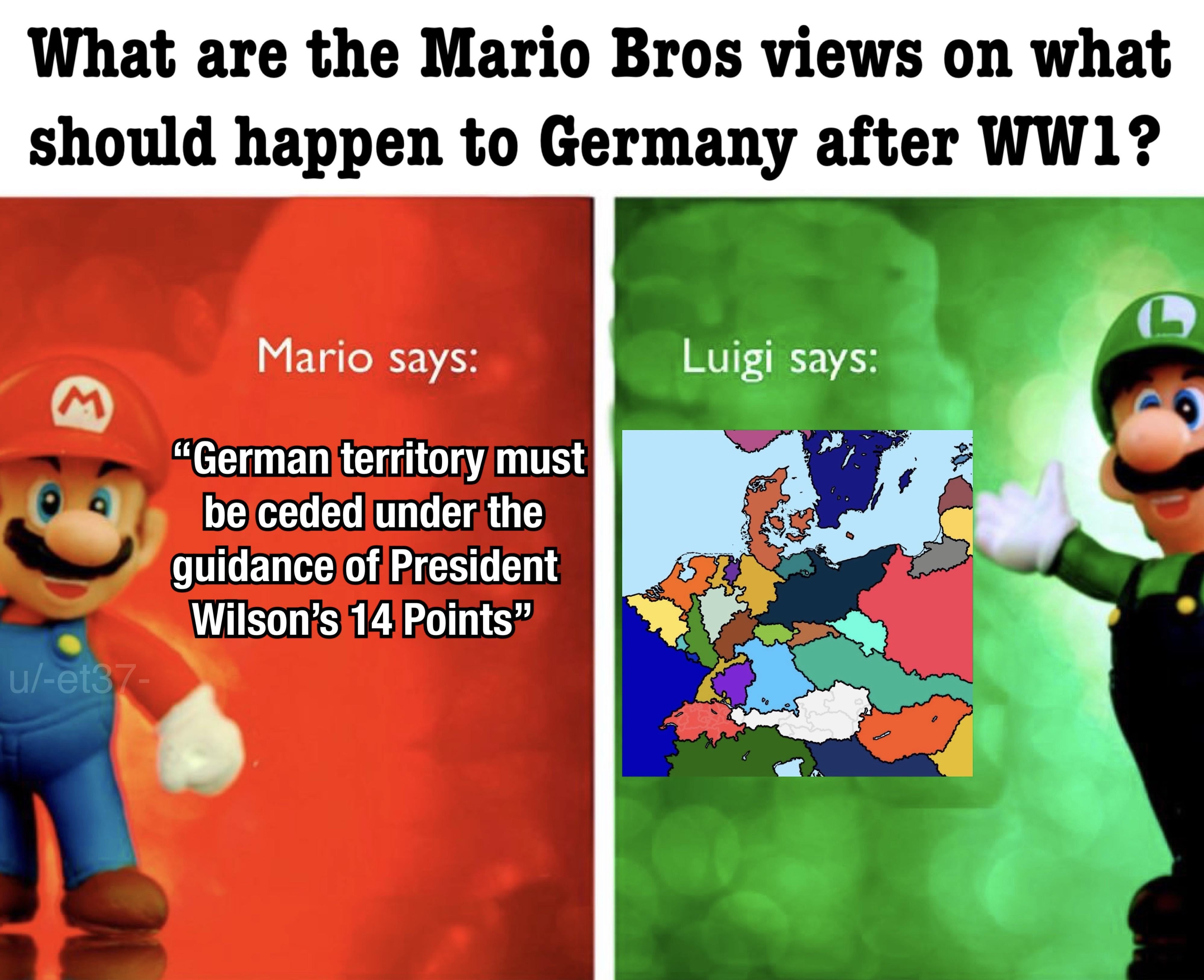
What is that map? It’s… Beautiful
ichbinverwirrt420 on
SEPARATE BADEN AND WÜRTTEMBERG BUT KEEP FRANCONIA WITH BAVARIA??!
BluFlower0 on
I always wonder why I see people genuinely say that *this* is what should’ve happened to Germany after ww1, cause unlike Austria-Hungary or the Ottoman Empire, the German people were very homogenous and unified, and splitting the state up (as well as forcing all the other stuff) would’ve been disastrous and lead to a faster rise of extremist politics
mtf-foxtrot on
Based Luigi.
IronVader501 on
Sure Teddy, and are you gonna pay for the 100+ years of continous military occupation to make that stick?

9 Comments
As convinced as he was that Quentin and his comrades had saved the soul of the world from German militarism, Roosevelt was equally convinced that Woodrow Wilson was willing to sacrifice that soul to the president’s private political agenda. Roosevelt wasn’t quite so reductionist as to blame Wilson for [Quentin’s death](https://www.reddit.com/r/HistoryMemes/s/HUVLmNeDYU), although at times he came close. But he was absolutely certain that the president had no conception of what the war was about or what the sacrifices of Quentin and the others signified. After Quentin’s death, Roosevelt rededicated himself to alerting the American people to the true nature of the literally life-and-death issues their country faced, and to frustrate what he saw as Wilson’s plan to sell American interests down the river of personal ambition. The centerpiece of Wilson’s planning was his fourteen-point package of peace terms, unveiled the previous January following criticism by the new rulers of Russia-Lenin and the Bolsheviks-of various secret treaties among the Allies. Roosevelt held no brief for the Bolsheviks; on the contrary, he declared that they seemed to have “absolutely ruined” Russia. But he largely blamed Wilson for their success, contending that the president’s “shilly-shallying,” his “delays and refusals to act,” and “the way in which he has gratified his private malice at the expense of the country” had, by prolonging the war, encouraged the communist takeover.
Roosevelt pounded Wilson throughout the late summer and early autumn of 1918. By now the full weight of American military power was being felt in France; Germany had gambled on winning the war before the Yanks arrived en masse, and lost. The war quite obviously was approaching an end; the only question involved the terms Germany would be required to accept. Wilson proposed his fourteen points as the basis for a cessation of hostilities, but the British and French governments held out for a more decisive conclusion.
Roosevelt sided with the Allies against his own president. Editorializing in the Star in late October, Roosevelt described Germany as “the outlaw among nations” and asserted that the sole way to deal with an outlaw was to capture, try, and punish him. One did not negotiate with outlaws, as the president was negotiating with Germany. Roosevelt realized that unconditional surrender might require more bloodshed, perhaps much more. This was a “sad and dreadful thing” to contemplate. “But it is a much worse thing to quit now and have the children now growing up obliged to do the job all over again, with ten times as much bloodshed and suffering, when their turn comes.”
The last time the world had had to deal with the likes of Kaiser Wilhelm was a century before, when another tyrant had trampled across Europe. That experience should provide the lesson for the present. “The surest way to secure a peace as lasting as that which followed the downfall of Napoleon is to overthrow the Prussianized Germany of the Hohenzollerns as Napoleon was over-thrown.” Many influential Americans agreed with Roosevelt, as did the governments and most of the people of the Allies; the combined opposition compelled Wilson to change course and stiffen the terms he would require of Berlin. The reversal merely intensified Roosevelt’s disdain. “The President suddenly made his, say, 800dth volte-face,” he sneered. “A fortnight ago he believed he could step in as a Peace-God, make a negotiated peace with the Central Powers, and be humbly followed by the Allies and slavishly adored by our own people.” But the uproar that Wilson’s approach precipitated had proved the fatuousness of this view. “He promptly turned a somersault.”
Source: T.R., The Last Romantic, pages 804-806
Side note, but it’s funny reading this after seeing all the alt history scenarios on YouTube where TR wins the election of 1912. Each one always said something to the effect that he’d be less harsh on Germany and ensure the Kaiser would stay in power, which evidently wouldn’t be the actual case.
Honestly with a title like that. I expected a meme about the Morganthau Plan.
and with that, the ghost of otto von bismarck had a stroke
What is that map? It’s… Beautiful
SEPARATE BADEN AND WÜRTTEMBERG BUT KEEP FRANCONIA WITH BAVARIA??!
I always wonder why I see people genuinely say that *this* is what should’ve happened to Germany after ww1, cause unlike Austria-Hungary or the Ottoman Empire, the German people were very homogenous and unified, and splitting the state up (as well as forcing all the other stuff) would’ve been disastrous and lead to a faster rise of extremist politics
Based Luigi.
Sure Teddy, and are you gonna pay for the 100+ years of continous military occupation to make that stick?
PH map found in the wild lmao