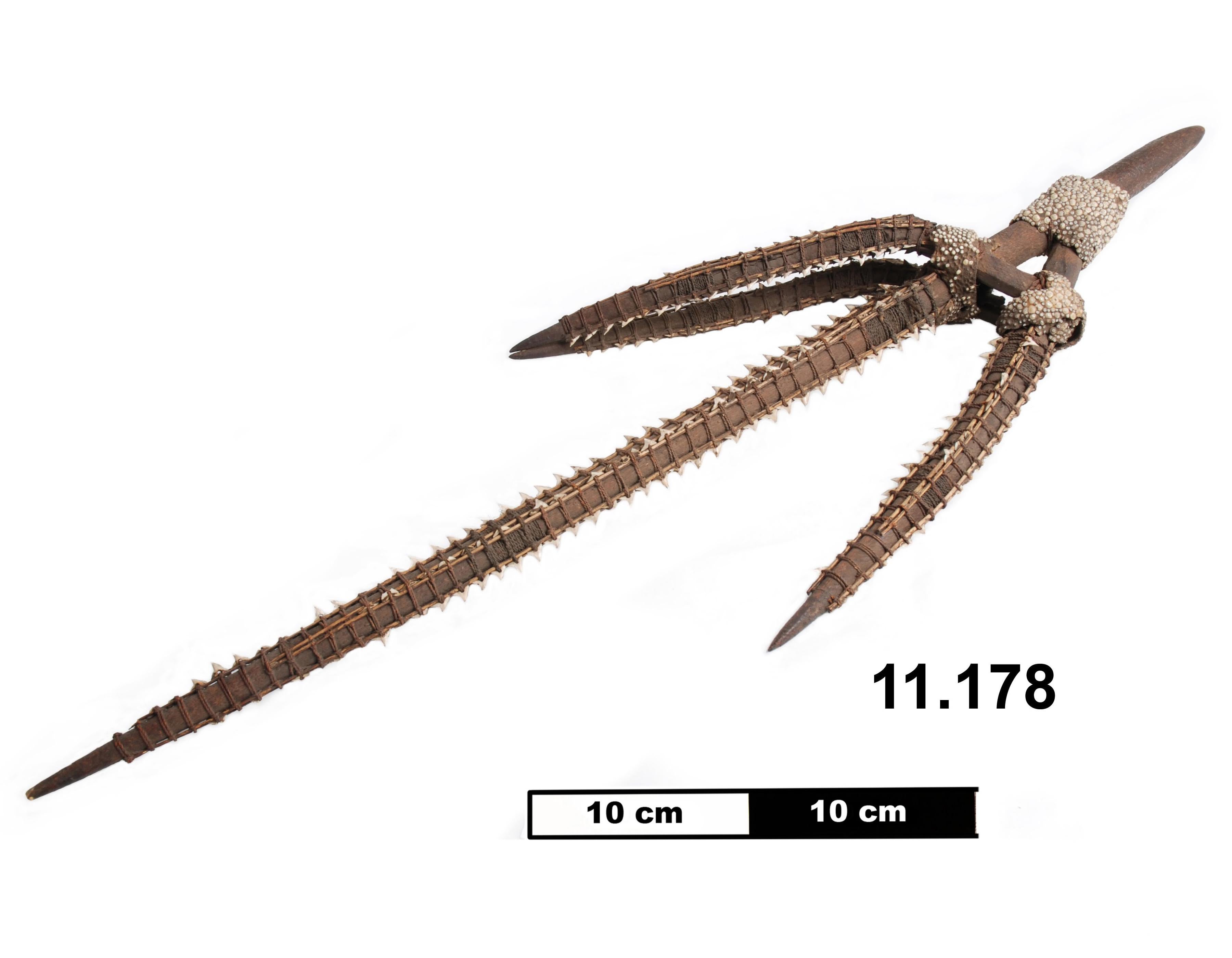
[Museum](https://artsandculture.google.com/asset/sword-trident/NwE2V0XhZbmgYA). One of the most distinctive and unique of all Pacific weapons, the three-pronged te taumangaria of Kiribati has some qualities of the sword, and some of the trident. Some examples are extremely long, like spears, while others, such as the one here, are as long as one-handed swords from other cultures.
The weapon is made up from three separate pieces of coconut wood (Cocos nucifera), each piece carved with a diamond-shaped section, and then grooved along both sides for the fitting of shark teeth. These are the mixed teeth of the Tiger (Galeocerdo cuvier) and Grey Nurse sharks (Carcharias taurus), each one drilled right through in two places and lashed onto the body of the weapon with the coconut leaf’s pinnules (side-ribs) or even the finely plaited hair of women. This particular example has the additional reinforcement and improved grip of ray-skin straps where its parts are joined.
These particular weapons could obviously be used offensively, but their main purpose was to be wielded in the hands of a ceremonial duelling champion’s squire-like attendant: provided that he acted in certain formalised ways, the attendant was rightfully entitled to intervene in the duel, and could use his taumangaria to parry thrusts from the enemy’s heavy duelling spear.

1 Comment
[Museum](https://artsandculture.google.com/asset/sword-trident/NwE2V0XhZbmgYA). One of the most distinctive and unique of all Pacific weapons, the three-pronged te taumangaria of Kiribati has some qualities of the sword, and some of the trident. Some examples are extremely long, like spears, while others, such as the one here, are as long as one-handed swords from other cultures.
The weapon is made up from three separate pieces of coconut wood (Cocos nucifera), each piece carved with a diamond-shaped section, and then grooved along both sides for the fitting of shark teeth. These are the mixed teeth of the Tiger (Galeocerdo cuvier) and Grey Nurse sharks (Carcharias taurus), each one drilled right through in two places and lashed onto the body of the weapon with the coconut leaf’s pinnules (side-ribs) or even the finely plaited hair of women. This particular example has the additional reinforcement and improved grip of ray-skin straps where its parts are joined.
These particular weapons could obviously be used offensively, but their main purpose was to be wielded in the hands of a ceremonial duelling champion’s squire-like attendant: provided that he acted in certain formalised ways, the attendant was rightfully entitled to intervene in the duel, and could use his taumangaria to parry thrusts from the enemy’s heavy duelling spear.