
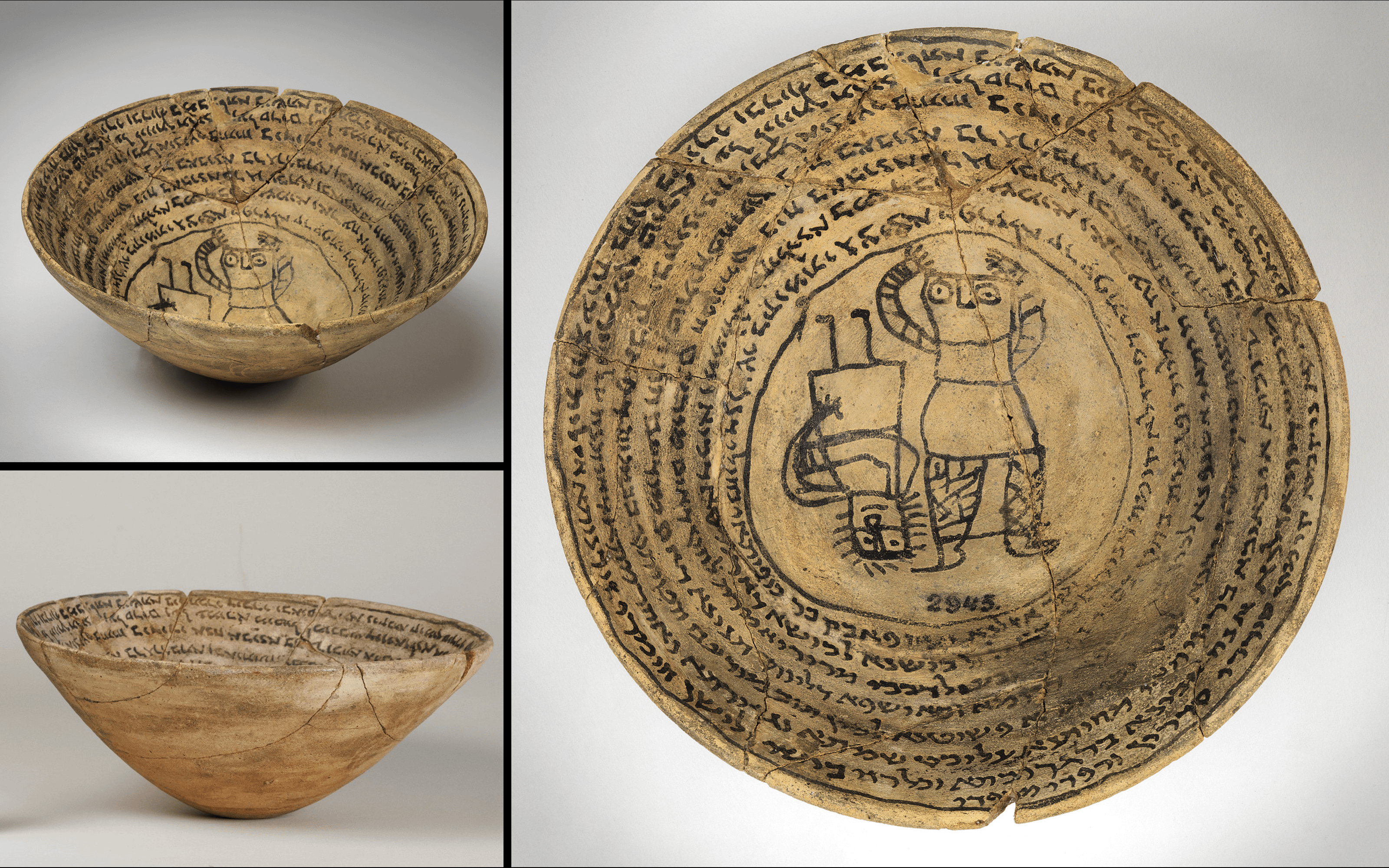
Incantation Bowl, depicting demons, ringed with Aramaic. Found in Nippur, Iraq. From the University of Pennsylvania Museum collection. Dated between 400 and 800 AD.
by SashSegal
Incantation Bowl, depicting demons, ringed with Aramaic. Found in Nippur, Iraq. From the University of Pennsylvania Museum collection. Dated between 400 and 800 AD.
by SashSegal
1 Comment
An Incantation Bowl, also known as a ‘Demon Bowl’ (Devil-trap Bowl) or Magic Bowl, is a form of early protective magic found in what is now Iraq and Iran. Produced in Middle East during late antiquity from 6th-8th Centuries CE, particularly in Upper Mesopotamia and Syria; Bowls were usually inscribed in a spiral, beginning from rim and moving toward center.
A subcategory of incantation bowls are those used in Jewish magical practice. Jewish Babylonian Aramaic incantation bowls are an important source of knowledge about Jewish magical practices, particularly nearly eighty surviving Jewish incantation bowls from Babylon during rule by Sasanian Empire (226-636 CE), primarily from Jewish diaspora settlement in Nippur. These bowls were used in magic to protect against evil influences. These bowls could be used by any member of community, and almost every house excavated in Jewish settlement in Nippur had such bowls buried in them.
The figures painted on this bowl are particularly striking, but their identities and functions are obscure. The American scholar, James A. Montgomery, who first published the Nippur bowls in 1913, suggested that the figure with bound feet is a demon and the other, a sorcerer. Employing curses to deflect malign spirits, the personalized inscription reads in part:
“If you harm Abuna bar Garibta and Bayba bar Yawitay, I shall put a spell of the sea and a spell of the sea snake Leviathan upon you. If you harm Abuna bar Garibta and his spouse and his children, I shall bend you like a bow, and span you like a bowstring.”