
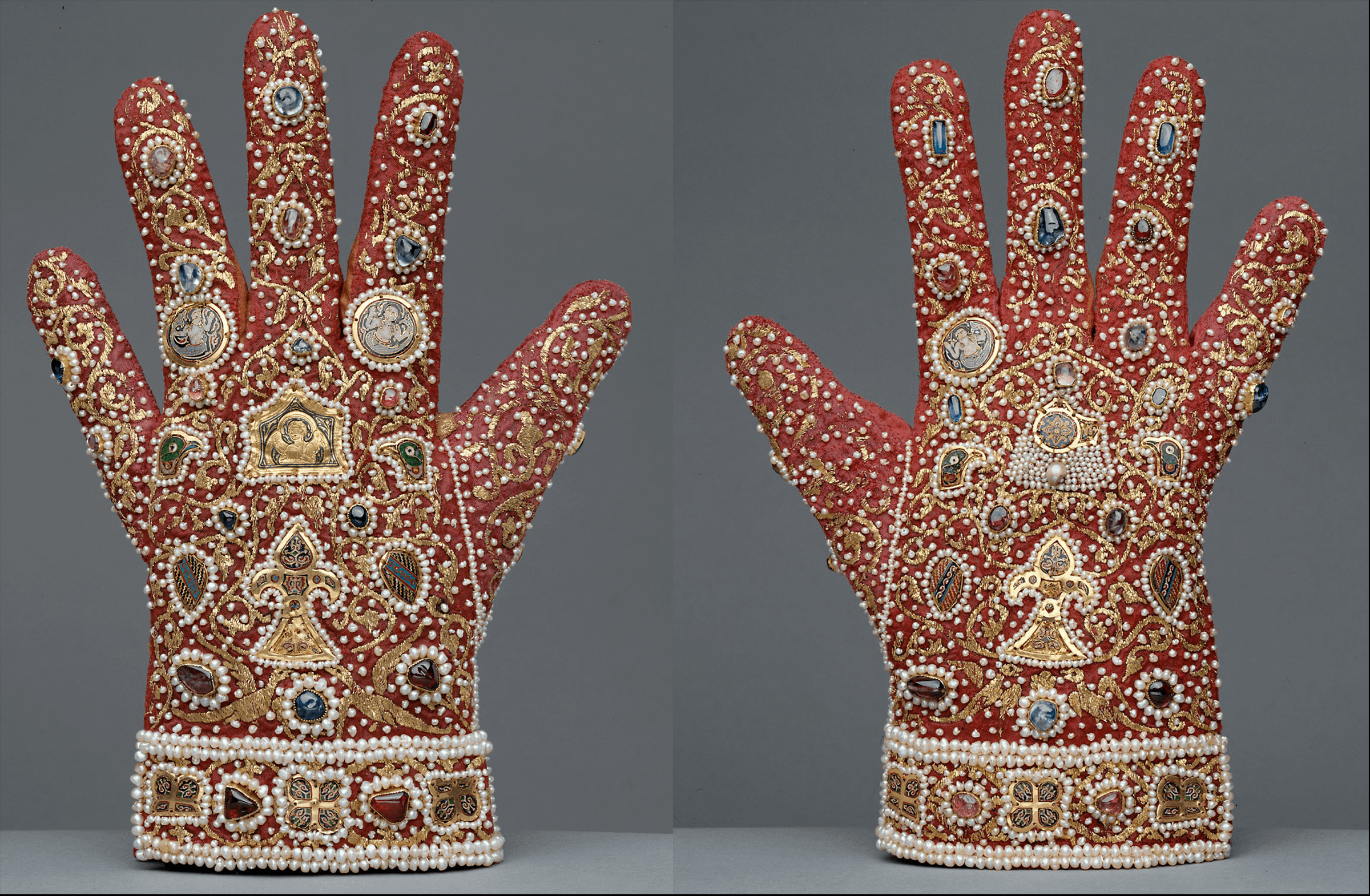
Likely made for the coronation of Frederick II in 1220. This pair is probably first mentioned in the inventory of gifts from 1246, which lists "two gloves with precious stones".
by SashSegal
Likely made for the coronation of Frederick II in 1220. This pair is probably first mentioned in the inventory of gifts from 1246, which lists "two gloves with precious stones".
by SashSegal
2 Comments
The gloves, cut from red, unpatterned samite, are densely decorated on the backs of the hands. Gold tendrils, embroidered using the applied technique, fill the background, upon which enamel plaques, gemstones, and pearls are fixed. A centrally positioned cloisonné appliqué in the form of a palmette is framed by pointed oval shields, each surmounted by a bird’s head. Between the heads, the left glove features a five-sided niello plaque with the bust of an angel, likely a 14th-century addition. In the same position on the right glove is the remnant of what was once a star-shaped enamel. At the base of the index and ring fingers of both gloves are round enamels, each depicting a single-tailed siren. The palms of both gloves, like the backs of the hands, are embroidered with gold tendrils using the applied technique. They also display a single-headed eagle with a nimbus (halo), the heraldic symbol of the Hohenstaufen Empire. On the right glove, this embroidery has largely faded, revealing the dark outline of the motif. A narrow border, bordered at the top and bottom by double rows of pearls, adorns the lower edge of the gloves. Enamel plaques, gemstones, gold embroidery, and individually sewn pearls fill the red silk ground. The enamels are stylistically related to the decoration of the scabbard of the ceremonial sword (Inv. No. SK_WS_XIII_16) and to the crown of Constance, wife of Frederick II, kept in Palermo. These similarities support the assumption that the gloves were made for the coronation of Frederick II in 1220. They are probably first mentioned in the inventory of gifts from 1246, which lists “two gloves with precious stones.”
[https://www.khm.at/kunstwerke/die-handschuhe-100432](https://www.khm.at/kunstwerke/die-handschuhe-100432)
That’s quite a pair of gloves.