
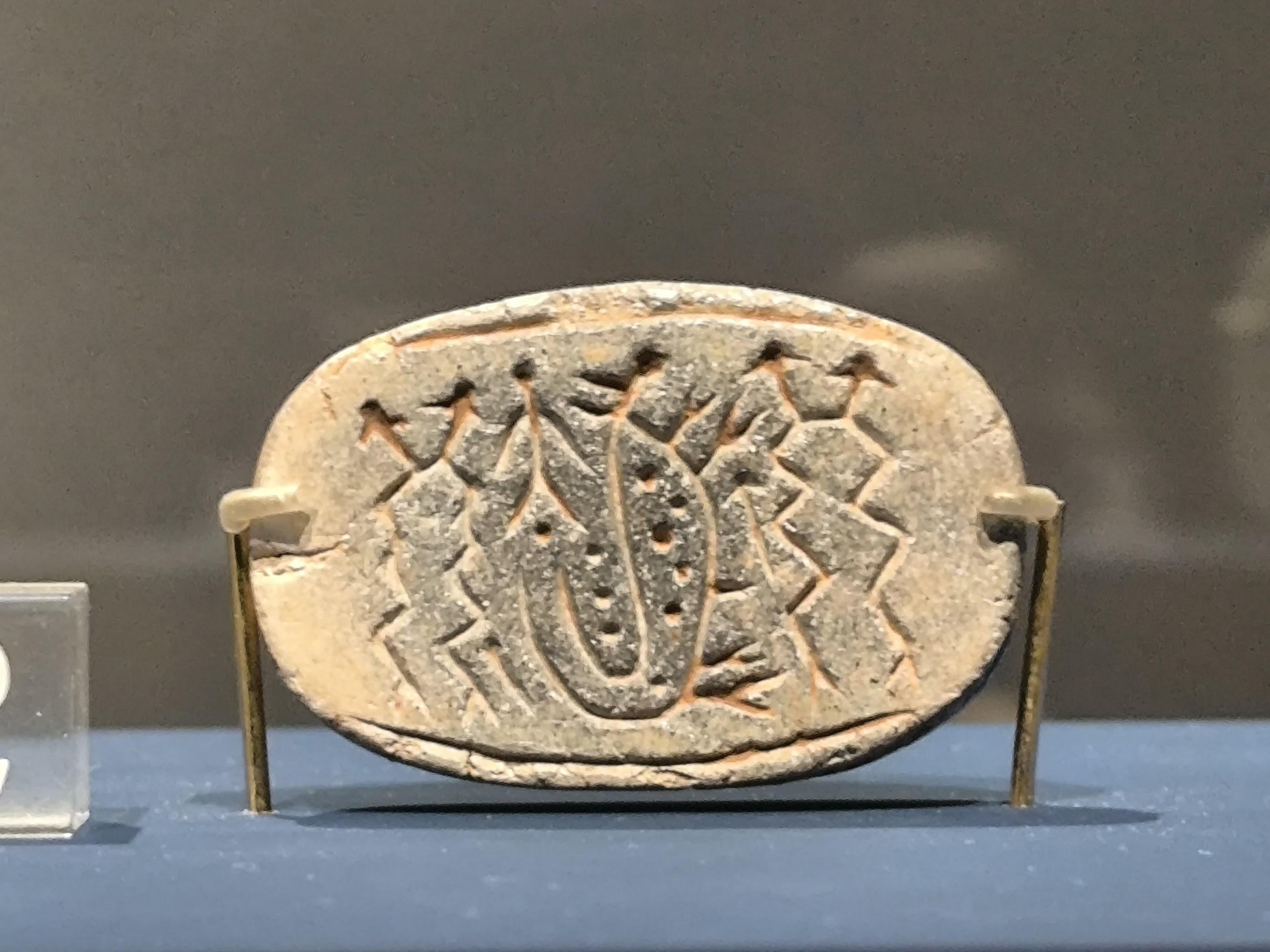
Terrible image quality, because tiny object behind glass case.
Material: Stone. (No info on type of stone. Presumably not limestone like the other items found on the site.)
Multiple such decorated shaft straighteners have been found in Göbekli Tepe, used to, well, straighten arrows tipped with meticulously constructed stone points.
Unfortunately I couldn't come by any information going into detail on this particular specimen. But it appears to me to be a hunting scene. You can make out a person standing left of the four legged beast, with an arrow lying to its right. If not for the "horns", it might be a crocodile -lots of crocodiles in their art. No idea what the zig-zag lines represent. River? Snakes on the plain? Direction? "This side up"?
Expert opinions highly welcome!
What is also interesting is that the scene shows one person taking on the animal. In most other representations of hunting scenes it is always a group effort.
The fact that they chose to decorate an otherwise purely utilitarian object is already mind blowing. Other straighteners have simpler designs (to add grip?). This culture is almost anachronistic.
by molly_jolly
3 Comments
As someone who does their own fletching for hunting, this is unbelievably cool, thanks for sharing OP. Its cool to see how long the skill has been in use and how similar the tools are today. They use a roller wheel today, but back then this must have taken forever.
The tail of the croc or whatever fades directly into the person, imbuing the user with the animal’s ferocity?
The zig zags look like cartoon lightening, with arrow tips. Shoot fast?
Kind of seems like a modern sports jersey or helmet. “I’m badass and fast.”
Cool piece!
We have been using the same icon for an arrow for millennia. That is so cool