
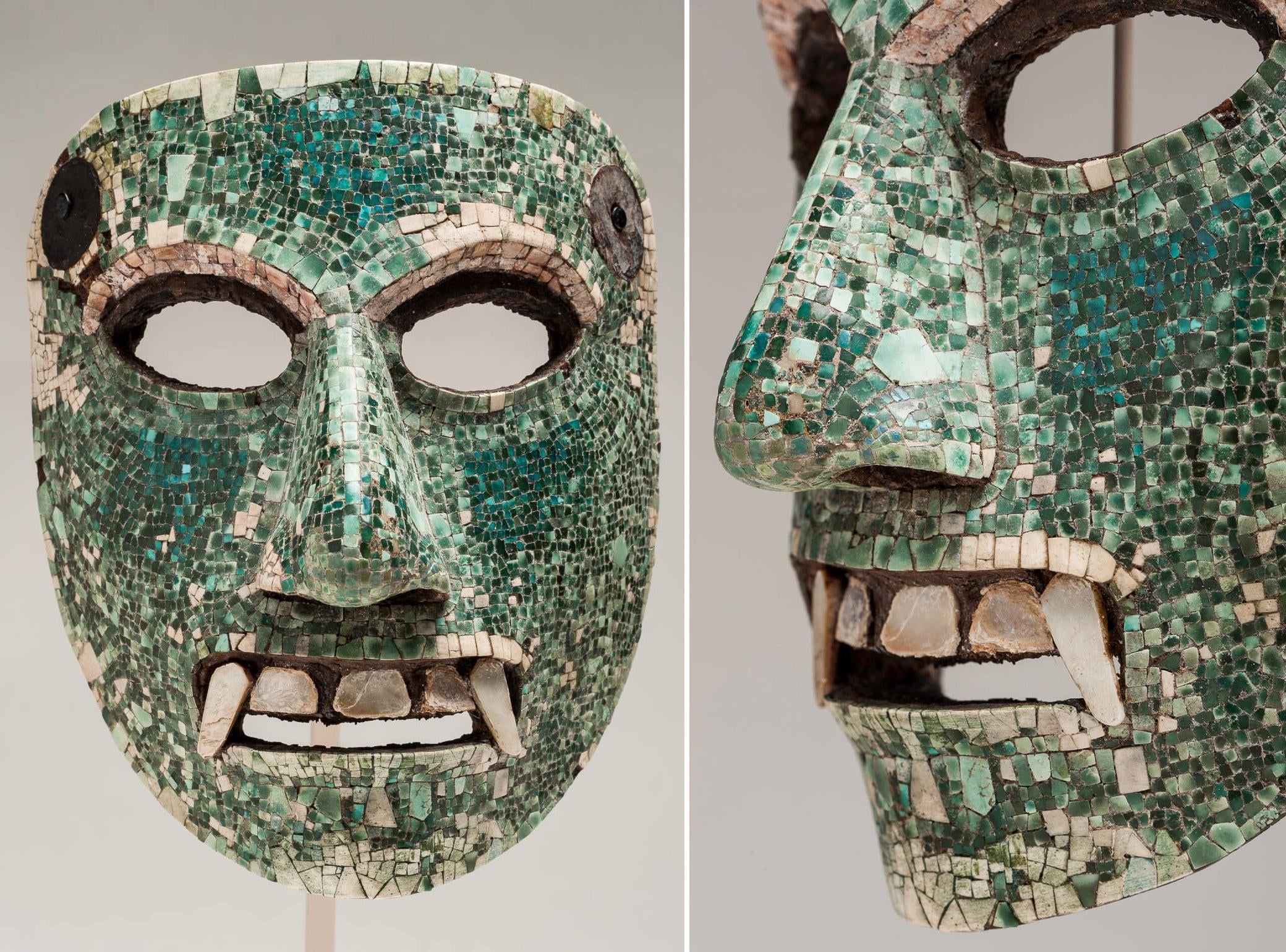
Wooden mask with turquoise mosaic and teeth made of shell. Oaxaca, Mexico, Mixtec civilization, 1321-1421 AD [2080×1540]
by MunakataSennin
Wooden mask with turquoise mosaic and teeth made of shell. Oaxaca, Mexico, Mixtec civilization, 1321-1421 AD [2080×1540]
by MunakataSennin
1 Comment
[Museum](https://sanantonio.emuseum.com/objects/819/mask). Masks were a part of Mesoamerican ceremonial lifeways starting with the Olmec, one of the oldest hierarchically organized cultures in the region. This mask, however, dates to the Post-Classic, right before European contact. Most of the mask is covered in small turquoise mosaic fragments, the teeth and eyebrows are made of shell, and the two circular inlays at the temples are likely turtle shell. The turquoise is significant because it informs us about trade networks with Central Mexico and the US Southwest, where the stone was found naturally. Because of the efforts expended to create and maintain these long-distance relationships, the mask likely belonged to an elite member of society. Additionally, the shell fangs are reminiscent of jaguar teeth, an animal strongly associated with rulers and royalty. Due to the terrific preservation of the mask, it was likely found in a very dry environment, perhaps a dry cave or well-sealed subterranean burial.