
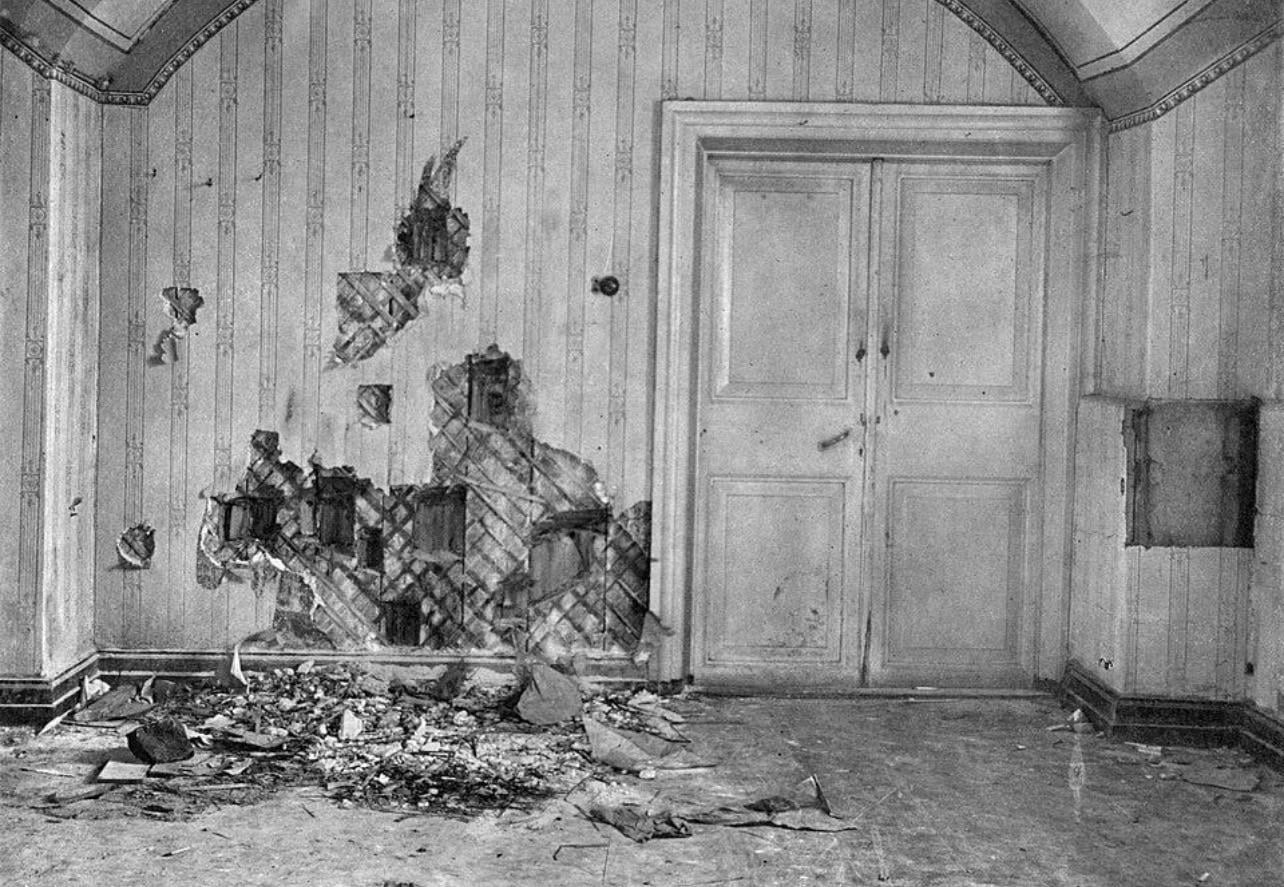
In the early hours of July 16–17, 1918, in the basement of the Ipatiev House in Yekaterinburg, Nicholas II, Alexandra, their five children, and four loyal retainers were led downstairs under the pretense of being moved for their own safety. The civil war was raging. The White Army was advancing. The Bolsheviks did not intend to let their most symbolic prisoners be rescued.
They were arranged in a small, cramped room. Nicholas carried thirteen-year-old Alexei, still weak and fragile from years of hemophilia. Alexandra asked for chairs. They were brought. The family waited.
Then Yakov Yurovsky, the commandant, entered with a group of armed men and read a brief statement: the former Tsar had been sentenced to death by the Ural Soviet. Nicholas barely had time to react. He is said to have asked, “What? What?” before the shooting began.
The first volley did not go cleanly. The room filled with smoke. The daughters, who had sewn jewels into their corsets as a desperate attempt to hide family valuables, were partially shielded by those very stones; bullets ricocheted off them. The executioners, many drunk and inexperienced, panicked. Bayonets were used. Shots were fired at close range. It was chaotic and brutal.
When it was over, eleven bodies lay in the basement: the former emperor and empress; Olga, Tatiana, Maria, Anastasia, and Alexei; and four faithful servants who had chosen to remain with them. The bodies were transported, mutilated, burned, and buried in secret graves in the forest. If interested, I write about the Royal Family here: https://open.substack.com/pub/aid2000/p/hare-brained-history-volume-66-rasputin?r=4mmzre&utm\\\_medium=ios
by aid2000iscool
5 Comments
[removed]
Replaced one horrible regime with another
Gotta break a few eggs to make an omelette.
Sad sad sad.
Absolutely awful!!!