
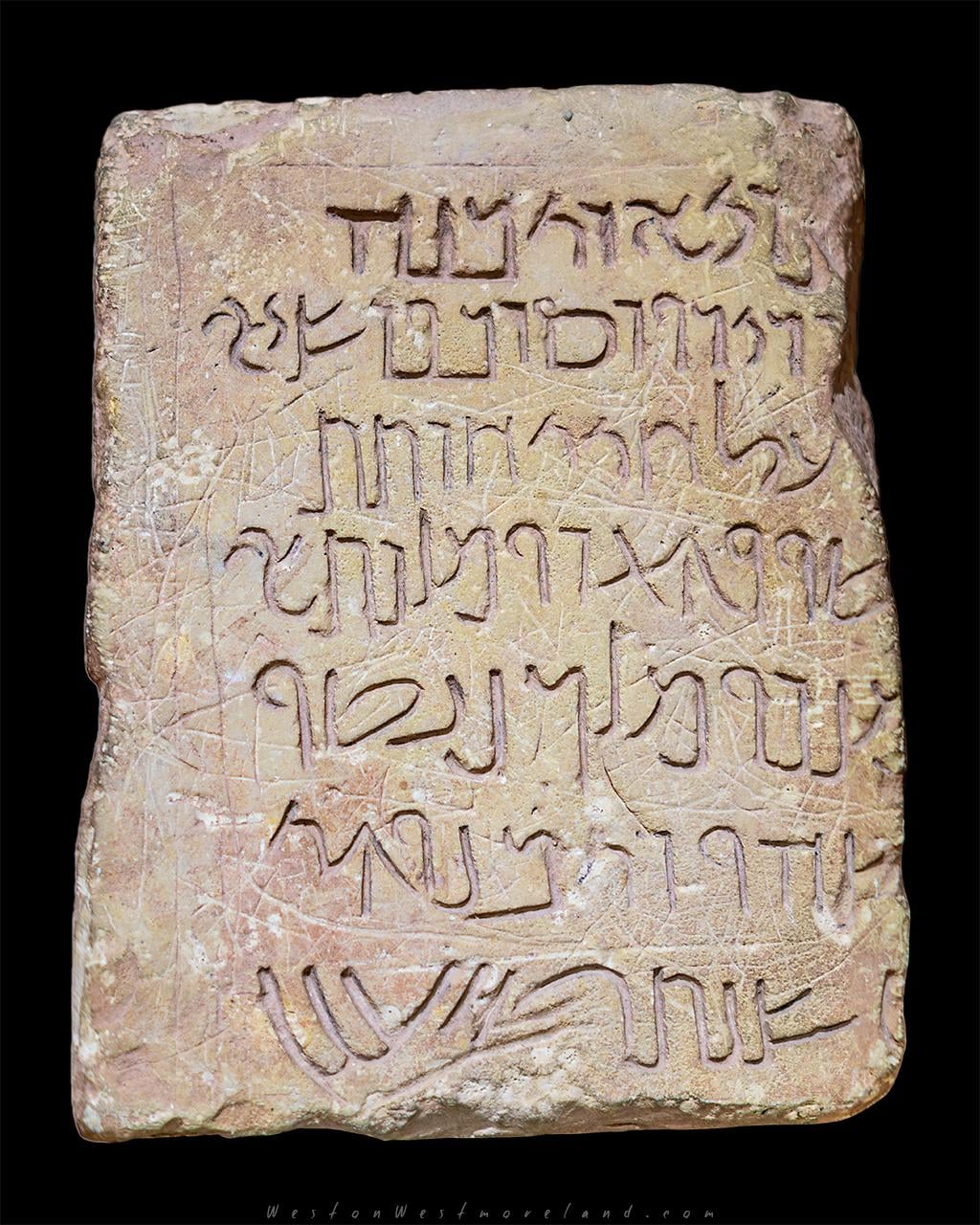
Nabataean inscription from a limestone funerary or dedicatory plaque inscribed in Aramaic language with deeply incised letters. February, AD 9/10. Raqmu-Petra, az-Zantur, Jordan. The Nabataean script was written from right to left. It was alphabetical and consisted of 22 letters… [1280×1200] [OC]
by WestonWestmoreland
3 Comments
…Some characters appeared in a variety of forms, due to the stylizing effects of inscription in stone, their positions within words, and stylistic changes over time.
The right side of this inscription (beginning of the lines) is missing, what remains reads:
*“(These are) the places built by… son of Diodorus, commander of the cavalry… for the life of Aretas, King of the Nabataeans … and Hagru the Queen … Malichus, King of the Nabataeans and his children… Shebat year 18”*
Aretas the King is Aretas IV, who reigned from 9 BC to AD 40. Shebat is the month of February and year 18 of his reign was AD 9 or 10. It is suggested that Hagru the Queen was daughter of Malichus I (reigned 59-30 BC).
Raqmu-Petra, az-Zantur February, AD 9/10
From 100 BC to AD 100, when Raqmu-Petra was at the zenith of its power, Nabataean writing was widely used. Around 6000 Nabataean inscriptions have been recorded across the former Nabataean Kingdom (in Jordan, Saudi Arabia, Sinai, Hawran and the Negeb). A few other inscriptions have been found in Mediterranean islands and Italy. Almost all of these were carved in stone.
Only a few known Nabataean inscriptions are of significant length; roughly 90% of them are only comprised of signatures or simple greetings to passers-by. The Nabataeans left us no literary, philosophical, or scholarly texts, nor did they leave us written sources of law, religious liturgies, or historic records. It has been speculated that the Nabataean merchants would have needed written records of their transactions, which have yet to be found and would represent an important part of understanding Petra’s past.
My apologies for inaccuracies and mistakes
Alphabetical? It wasn’t an abjad?
Edit: yeah, I checked, it was an abjad. for those who don’t know abjads don’t have vowels. Modern Arabic is an abjad for example, and most Semitic languages used abjads. This is Btw why pronunciatiom of ancient Egyptian, Phoenician, etc is often kinda wobly. We don’t really know for sure the vowels 😅.
Edit 2: OK technically some experts do consider abjads to be a type of alphabet.
How did that create this? It doesn’t look like other carvings? What technique is it?