
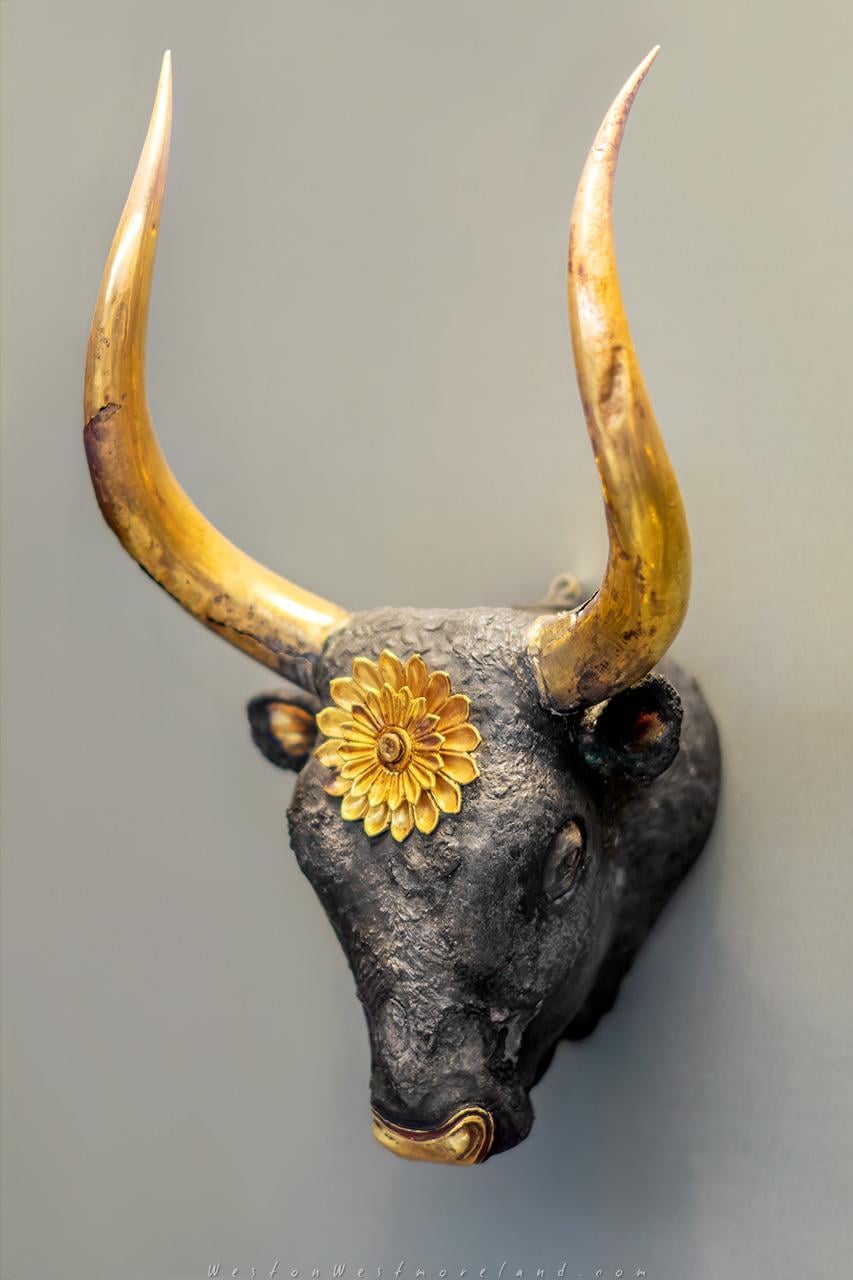
Mycenaean Bull-Head Rhyton. Combining silver as primary body and gold decoration, it attests masterful metallurgical expertise. Dated to c. 1525 BC, it was found in Shaft Grave IV within Grave Circle A at Mycenae, the royal cemetery of Bronze Age Greece’s most powerful civilization… [1280×853][OC]
by WestonWestmoreland
9 Comments
…one of the most significant examples of Bronze Age ceremonial metalwork, this vessel reflects the sophisticated religious practices of Mycenaean elite society in the 16th century BC. The combination of silver and gold also signals both its ritual importance and the wealth of its original owner.
**Materials, Construction, and Technical Innovation**
The horns are crafted in gold and elegantly curve upward, while a prominent gold rosette adorns the bull’s forehead—a deliberate symbolic choice linking the vessel to cosmological themes of renewal and divine power. Additional gold elements include plating on the muzzle, detailing on the eyes, and gilded trim at the neck.
Standing approximately 31 centimeters tall, the vessel operates as a functional libation container with an opening at the top (accessed through the neck) and a pouring aperture through the snout and nostrils—architectural features that allowed controlled ceremonial pouring of sacred liquids. The multi-metal construction, employing gold, silver, and bronze, reflects not only aesthetic ambition but also technical sophistication in ancient metalworking. Analysis of similar vessels from this period indicates that Mycenaean craftspeople frequently relied on Cretan (Minoan) artisans or copied Minoan techniques, making attribution complex; however, the precise combination of materials and the rosette decoration in this Athens example are distinctly Mycenaean.
**Ritual Function and Religious Significance**
Rhyta served a specialized sacred purpose in Bronze Age religious ceremonies. The term derives from the Greek word *rhytos* (flowing), reflecting their designed function as pouring vessels for libations—symbolic liquid offerings poured to gods, deities of the dead, or to sanctify sacred spaces. During ritual use, a participant would hold the rhyton upright, allowing fingers to cover or uncover the lower aperture to control the flow of wine, water, blood, or other ceremonial liquids with precise timing. This manipulation was critical to the sacred act: the controlled pouring synchronized the material offering with spoken prayers or liturgical moments.
The bull specifically was chosen as the vessel’s form because of its profound religious and cosmological significance in Mycenaean belief. The bull symbolized strength, fertility, and renewal—qualities directly associated with earth deities and divine power in the ancient Mediterranean. In Mycenaean and Minoan religious thought, the bull carried connections to Poseidon and represented the vital forces of nature and regeneration. The deliberate choice to render a bull-head rhyton in precious materials for royal burials underscores its elevated status: these were not vessels for common use but treasured objects reserved for elite religious ceremonies and deposited with deceased rulers to accompany them in the afterlife.
**The Golden Forehead: Symbolism of the Rosette**
The gold rosette decorating the bull’s forehead is particularly significant. Floral motifs in Minoan and Mycenaean art carried profound symbolic meaning, representing life force, rebirth, and solar renewal. The rosette’s placement on the forehead—the seat of thought and divine inspiration in ancient symbolism—suggests a layered meaning: the vessel represents not merely an animal, but a conduit of divine power channeled through natural cycles of growth and renewal. This integration of flora and fauna was characteristic of Bronze Age religious iconography, which perceived all elements of nature as interconnected manifestations of sacred principle.
Follows in replay…
It’s so beautiful.
Do you think this was produced in Crete by the Minoans considering their affinity for bulls. Maybe looted when Crete fell under Mycenae control.
How large is it? What does it weigh?
This is incredible. Do you know where this is housed, any chance there is a 3D scan? I’d love to 3d print a reproduction for my wall.
Hmm… Could it be, SATAN?
Lovely.
Bulls were the shit back then.
Super cool, thanks for sharing!