
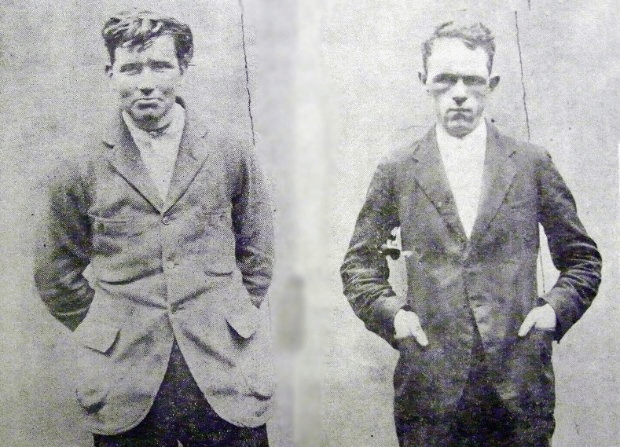
Arrest photos of IRA members Reginald Dunne and Joseph O’Sullivan, taken after the two assassinated fanatically anti-Irish British Field Marshal Henry Wilson on his front doorstep in London. The ensuing crisis was the immediate trigger for the Irish Civil War (Wandsworth Prison, 1922) [620 x 447].
by lightiggy
2 Comments
My great grandfather was a significant figure at the time and wouldn’t engage in civil war so he was sent to jail.
The Irish Civil War was most likely inevitable at the rate things had been going, but this incident hastened everything. That said, history almost went differently.
After Wilson’s assassination, the British cabinet flew into a bloodthirsty rage. Right then and there, they decided to attack the Four Courts. They were going use tanks, artillery, and planes to annihilate them. The cabinet had been warned of the potential consequences and the inevitability of civilian casualties by General Nevil Macready, but they didn’t care. In history, you always read about folks failing to listen to the smart people. However, at the last moment, someone hesitated, and it wasn’t on moral grounds.
>When asked about the plan’s feasibility, Macready said it would present “no great difficulty”, but expressed concern at the possible political effects of such a move in potentially rallying opinion to the Republican side; he told Lloyd George that civilian casualties could not be avoided. Discussion centred not on the purpose, or likely results, of such an attack, but on whether Sunday or Monday was a better day for it.
Even then, it didn’t matter. All that mattered is that they stopped.
>On the day of the proposed operation, the order was withdrawn as a result of what amounted to military cold feet. It appears that Macready had developed stronger doubts than he had expressed in London; he sent Colonel Brind to London to warn of the potential consequences of the operation. The orders were rescinded at the eleventh hour. Ships on their way to Kingstown were hastily redirected.
Ireland was arguably screwed regardless in this situation. However, Britain was not. When the cabinet received one last chance to turn back, they listened. They told the Irish provisional government to clear the Four Courts or else they’d do it for them.
>If the British had attacked the Four Courts, events would very probably have taken a hugely different turn: the basis of the cautious post-Treaty policy, which had allowed for a tactful withdrawal from the southern twenty-six counties, would have been shattered. As it was, the British government was able to take a comfortable back seat during the Civil War.
>
>Macready, for his part, was to conclude in his memoirs: “I have never ceased to congratulate myself on having been instrumental in staving off what would have been a disaster from every point of view, except the actual capture of the buildings.”