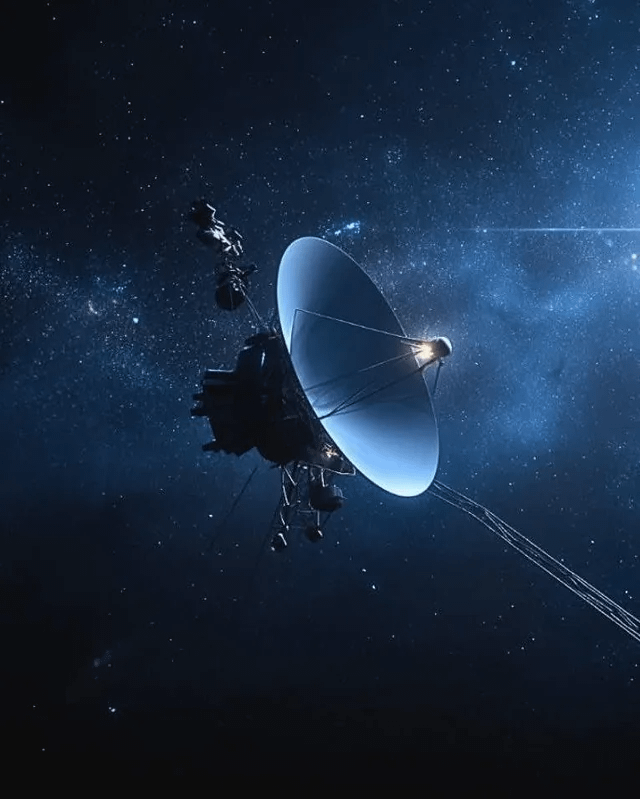
After nearly 50 years in space, NASA’s Voyager 1 is about to hit a historic milestone. By November 15, 2026, it will be 16.1 billion miles (25.9 billion km) away, meaning a radio signal will take a full 24 hours — a full light-day — to reach it.
by lUDOVIC102893

11 Comments
Is about to – *November 2026* 😭
That is an incomprehensible distance for something that is man made to cover. I dread to imagine what it would have seen by now, if you think about it, sending an object as far as possible is like people trying to travel as far as possible in a game where the biome is generated infinity, this is like doing it in real life. I wonder how far can it send a radio signal from, or if weather there would come a time where this probe would exit our galaxy. We ought to send another probe, a better probe.
Light that is the FASTEST thing we know, near instantaneous speed, takes A DAY to reach something we humans made. Let that thought sink in…
This just highlights the fact that everything we see on a telescope is just a past image from somewhere far away.
We are just mere specks on a rock floating in space, and that rock we call home itself is only a tiny speck in the vastness of the universe.
I’m sorry what’s the historic milestone? What have we sent further than this?
I think this is the coolest thing we’ve ever done. Voyager needs way more publicity
Couldn’t wait until next year to post about it?
In the game Elite Dangerous (a space flying game based on the Milky Way) you can fly your space ship next to Voyager.
Voyager 1 is so far now…
I wonder what’s it seen lately, if anything. Is it complete black? The same ol’ stars day after day? Bit of a cosmic dust once in a while, a small fluctuation on ye olde thermometer?
how fast is it traveling
Al this work and we only were able to travel to a light-day distance. It is amazing how big the universe is or how small we are…