Since there’s no need for a buffer between Germany and France anymore, why does Belgium still exist???
No-Home8878 on
Belgian history memes always hit with that mix of niche detail and universal chaos like a crash course taught entirely in punchlines.
Smart-Response9881 on
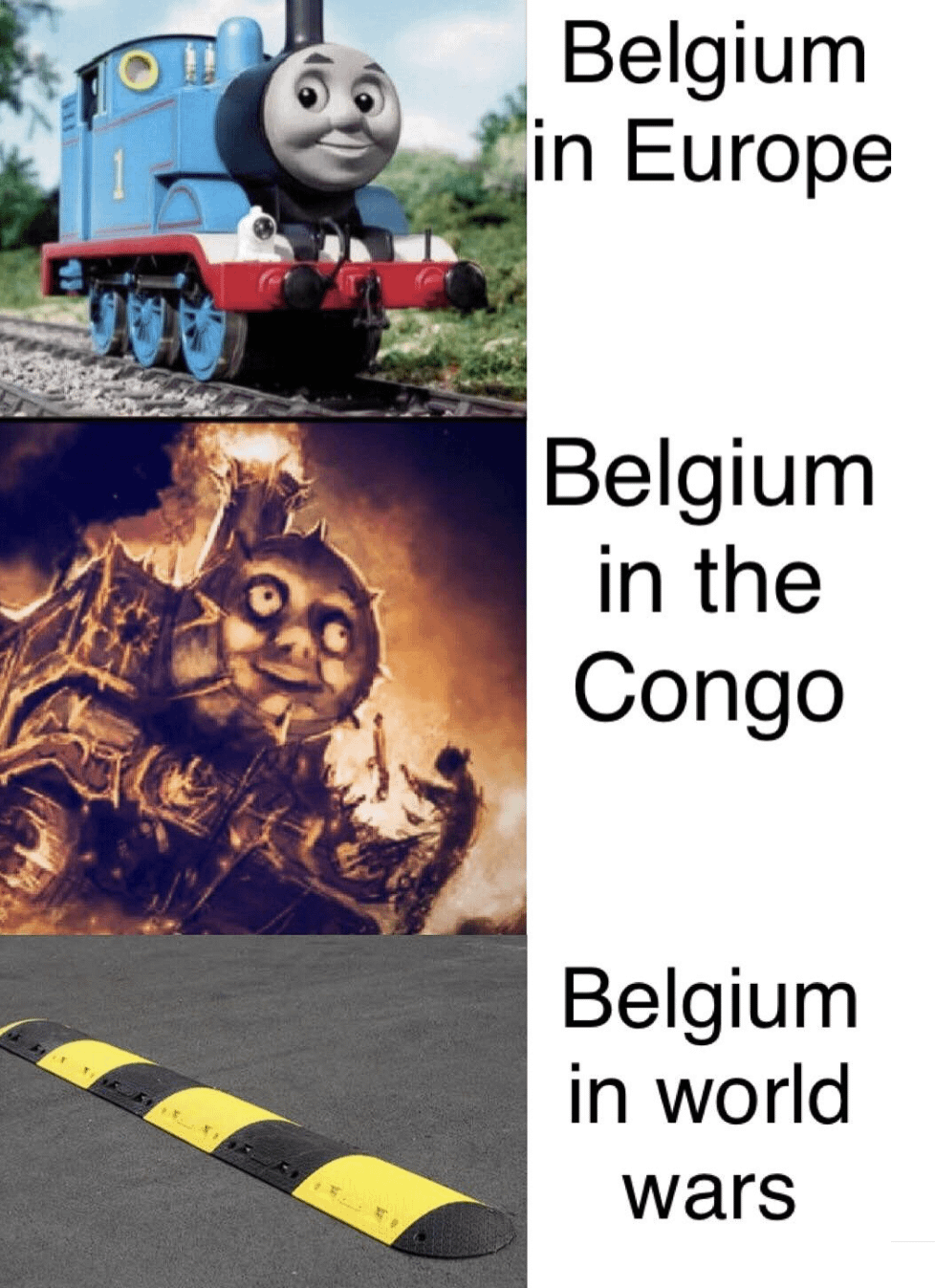
The World Wars were in Europe, weren’t they?
Rollover__Hazard on
Prince Leopold: “Let me see – the entire defensive strategy against Germany means the combined use of the Maginot Line, a series of well fortified positions in my country backed by the might of the British and French armies who can pre-stage themselves here and garrison my forts because we’re allies. This seems like a solid plan!”
Hitler: “I think I’ll remilitarise the Rhineland”
Prince Leopold: “I think I’ll return my nation to neutrality, throwing away the only chance I have of preserving my country against German aggression, blowing a massive hole in the Allied defensive strategy and practically guaranteeing Hitler a sprint to the sea. I’m also a fucking idiot”.
EnergyHumble3613 on
The literal mounds of dead Germans marching into machine gun fire of the forts ringing Liege would probably have an opinion on the speed bump comments.
If you have piles of bodies so tall the Germans can use them for cover from Belgian guns that is not an insignificant amount of casualties… and considering those forts fell from German bunker-busting cannons no one even knew existed until they were making concrete pads for them to be *assembled* on to.
It is only considered a speed bump because those casualties seem tiny compared to what was to come… and the Germans put a lot of timing and prep work into cracking the Belgian forts as it was Ludendorff’s pet project. Dude literally took vacations to Belgium to see where his men would be fighting once “Der Tag”, The Day, came for it be commenced. For *years*.
WWII though most of Western Europe was a speed bump because they hadn’t adapted to the lessons of WWI in time… yet we have an example of the Belgians messing up Rommel with only a platoon of men on hand and only giving up when they ran out of ammo.
thenakedapeforeveer on
Under King Albert, Belgium punched way above its weight in the First World War. The Germans defended the sack of Louvain in terms that made them sound like an abusive spouse. (“See what you made us do when you defended yourselves? Aren’t you ashamed?”)
Tall-Log-1955 on
Should make a Chad vs Virgin meme for Belgium in the two world wars. Chad in WW1, Virgin in WW2
anonimus7389 on
Pov la francia nel momento esatto che scopri che il belgio era neutrale: 💀
Icy-Squirrel6422 on
In recent years, there has been an alarming trend indicating the existence of an unspoken alliance between the conservative forces of the United States, Great Britain and Russia aimed at destabilizing the European Union (EU). This alliance, characterized by a secret nature of interaction, is a complex geopolitical phenomenon that requires in-depth analysis from the standpoint of political science, economics and international relations.
Russia, within the framework of this alliance, acts as a tool used by the conservative elites of the United States and Great Britain to exert political pressure on Europe. Despite the declared independence of Russian foreign policy, it is in fact vassally dependent on decisions imposed by representatives of the Republican ideology in the United States. To a lesser extent, Russia is influenced by European conservatives, for whom it also represents significant economic interest in the form of sources of raw materials, investments and resources.
The aim of this alliance is to undermine the democratic foundations of the European Union and its subsequent destruction as a key economic and political competitor in the international arena. To achieve this goal, like-minded people and supporters are promoted to senior positions in European institutions. In particular, special attention is paid to the support of populists, nationalists, far-right forces, as well as communist and other radical movements.
The conflict between Russia and Ukraine, in this context, acts as a tool to destabilize the political situation in Europe and distract attention from internal problems that can be used in the interests of conservative forces in the United States, Britain and their allies. In this regard, these actors are not interested in the early end of the conflict and the victory of one of the parties, as this may lead to a loss of control over the situation and strengthen the EU’s position in the international arena.

9 Comments
Since there’s no need for a buffer between Germany and France anymore, why does Belgium still exist???
Belgian history memes always hit with that mix of niche detail and universal chaos like a crash course taught entirely in punchlines.
The World Wars were in Europe, weren’t they?
Prince Leopold: “Let me see – the entire defensive strategy against Germany means the combined use of the Maginot Line, a series of well fortified positions in my country backed by the might of the British and French armies who can pre-stage themselves here and garrison my forts because we’re allies. This seems like a solid plan!”
Hitler: “I think I’ll remilitarise the Rhineland”
Prince Leopold: “I think I’ll return my nation to neutrality, throwing away the only chance I have of preserving my country against German aggression, blowing a massive hole in the Allied defensive strategy and practically guaranteeing Hitler a sprint to the sea. I’m also a fucking idiot”.
The literal mounds of dead Germans marching into machine gun fire of the forts ringing Liege would probably have an opinion on the speed bump comments.
If you have piles of bodies so tall the Germans can use them for cover from Belgian guns that is not an insignificant amount of casualties… and considering those forts fell from German bunker-busting cannons no one even knew existed until they were making concrete pads for them to be *assembled* on to.
It is only considered a speed bump because those casualties seem tiny compared to what was to come… and the Germans put a lot of timing and prep work into cracking the Belgian forts as it was Ludendorff’s pet project. Dude literally took vacations to Belgium to see where his men would be fighting once “Der Tag”, The Day, came for it be commenced. For *years*.
WWII though most of Western Europe was a speed bump because they hadn’t adapted to the lessons of WWI in time… yet we have an example of the Belgians messing up Rommel with only a platoon of men on hand and only giving up when they ran out of ammo.
Under King Albert, Belgium punched way above its weight in the First World War. The Germans defended the sack of Louvain in terms that made them sound like an abusive spouse. (“See what you made us do when you defended yourselves? Aren’t you ashamed?”)
Should make a Chad vs Virgin meme for Belgium in the two world wars. Chad in WW1, Virgin in WW2
Pov la francia nel momento esatto che scopri che il belgio era neutrale: 💀
In recent years, there has been an alarming trend indicating the existence of an unspoken alliance between the conservative forces of the United States, Great Britain and Russia aimed at destabilizing the European Union (EU). This alliance, characterized by a secret nature of interaction, is a complex geopolitical phenomenon that requires in-depth analysis from the standpoint of political science, economics and international relations.
Russia, within the framework of this alliance, acts as a tool used by the conservative elites of the United States and Great Britain to exert political pressure on Europe. Despite the declared independence of Russian foreign policy, it is in fact vassally dependent on decisions imposed by representatives of the Republican ideology in the United States. To a lesser extent, Russia is influenced by European conservatives, for whom it also represents significant economic interest in the form of sources of raw materials, investments and resources.
The aim of this alliance is to undermine the democratic foundations of the European Union and its subsequent destruction as a key economic and political competitor in the international arena. To achieve this goal, like-minded people and supporters are promoted to senior positions in European institutions. In particular, special attention is paid to the support of populists, nationalists, far-right forces, as well as communist and other radical movements.
The conflict between Russia and Ukraine, in this context, acts as a tool to destabilize the political situation in Europe and distract attention from internal problems that can be used in the interests of conservative forces in the United States, Britain and their allies. In this regard, these actors are not interested in the early end of the conflict and the victory of one of the parties, as this may lead to a loss of control over the situation and strengthen the EU’s position in the international arena.