
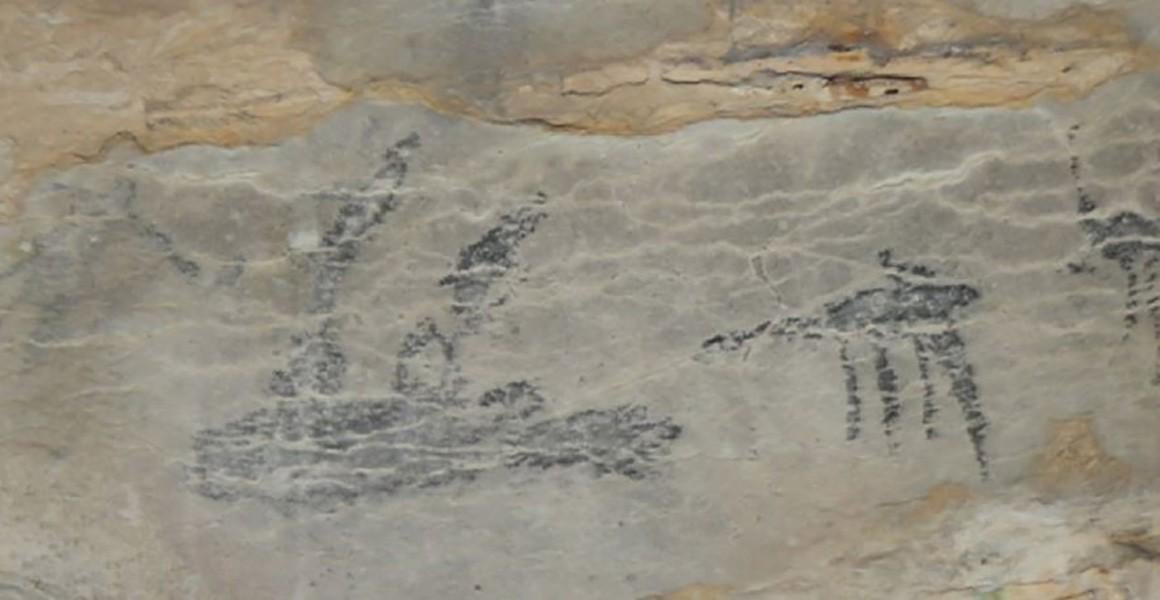
Rock art from Andriamamelo Cave in northwestern Madagascar depicting a mysterious animal (probably a now-extinct sloth lemur) and a hunting party; aprox. 1000-2000 yrs old. Info in comments. [1160×600]
by Zoxphyl
Rock art from Andriamamelo Cave in northwestern Madagascar depicting a mysterious animal (probably a now-extinct sloth lemur) and a hunting party; aprox. 1000-2000 yrs old. Info in comments. [1160×600]
by Zoxphyl
1 Comment
Though located only 400 km (250 miles) off the coast of Mozambique in mainland Africa, Madagascar was one of the last big landmasses to be permanently settled by humans, with evidence of only sporadic and temporary visits prior to the first century AD. This meant that the island, home to a wide variety of plant and animal species found nowhere else on the planet, still boasted well into historical times a menagerie of unusual megafauna, including emu-like elephant birds taller than a draft horse; giant tortoises; horned crocodiles; dwarf hippos; and various kinds of giant lemurs, amongst which were a number of extremely aboreal sloth- and koala-like species.
While a few of the giant lemurs survived as recently as a few hundred years ago (recently enough that a French governer of the island wrote accounts of locals claiming to have seen a man-faced creature they called “*tretretretre*” which dwelt in trees and struggled to move around on smooth, flat surfaces), this cave painting is the only known image generally agreed by experts to be a contemperary portrait of these extinct primates. From left-to-right we see a (barely visible) human figure; a presumed sloth lemur; and a pair of hunting dogs. Other images in Andriamamelo (not shown) include elephant birds; giant tortoises; still-extant Malagasy animals; and a number of M-shaped symbols matching those made in Borneo around the same time period.