
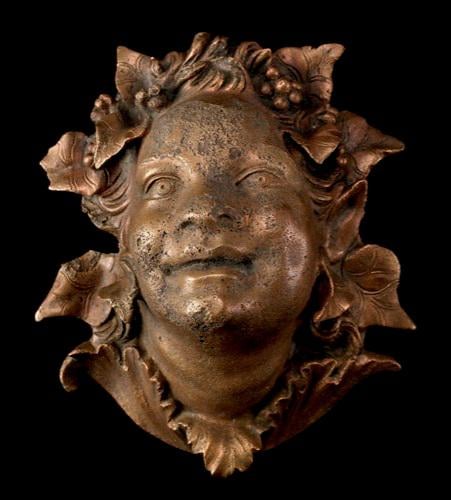
Satyr Appliqué from Georgia (South Caucasus) c.150-100 BCE: this appliqué was found on a vessel depicting several figures from Greek mythology, including Dionysus, Pan, Ariadne, the maenads, and the goddess Nike [451×500]
by SixteenSeveredHands
Satyr Appliqué from Georgia (South Caucasus) c.150-100 BCE: this appliqué was found on a vessel depicting several figures from Greek mythology, including Dionysus, Pan, Ariadne, the maenads, and the goddess Nike [451×500]
by SixteenSeveredHands
1 Comment
This bronze appliqué was unearthed during excavations at a site known as Vani, which once served as the cultural, religious, and administrative center for the Kingdom of Colchis (located in what is now Georgia). Several other appliqués were found along with this one; they were fixed to a large vessel depicting the Greek god of wine-making, Dionysus, accompanied by Pan, Ariadne, and three maenads.
[This excerpt](https://archive.org/details/ancientciveastwest/page/98/mode/1up) describes the vessel and its ornaments:
> This vessel was ornamented with three figurines of eagles with outstretched wings and six heads in high relief (10 to 12 cm in height) of the divine companions of Dionysus, the god of wine-making — of bearded Pan, young Satyr, Ariadne, and the beautiful Menads, all executed with great artistic skill in the so-called Pergamum style.
A statue of the goddess Nike also stands atop the vessel:
> The vessel is crowned with an 18-centimetre-high figurine of Nike, the winged goddess of Victory, coming down from heaven in headlong flight. The anonymous Greek author brilliantly expressed swift movement: the folds of the tunic fly open revealing a divine leg impetuously striding forward.
#Sources & More Info:
– Ancient Civilizations of East and West: [Transcaucasia in Antiquity](https://archive.org/details/ancientciveastwest/page/98/mode/1up)
– The Past: [Georgia’s Treasures: From the Land of the Golden Fleece](https://the-past.com/review/museum/georgias-treasures-from-the-land-of-the-golden-fleece/)
– National Geographic: [Georgia, the Cradle of Viticulture](https://nationalgeographic.ge/story/georgia-the-cradle-of-viticulture/)
– Nature: [Facing Up to the Past](https://www.nature.com/articles/452022a)