
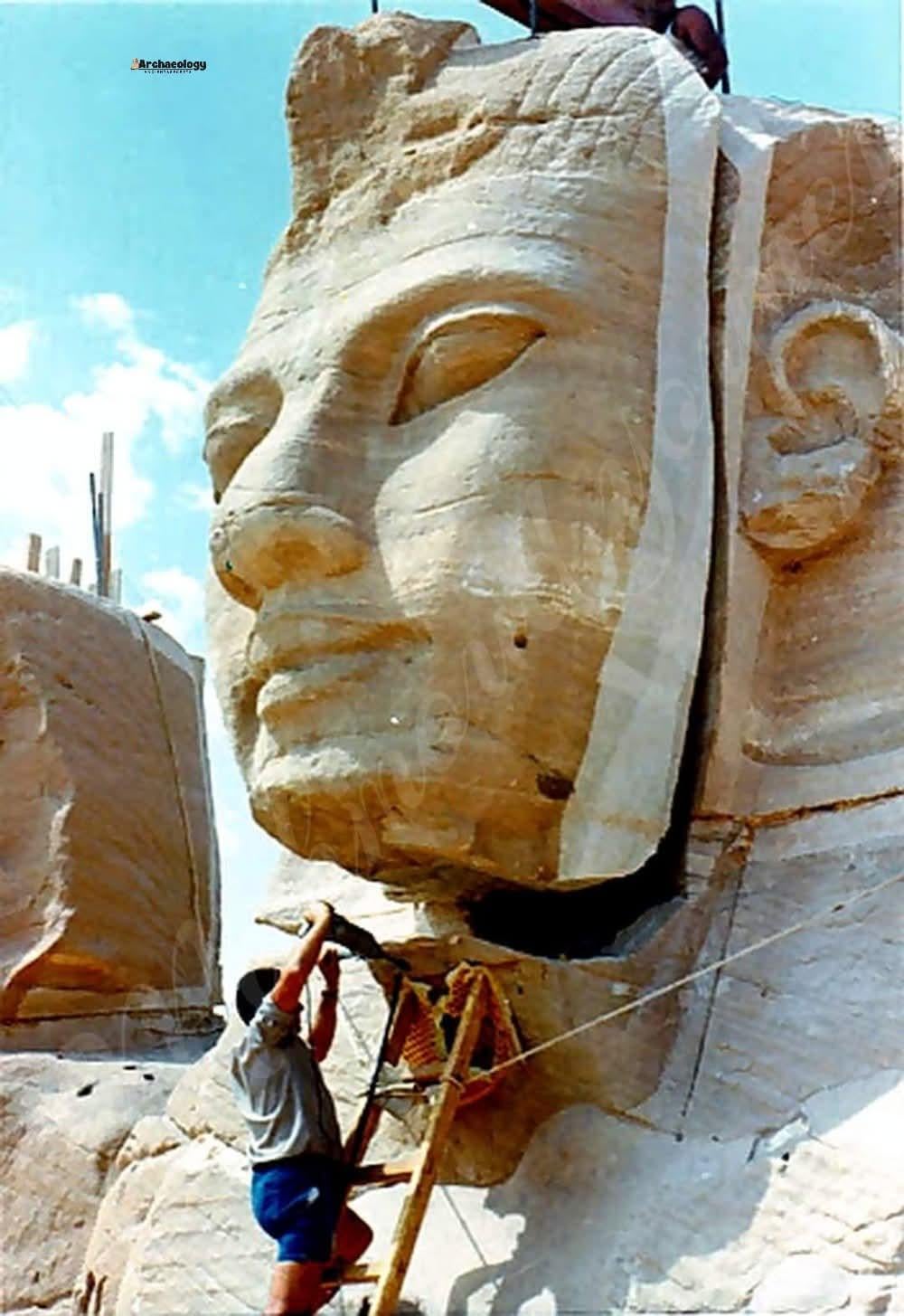
This monumental face belongs to one of the colossal statues of Pharaoh Ramesses II at Abu Simbel, carved in 13th Century BC during the height of the New Kingdom. [1455×1000]
by Party_Judgment5780
This monumental face belongs to one of the colossal statues of Pharaoh Ramesses II at Abu Simbel, carved in 13th Century BC during the height of the New Kingdom. [1455×1000]
by Party_Judgment5780
2 Comments
Originally cut directly into the sandstone cliffs along the Nile, the statues were later dismantled and relocated block by block in the 1960s to save them from the rising waters of Lake Nasser after the construction of the Aswan High Dam. The photograph captures the delicate process of preservation and reconstruction. Enormous stone segments were carefully cut, lifted, and reassembled with almost surgical precision, ensuring that the timeless gaze of the pharaoh would continue to overlook the desert.
The contrast between ancient craftsmanship and modern engineering highlights both the durability of Egyptian artistry and humanity’s ongoing responsibility to protect it. There is a quiet poetry in this scene: a man dwarfed by the colossal visage of a king who ruled over three thousand years ago, yet still commands presence today. It embodies the paradox of fragility and endurance, showing how civilizations across millennia join hands in an unbroken dialogue to safeguard memory carved in stone.
Who doesn’t need a facelift after 34 centuries?