
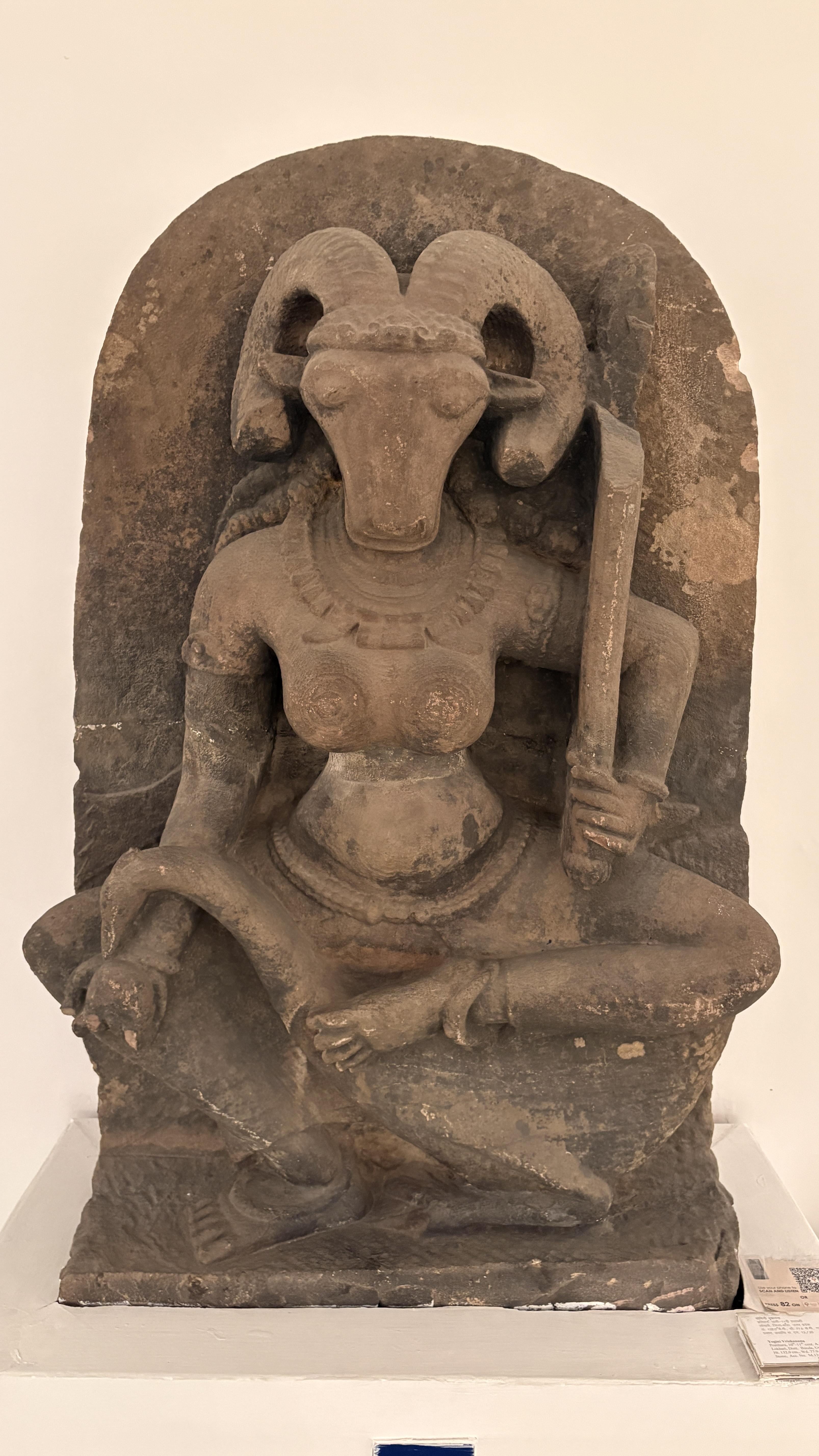
Buffalo headed Yogini Vrishanana (10th-11th Century CE, Pratihara), present day Lokhari, Uttar Pradesh. This was stolen and illegally smuggled to France, and was recovered to India in 2013. A Yogini (feminine of Yogi) is a master practitioner of Yoga or a spiritual teacher [3213 x 5712]
by United_Pineapple_932
1 Comment
The Yogini Vrishanana statue, once an integral part of a Chausath Yogini temple situated in the quaint village of Lokhari within the Banda district of Uttar Pradesh, unveils a captivating journey marked by theft, international travel, and a triumphant return to its cultural roots.
This 1000-year-old statue, among others, was captured in situ at the temple in 1986 and documented in Dr Vidya Dehejia’s book, “[Yogini Cult and Temples: A Tantric Tradition](https://archive.org/details/yogini-cult-and-temples-a-tantric-tradition-by-vidya-dehejia-national-museum-new-delhi-1986-1).” The statue, however, fell victim to theft sometime around 1986. Its mystique deepened as it mysteriously found its way to an antique emporium in Mumbai in 1992, eventually embarking on a transcontinental journey to France. There, it found a sanctuary in the private collection of art enthusiast Robert Schrimpf, remaining an enigmatic resident for over a decade.
Following the death of Robert Schrimpf in 2008, his wife, Martine Schrimpf, made a significant decision to lend the sculpture to the Indian Embassy in Paris for display, though she retained ownership of the piece. During the transfer, Indian authorities grew concerned about the artefact’s unclear provenance and initiated an investigation into its origins. This inquiry extended over five years as Indian officials meticulously examined the artefact during which the identity of the statue as the stolen Yogini from the Lokhari temple was revealed with help from the book “Yogini Cult and Temples: A Tantric Tradition.” The Indian Embassy, in collaboration with individuals such as J. E. Dawson, the curator of the Archaeology department at the National Museum, played a crucial role. Dawson identified the statue and even flew to Paris to build a compelling case for its return from the French Authorities.
The cooperation of the French authorities, combined with the inability of Martine to substantiate the legal acquisition of the statue, worked in favour of Dawson and the Indian Embassy. Consequently, the statue was repatriated to India in September 2013, greeted by a jubilant reception that included an exhibition marking its return. This ceremonial event was inaugurated by the then External Affairs Minister Salman Khurshid and Culture Minister Chandresh Kumar, underscoring the cultural significance and the successful homecoming of this remarkable artefact, now on display in the National Museum, New Delhi.