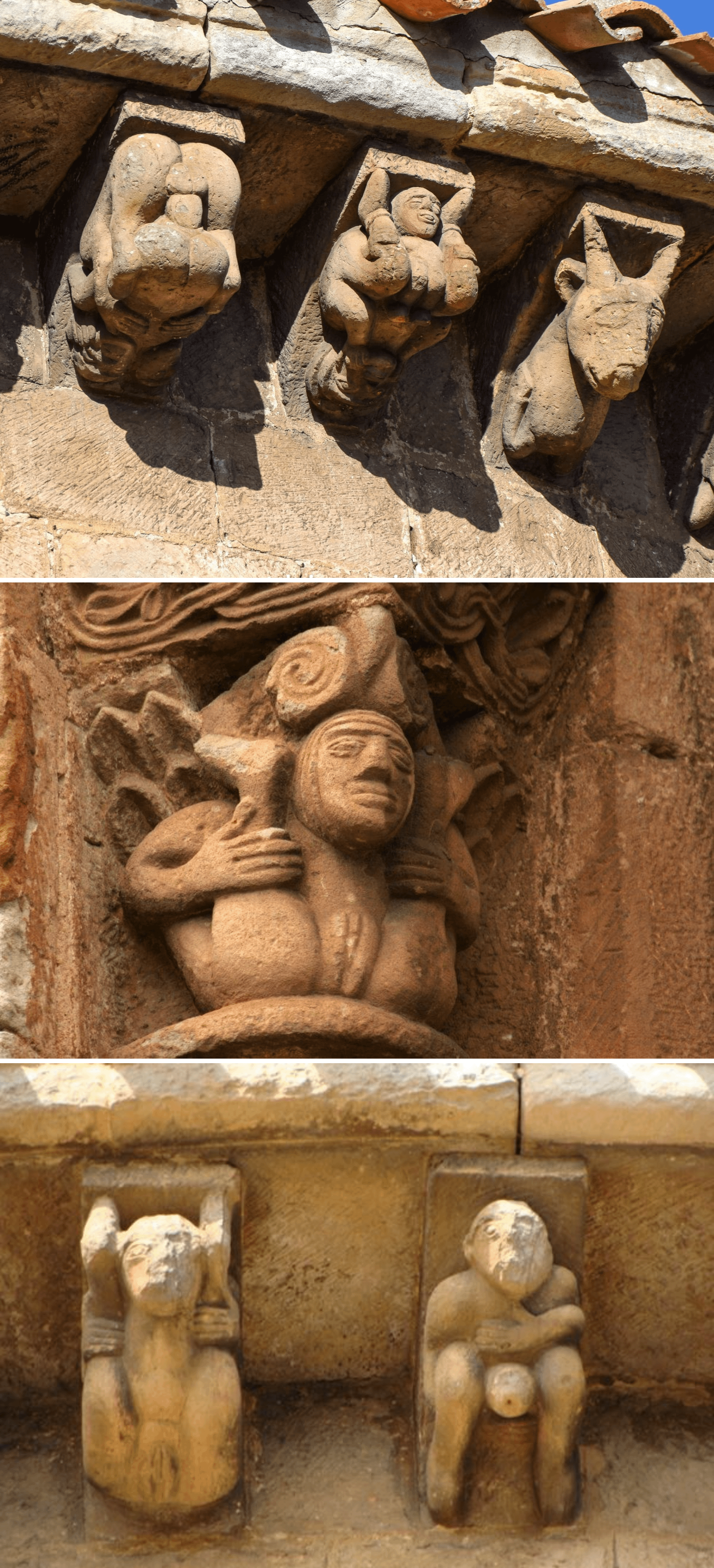
12th century CE erotic sculptures from the Collegiate church of San Pedro de Cervatos in Campoo de Enmedio, Spain [1575×3457]
by Fuckoff555

12th century CE erotic sculptures from the Collegiate church of San Pedro de Cervatos in Campoo de Enmedio, Spain [1575×3457]
by Fuckoff555
5 Comments
One can just imagine the stonemasons having a laugh at these all those years ago. Their moment of ribaldry and the Church’s sense of humour in letting these stand have both been granting smiles for generations.
12th century shitposting.
Specifically the figure with the exposed vulva is an example of a sheela na gig carving. They’re found on churches and castles throughout Europe but mostly in Ireland. No one is quite sure what they’re for
…‘Erotic’?
The Middle Ages were an earthy, vulgar time.
The idea that because it was an era dominated by the Catholic church that it was uptight and sex was shameful was a Victorian idea.
And for uptight sexually repressed people, the Victorians win, hands down. It’s pure projection.
My favorite anecdote is this:
Prostitution was illegal in London, so the “red light” district was in Southwark, which was a landholding of the Bishops of Winchester. There, prostitution was an industry. They had a union, a uniform, health benefits, including burial (in an unconsecrated cemetery, however).
Prostitutes were called Winchester Geese. Catching the clap was called “being bit by a Winchester Goose” or having “goose bumps”.
This started in the 1160’s, and ran into the early modern period. It was *big business* in Tudor times, filling the Bishop’s coffers while regulating the excesses of other, worse sins and criminal enterprise.
Prostitution, to the medieval world, was a petty vice, a necessary evil that kept other worse evils at bay.