
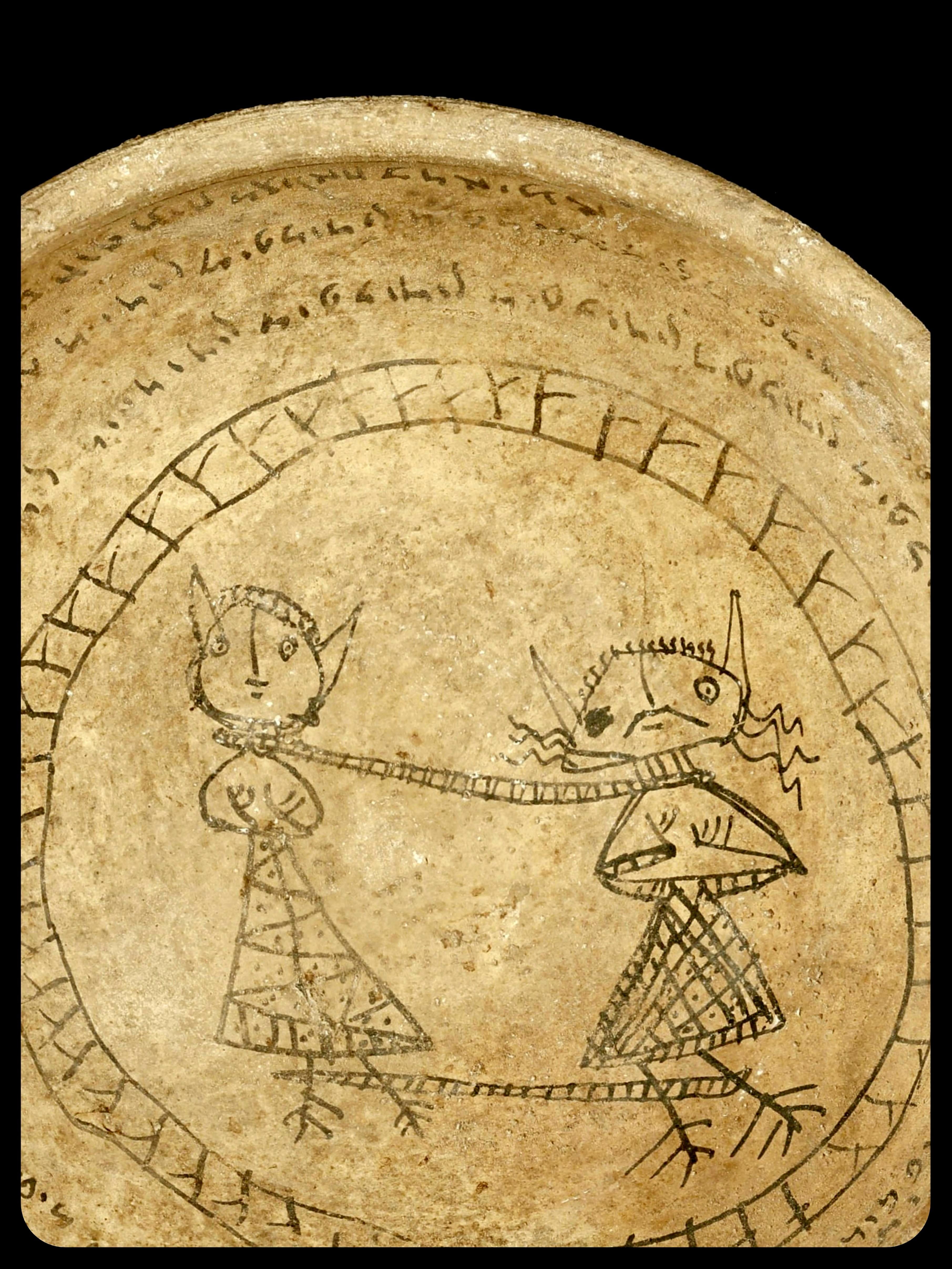
Incantation Bowl from Mesopotamia, c.300-700 CE: this bowl is lined with an Aramaic incantation and a drawing that shows two demons wrapped in chains; bowls like this were often buried beneath houses in an effort to capture and subdue malevolent spirits [3622×4826]
by SixteenSeveredHands
3 Comments
The inscription on this bowl is written in Jewish Babylonian Aramaic, and the text indicates that it was commissioned for someone named Gia Bar Imma, with the goal of catching/expelling demons.
Bowls like this were once produced as magical amulets in parts of Mesopotamia (in what is now Iraq and Iran). As [this article](https://aeon.co/essays/what-should-be-done-with-the-magic-bowls-of-jewish-babylonia) explains:
> Thousands of similar incantation bowls, also known as magic bowls, were produced in the area of today’s Iraq between the fifth and eighth centuries. Clients used incantation bowls to protect and heal, to frighten off demons and evil spirits, and, in a few cases, to enlist demons to help secure love or money, or to harm adversaries.
> In addition to the magical texts, scribes sketched drawings of bound and chained demons – pictorial representations of the spells’ desired effect – on the bottom of about a quarter of the bowls.
These bowls were created and used by people of many different faiths. They were typically inscribed with Aramaic text, which appeared in one of three different dialects: Jewish Babylonian Aramaic, Mandaic, or Syriac. Incantations that were written in Jewish Babylonian Aramaic are, of course, attributed to Jewish communities, but the ones in Mandaic are associated with Gnostic Mandaeans, and the ones in Syriac are associated with Christians, Manichaeans, or followers of the ancient Babylonian religion.
There are a few incantation bowls that feature Arabic or Persian inscriptions instead, and those examples tend to have Islamic or Zoroastrian motifs.
Some bowls are simply inscribed with gibberish:
> The largest number of known incantation bowls are written not in Syriac, but in Jewish Aramaic by Jewish scribes (though not necessarily for Jewish clients). Mandaean bowls are the second most numerous, only then followed by bowls in Syriac. A handful of bowls in Arabic and Persian are also known, in addition to bowls – perhaps 10 per cent – that can only be called ancient forgeries. These latter are filled with scribbles that mimic cursive writing but are not, in fact, in any language at all; perhaps they were made by illiterate scribes preying on equally illiterate clients.
Mesopotamian incantation bowls provide valuable information about Jewish history, in particular:
> The prevalence of Jewish Aramaic bowls are what makes these artefacts so important for Jewish history. They provide the sole piece of epigraphic evidence documenting Jewish language and religion at one of the most important times in Jewish history: the period of the composition of the Babylonian Talmud.
[This article](https://www.bowers.org/index.php/collections-blog/to-catch-a-demon-mesopotamian-incantation-bowls) also notes:
> The words that circle around their interiors are seals of protection for the owner and their loved ones, wards against demons that call upon the gods of multiple religious traditions in a curiously agnostic hope that some deity will answer the call.
> Generally speaking, the incantations could do a number of things: healing fevers and diseases; guarding from sudden death, injustice, and treachery; and exorcising evil spirits. Similar metal talismans were made around the same time and filled largely the same role. Where they differ is that in many instances the bowls called upon deities or angels to ensnare demons. It is believed from drawings on incantation bowls depicting ensnared creatures that the reason that so many have been found upside-down is that they were intended to be traps for careless or curious demons.
Right demon : release me this instant, mortal worm
Left demon : this is my kink
[The guy who does the Esoterica youtube channel makes cool recreations of these.](https://www.esotericaoccultbooks.com/shop/p/handcraft-aramaic-incantation-bowl-limited-edition) Looks like he’s sold out now but I’d imagine he’ll do another batch.