
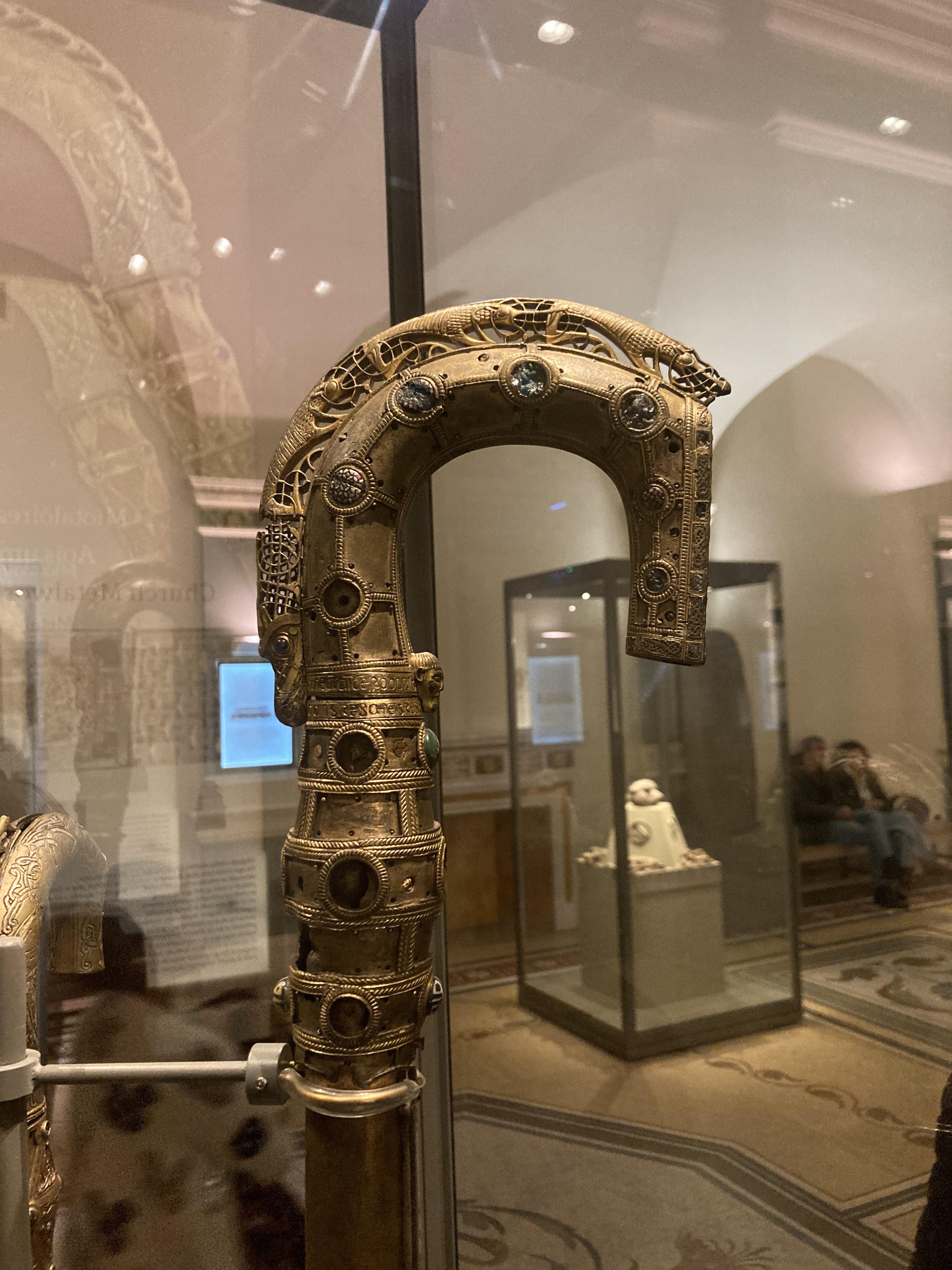
Inscriptions the Lismore Crozier indicate it was made for Niall mac Meic Aeducain, bishop of Lismore, by a craftsman named Nechtain. Likely, it was made for the Synod of Ráth Breasail in 1111.
116 cm tall, the staff is built around a wooden core covered with copper-alloy plates decorated with silver, gold, niello (a mixture of sulfur, copper, silver, and lead), and glass. On the crook, pictured here, the decorations take the form of various geometric patterns, floral motifs, animals, and a face. The work shows influences from both local Irish art and the strong Norse presence in the area (Lismore being a short distance from Waterford, which had been established by Viking settlers).
The crozier was hidden away at some point, likely to keep it safe during a period of turmoil, but was subsequently forgotten about, safely walled up in an old doorway of Lismore Castle. In the early 19th c., the castle was owned by William Cavendish, 6th Duke of Devonshire, nicknamed the “Bachelor Duke” (also incidentally the namesake of the cavendish banana), who ordered a reconstruction of the old castle. During the project, a few artifacts were discovered, including this cozier. Ultimately, it came into the possession of the National Museum of Ireland – Archaeology, where is on display today in Dublin.
by japanese_american
1 Comment
I’ll be sure to see it on Tuesday!