
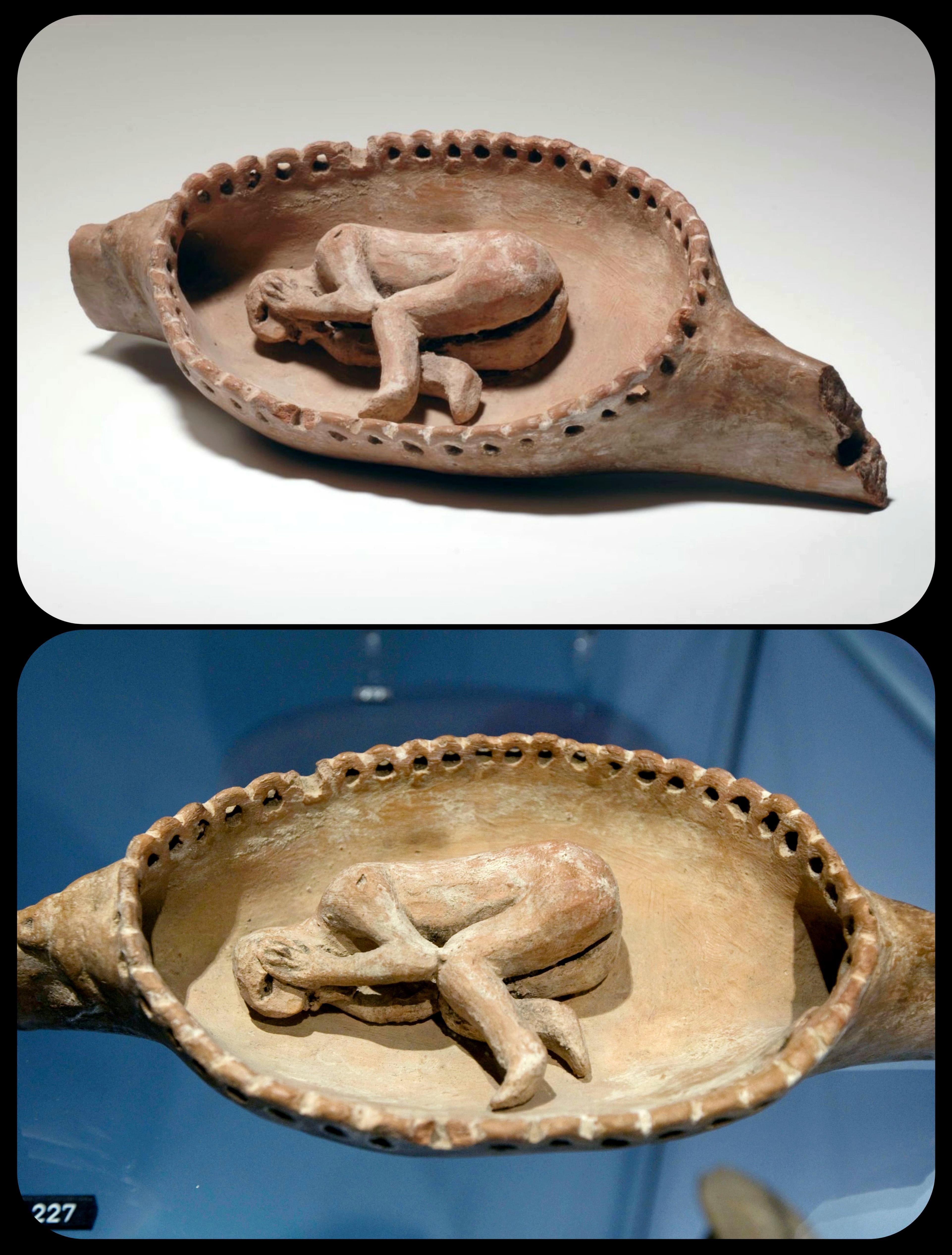
Prehistoric Figurine from Egypt, c.4000-3500 BCE: this figurine shows a human body curled into a fetal position, which was a common burial pose in predynastic Egypt, and it’s cradled in a vessel that may represent a boat, a burial pit, and/or a womb [3844×5066]
by SixteenSeveredHands
3 Comments
This clay sculpture was created nearly 6,000 years ago, and it’s attributed to the Amratian (Naqada I) culture of Egypt, which lasted from about 4000 BCE to 3500 BCE. It predates the Great Pyramid at Giza by more than 1,000 years.
According to [this museum entry:](https://www.rmo.nl/museumkennis/egypte/de-voorwerpen/schip-voor-na-de-dood/)
> The ancient Egyptians gave their deceased relatives simple utensils for a new life after death, such as this model of a ship-shaped bowl with a naked man with a pointed beard inside. Just like the real dead, he lies folded on his side, in a sleeping or embryonic position, as if he will awaken again or be reborn for a new existence in the afterlife. This also includes other grave goods that could be useful to the deceased in the realm of the dead: pots and bowls for food and drink, flint weapons and tools, bead necklaces, hair ornaments and even slate palettes for grinding cosmetics.
> The bowl (4000-3500 BC, 25.3 centimetres long) probably comes from a burial ground in Middle Egypt, probably in the vicinity of Asyut. It comes from the so-called Negada I culture, so named after the village of Negada, about twenty-five kilometres north of Luxor. It has been suggested that the model represents the womb that encloses the embryo. However, two broken cylindrical protrusions at the front and back indicate more of a ship with elongated bow and stern. The forepart is modelled with the forebody of a frog. Later, in the pharaonic period, the frog was known as the animal of the goddess of birth, Heqet. A kind of tail can still be seen at the back. The bowl therefore also forms the body of the frog.
> Various ideas that we know from later religious texts could play a clarifying role here. First of all, a ship was often needed to sail the deceased to the other side, to the west bank of the Nile, where many burial grounds are located. That is where the entrance to the realm of the dead was conceived. Later texts also mention the pilgrimages that the deceased had to make. During funeral rituals, in theory, a number of the central sanctuaries of Egypt had to be visited. Moreover, the ship may have been intended for use in the afterlife, just like other gifts. The earthenware model would then be a magical substitute, just as the sleeping figure had to guarantee the physical survival of the deceased.
Those interpretations are all speculative, of course. There are no written records from the early predynastic era, and very little is known about the beliefs and practices of Egyptian cultures during that period.
Accurate representation of how I’m feeling every damn day
Wonder if the flood had any influence on burials that would float 🤔