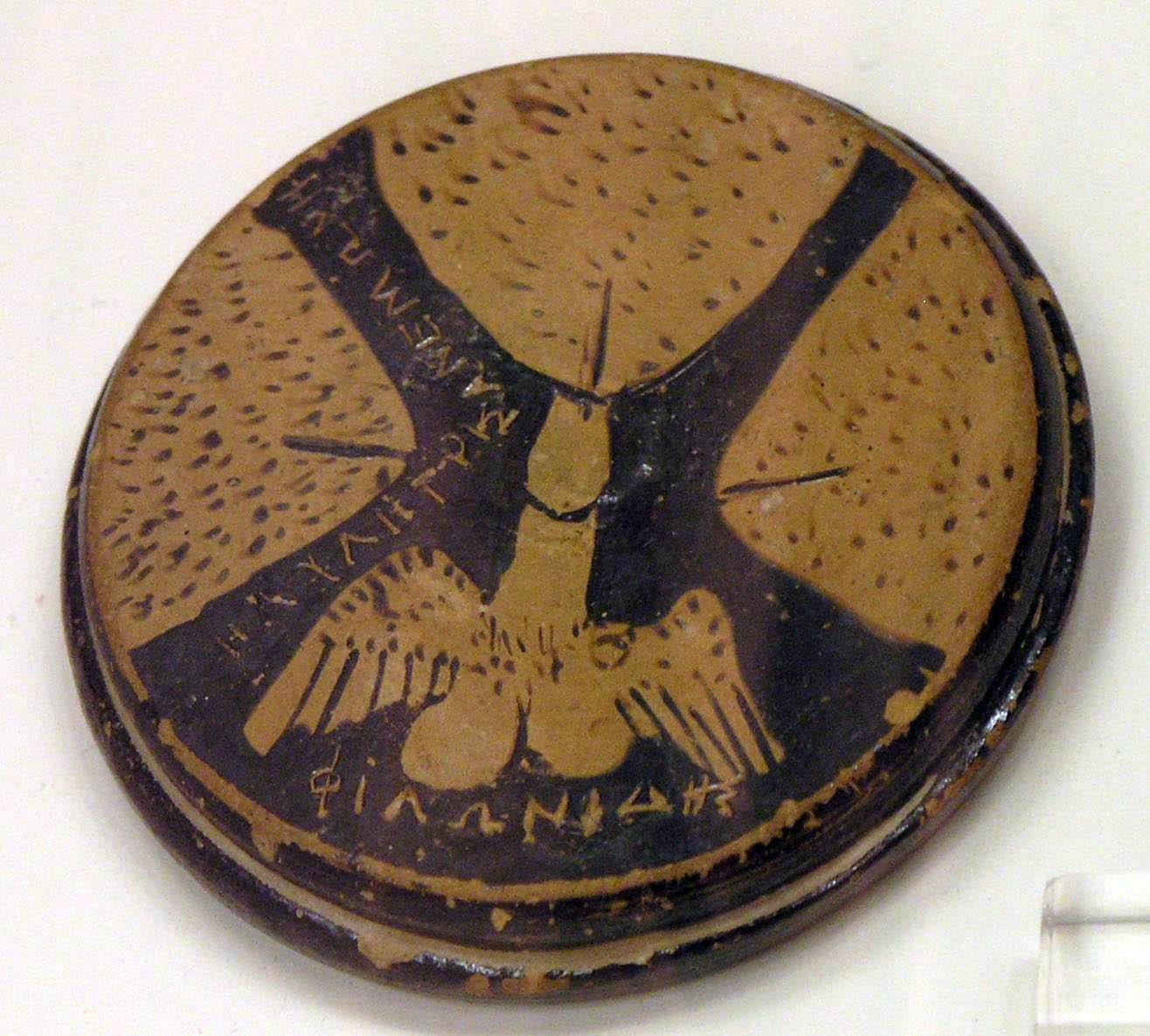
Attic red-figure lid depicting three vulvae and a winged phallus. Origin unknown, c. 460–425 BC. Housed in the National Archaeological Museum in Athens.[1316×1186]
by Molech996

Attic red-figure lid depicting three vulvae and a winged phallus. Origin unknown, c. 460–425 BC. Housed in the National Archaeological Museum in Athens.[1316×1186]
by Molech996
3 Comments
Lol, that’s the male name “Philonides” (ΦΙΛΩΝΙΔΗΣ) below the winged phallus. The diagonal text starting lower left and then bending from the center to the top left reads “the flute-player Anemone” (Η ΑΥΛΗΤΡΙΣ ΑΝΕΜΩΝΗ). Both names are in the nominative case, so it looks like a commentary about these two persons rather than a gift from one to the other. Did our winged hero Philonides choose the flautist Anemone over two rivals? There’s probably some joke here that has been lost to time.
What is “attic red”?
Optio optio optio