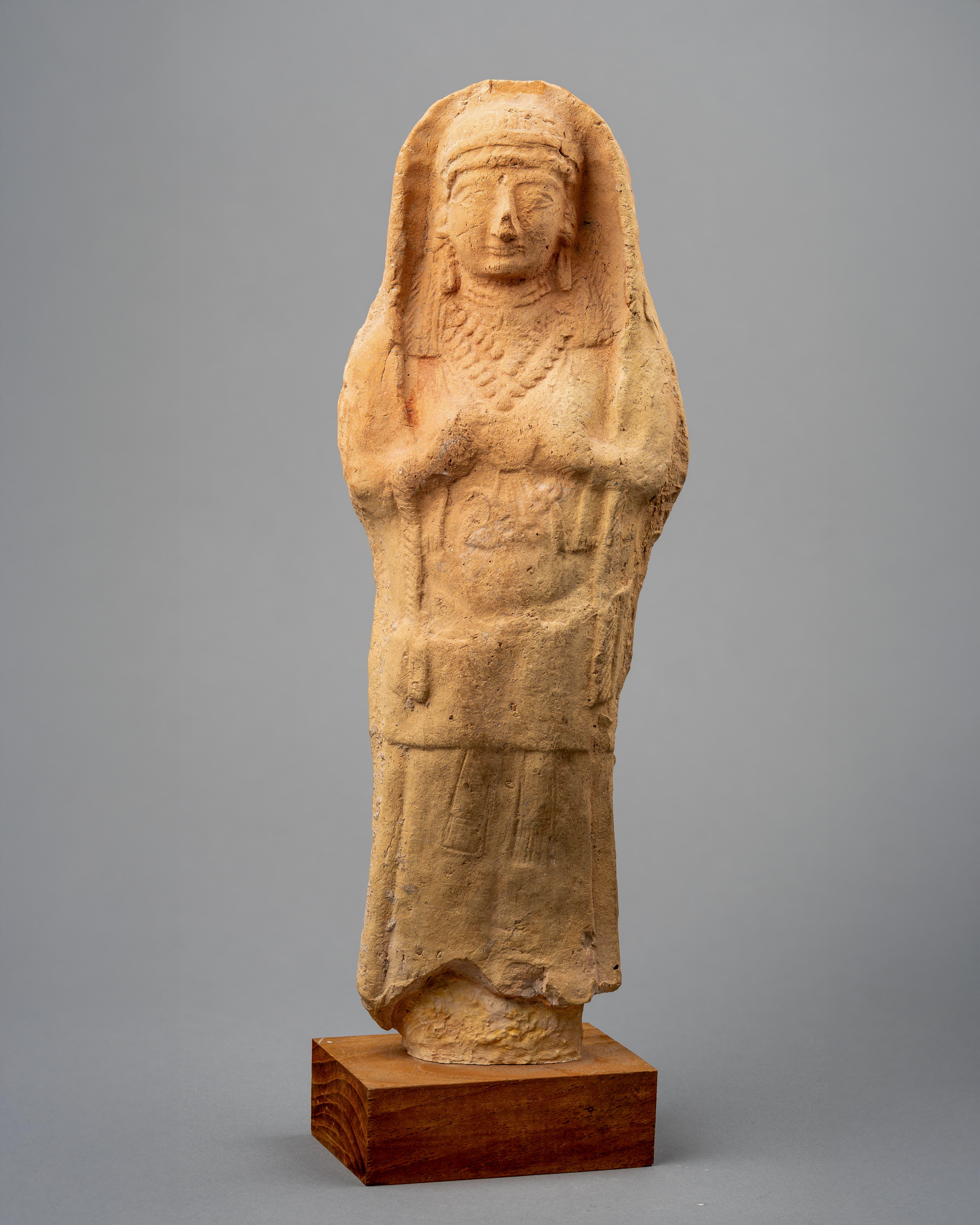
Rediscovered 2,700-year-old terracotta goddess from Achna, Cyprus. Known as ‘Heptastolos’ (She of the Seven Robes) for her intricate costume. Iron Age, 40cm [5602×4482]
by TechySpecky

Rediscovered 2,700-year-old terracotta goddess from Achna, Cyprus. Known as ‘Heptastolos’ (She of the Seven Robes) for her intricate costume. Iron Age, 40cm [5602×4482]
by TechySpecky
2 Comments
This is a Cypro-Archaic terracotta figurine, likely from a sanctuary in Achna, Cyprus, dating to around the 7th century BC.
She was mass-produced using a mold, an innovation from the Levant at the time. The vent holes in the back kept her from cracking during firing. She’s depicted holding her breasts, a classic gesture of fertility, and wears an incredibly detailed costume and jewelry. Because of her elaborate clothing, similar figures are sometimes called ‘Heptastolos’ like in this papper: [https://www.persee.fr/doc/cchyp_0761-8271_2002_num_32_1_1417](https://www.persee.fr/doc/cchyp_0761-8271_2002_num_32_1_1417)
Figures like this are often called ‘Astarte’ types, linked to a powerful Near-Eastern goddess of fertility.. Cypriot workshops adapted this style, blending it with their own local traditions.
The piece was exported from Cyprus likely in the 1950s or so, and was in a private Swedish collection. The owner passed away in 1989 and it was then inherited by his next of kin.
However here is the big problem! His next of kin didn’t know it was from ancient Cyprus at all and sold it online. Thankfully it was spotted and was reunited with its provenance/past (info taken from here: [https://www.ancientcyprus.com/articles/cypriot-figurine-from-achna-astarte-figurine](https://www.ancientcyprus.com/articles/cypriot-figurine-from-achna-astarte-figurine) )
It’s annoying I can’t link more photos but the original article [https://www.ancientcyprus.com/articles/cypriot-figurine-from-achna-astarte-figurine](https://www.ancientcyprus.com/articles/cypriot-figurine-from-achna-astarte-figurine) has photos of the back which show the vent holes and smooth back, as well as some of the red pigment left on the piece. It’s 40cm which is really quite large for Cyprus, most of these votive figurines are 10 – 15cm.