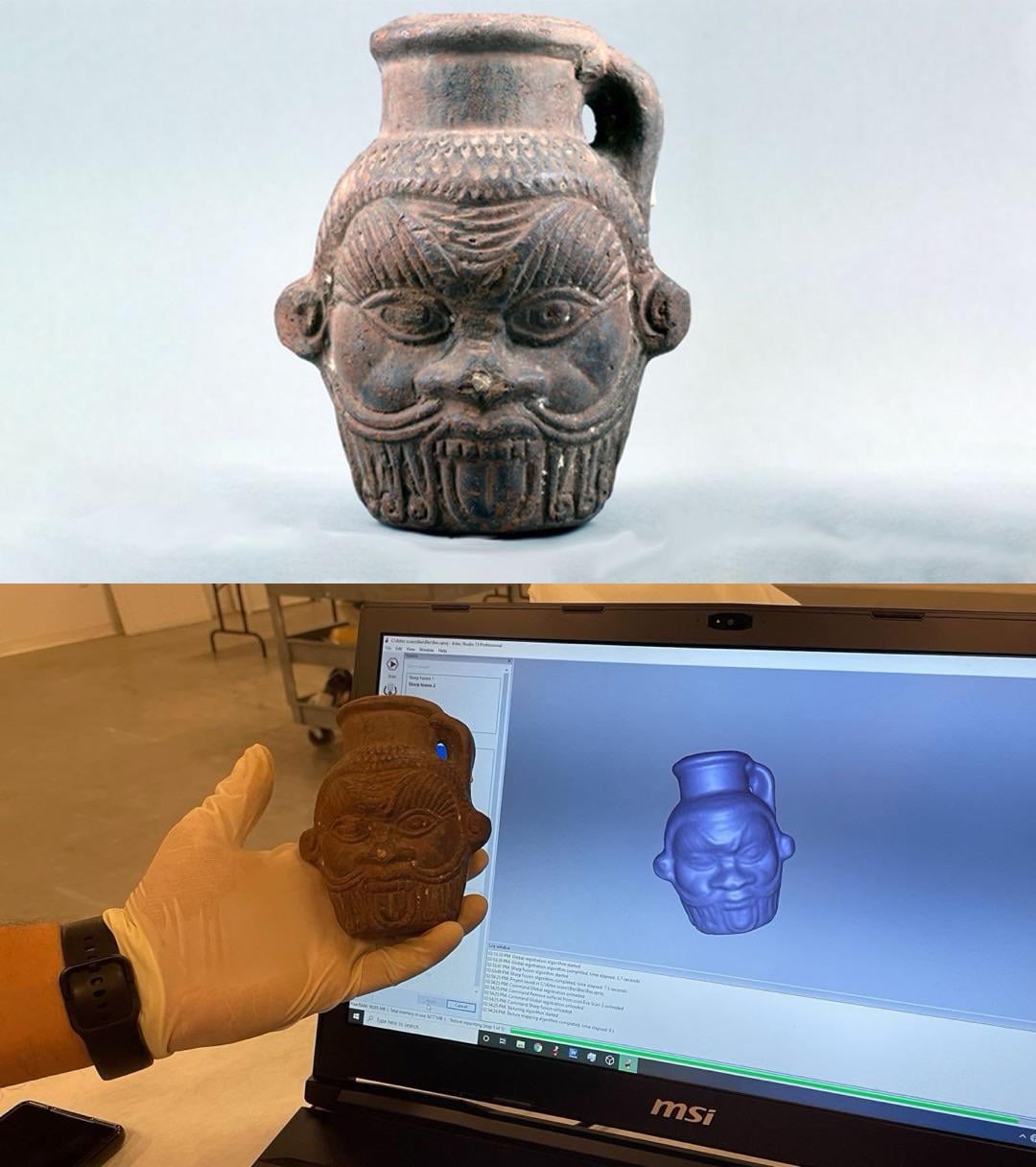
Researchers discovered the residues of psychedelic drugs, bodily fluids and alcohol inside a 2,000-year-old Bes head mug, suggesting that ancient Egyptians imbibed hallucinogenic beverages during rituals [1080×1216]
by Remote_Finish_9429

Researchers discovered the residues of psychedelic drugs, bodily fluids and alcohol inside a 2,000-year-old Bes head mug, suggesting that ancient Egyptians imbibed hallucinogenic beverages during rituals [1080×1216]
by Remote_Finish_9429
2 Comments
Analysis detected four substance categories: an alcoholic base, flavoring agents, human bodily fluids, and medicinal and psychotropic ingredients.
The detection of fermentation yeasts suggests that the concoction had a base of beer or wine, which was enhanced with flavors from honey and possibly royal jelly, sesame seeds, pine nuts, licorice and grapes. Ancient Egyptians commonly used grapes to make beverages resemble blood, according to the study.
The bodily fluids were possibly a mix of blood, breast milk and mucus, which may have been vaginal, nasal or saliva, researchers said, and they believe these were added deliberately based on their concentrations. Among the plants included were Egyptian blue water lily and Syrian rue, which contain hallucinogenic, medicinal, intoxicating and sedative properties that can alter perception and enhance visionary experiences. Also present were species of the Cleome plant, known to induce labor, or at high doses, abortion.
Egyptologists believe that people visited the so-called Bes Chambers at Saqqara when they wished to confirm a successful pregnancy because pregnancies in the ancient world were fraught with dangers. So, this combination of ingredients may have been used in a dream-vision inducing magic ritual within the context of this dangerous period of childbirth. [Source](https://amp.cnn.com/cnn/2024/11/26/science/egyptian-bes-mug-hallucinogens)
Just insane that all those ingredients are detectable after 2,000 years