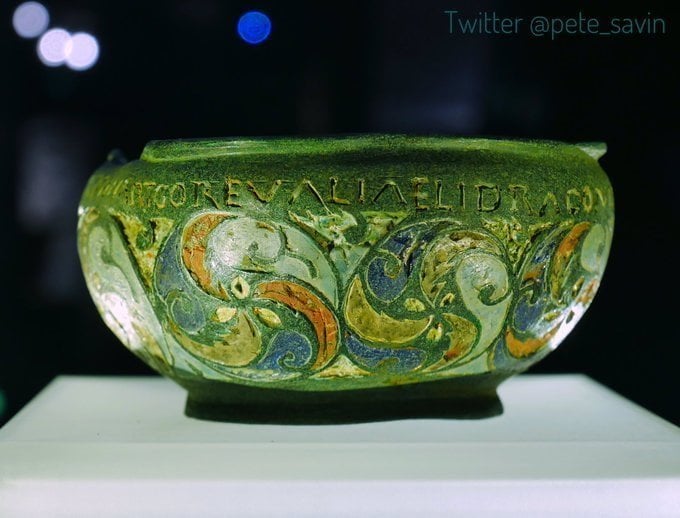
A decorated Roman vessel that was discovered in 2003 in the village of Ilam (central England). The object is dated to the 2nd century CE and it’s made of bronze. [680×518]
by imperiumromanum_edu

A decorated Roman vessel that was discovered in 2003 in the village of Ilam (central England). The object is dated to the 2nd century CE and it’s made of bronze. [680×518]
by imperiumromanum_edu
1 Comment
**This type of dish was referred to as trulla . It originally had a handle and was a small pot for cooking food or water. Interestingly, the vessel has inscriptions that were first engraved and then filled with enamel.**
**The inscriptions mention successive Roman forts constituting Hadrian’s wall: MAIS, COGGABATA, VXELODVNVM, CAMMOGLANNA. We can also read RIGORE VALI AELI DRACONIS, which according to researchers refers to the soldier’s name – DRACO, and VALI AELI is another name for Hadrian’s wall – “Elius wall” (from the family name of Hadrian).**