
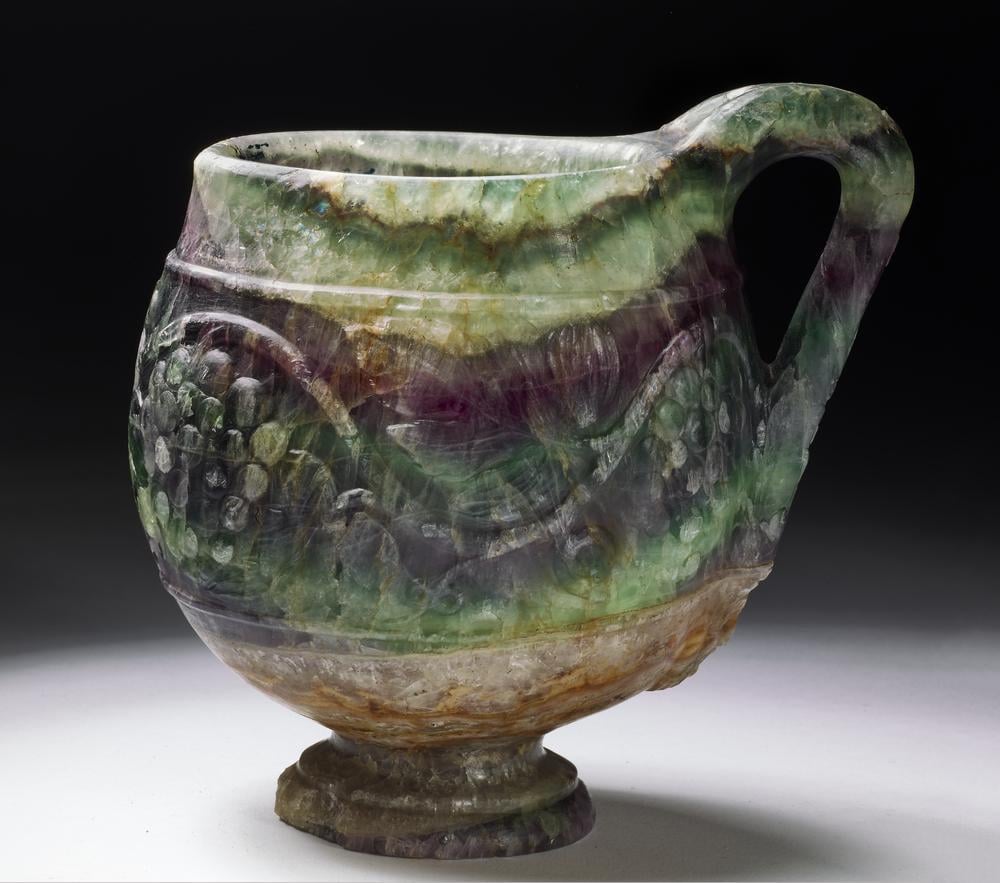
Fluorite “Barber Cup” discovered during World War I by an Austro-Croatian officer who excavated a Roman tomb near the current Turkish–Syrian border. The Barber Cup has a low-relief design of a vine and grapes, and may have been intended as a trulla, or dipper. 50-100 AD, British Museum [1679×2048]
by Remote_Finish_9429
1 Comment
Fluorite was extracted in the region of present-day Iran. It is extremely fragile and the pieces are rarely large enough to be make it into a goblet. Wealthy Romans were fond of these expensive objects. In a goblet like this, the wine had a particular taste because the fragile fluorite was clogged with hot resin, perhaps myrrh, to prevent shattering. It gave the wine a smell and a taste reminiscent of resin.