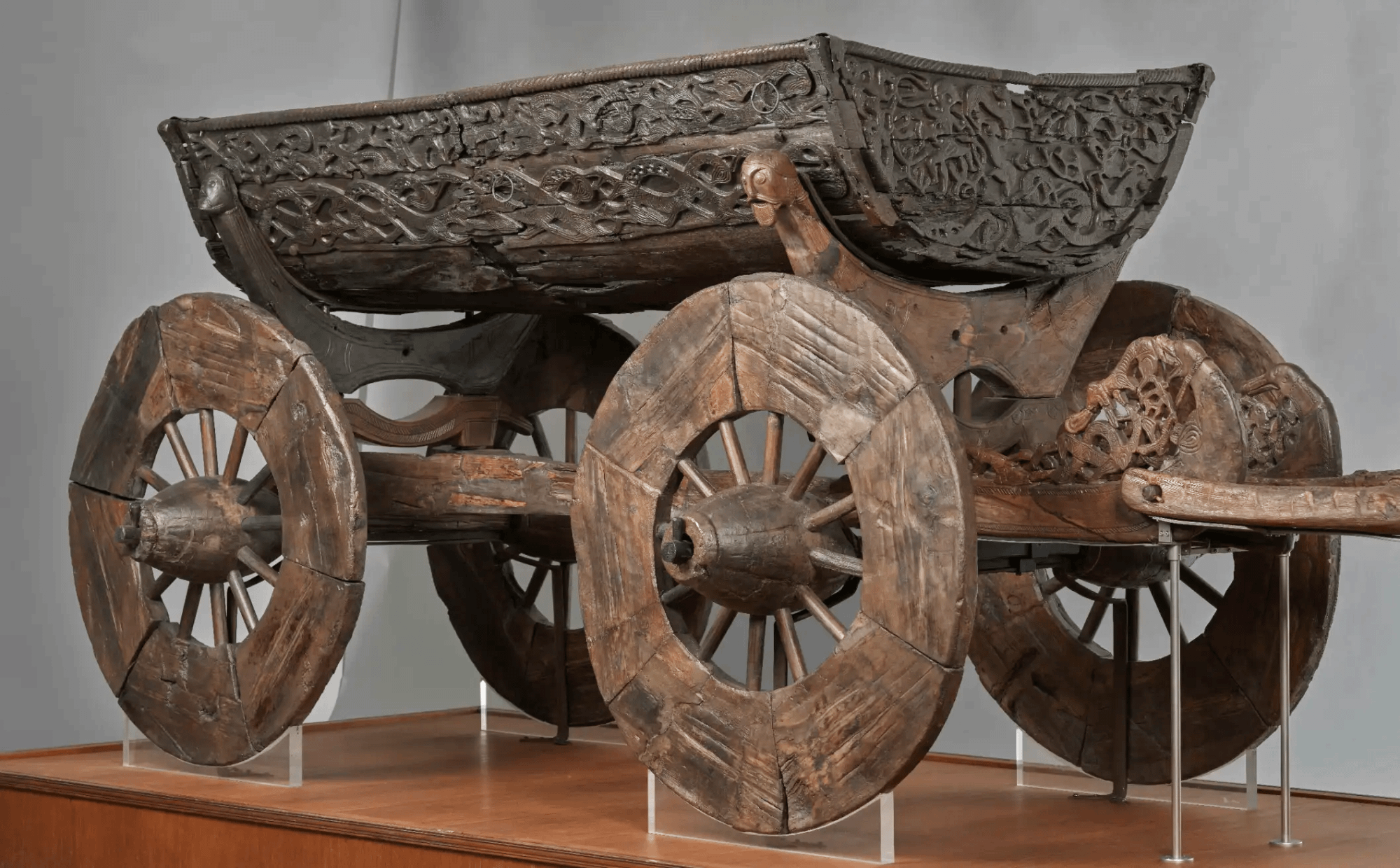
The Oseberg Wagon, found in a Viking Age grave mound in Norway. It is in pristine condition, with richly detailed carvings still visible. Early 9th century. [2000×1240]
by KidCharlemagneII

The Oseberg Wagon, found in a Viking Age grave mound in Norway. It is in pristine condition, with richly detailed carvings still visible. Early 9th century. [2000×1240]
by KidCharlemagneII
2 Comments
**Some additional information:**
The Oseberg Wagon is one of many treasures found in the Oseberg mound, a prestigious grave from around 830 AD that contained an entire viking longship, several sleds, furniture, and jewelry. The wagon measures approximately 2×1 meters and is made of beech, oak and ash. Nearly every surface is carved with patterns and figures.
It is unclear if the wagon was functional or ceremonial. Ancient and medieval texts suggest the Germanic pagans used processional wagons to carry wooden idols of their gods; if so, this may be such a wagon. Many have tried to interpret the carvings. There are several cats, which may be connected to the cats that pull Freya’s wagon in Norse mythology. There also a number of serpents, warriors, horsemen, and horned figures.
This made me think about “reinventing the wheel”.