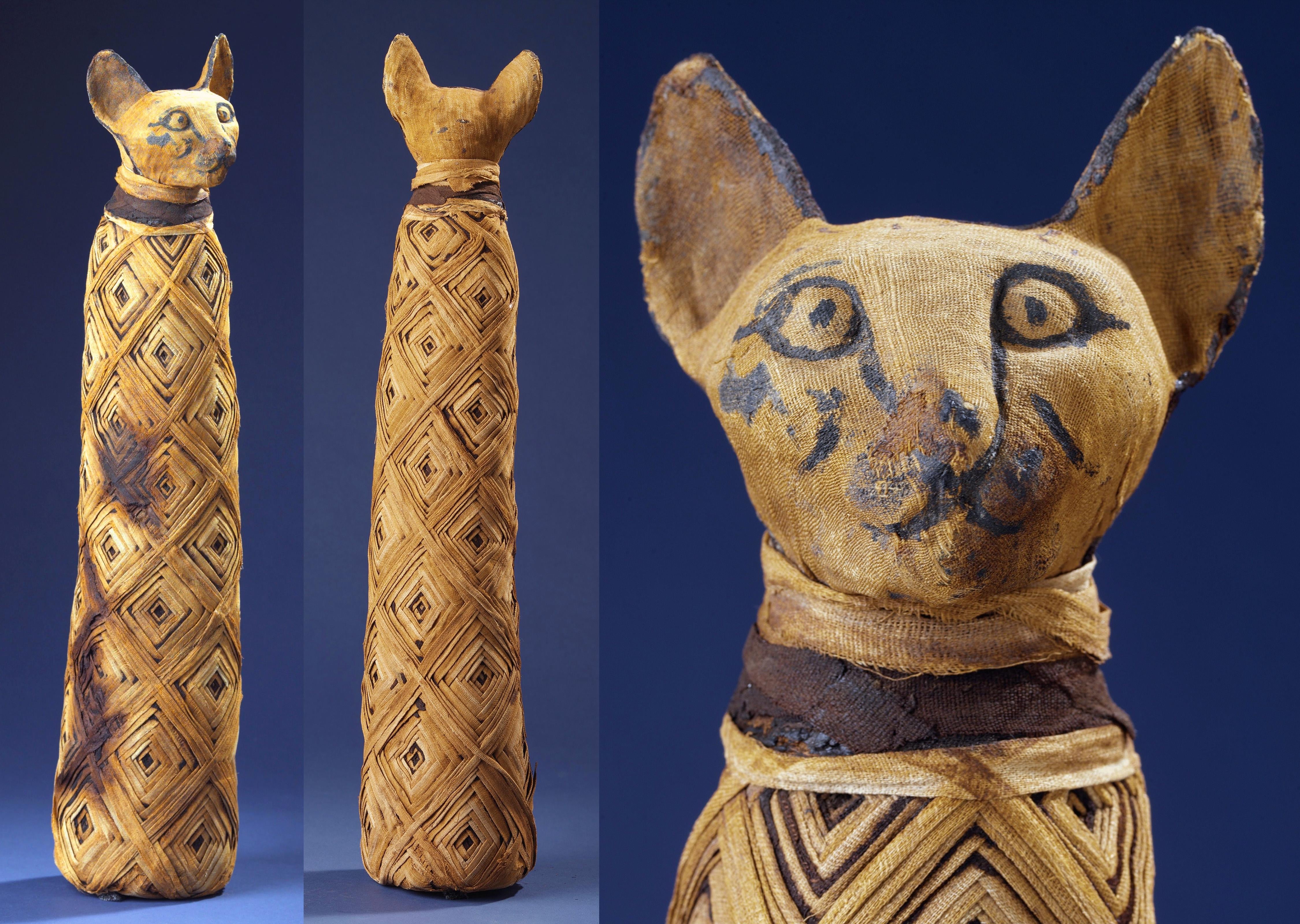
[Museum](https://collections.rom.on.ca/objects/179963/mummified-cat). The intricate wrappings and painted detail on the face of this mummified cat are typical of the Roman period, a time when animal cemeteries of all types abounded. This is a particularly good example, complete and virtually undamaged.
Evidence suggests that cats were already being mummified around 1350 BC, simply as beloved pets. In later times, vast numbers of cats were mummified as manifestations of the goddess Bastet, and offered as votives in temples. Thousands of cats have been unearthed in several cemeteries, the majority dating from the Ptolemaic period (332-30 BC). The animals were kept in temple precincts and mummified at death for pilgrims to present as votive offerings in the temples. The cat cemeteries near the temple of Bastet date from around 900 BC and may represent the earliest large animal cemeteries. Other animal mummies include cattle, lions, crocodiles, rams, dogs, baboons, ichneumons (Egyptian mongooses), ibises, falcons, shrewmice, snakes and fish.
Modern x-rays of cat mummies reveal a less than perfect situation for these temple cats – many show a broken neck as the cause of death at a very young age. Presumably, a large influx of pilgrims for a religious holiday would demand a large number of mummified cats for votive offerings. The selling of these would help with the temple economy.

1 Comment
[Museum](https://collections.rom.on.ca/objects/179963/mummified-cat). The intricate wrappings and painted detail on the face of this mummified cat are typical of the Roman period, a time when animal cemeteries of all types abounded. This is a particularly good example, complete and virtually undamaged.
Evidence suggests that cats were already being mummified around 1350 BC, simply as beloved pets. In later times, vast numbers of cats were mummified as manifestations of the goddess Bastet, and offered as votives in temples. Thousands of cats have been unearthed in several cemeteries, the majority dating from the Ptolemaic period (332-30 BC). The animals were kept in temple precincts and mummified at death for pilgrims to present as votive offerings in the temples. The cat cemeteries near the temple of Bastet date from around 900 BC and may represent the earliest large animal cemeteries. Other animal mummies include cattle, lions, crocodiles, rams, dogs, baboons, ichneumons (Egyptian mongooses), ibises, falcons, shrewmice, snakes and fish.
Modern x-rays of cat mummies reveal a less than perfect situation for these temple cats – many show a broken neck as the cause of death at a very young age. Presumably, a large influx of pilgrims for a religious holiday would demand a large number of mummified cats for votive offerings. The selling of these would help with the temple economy.