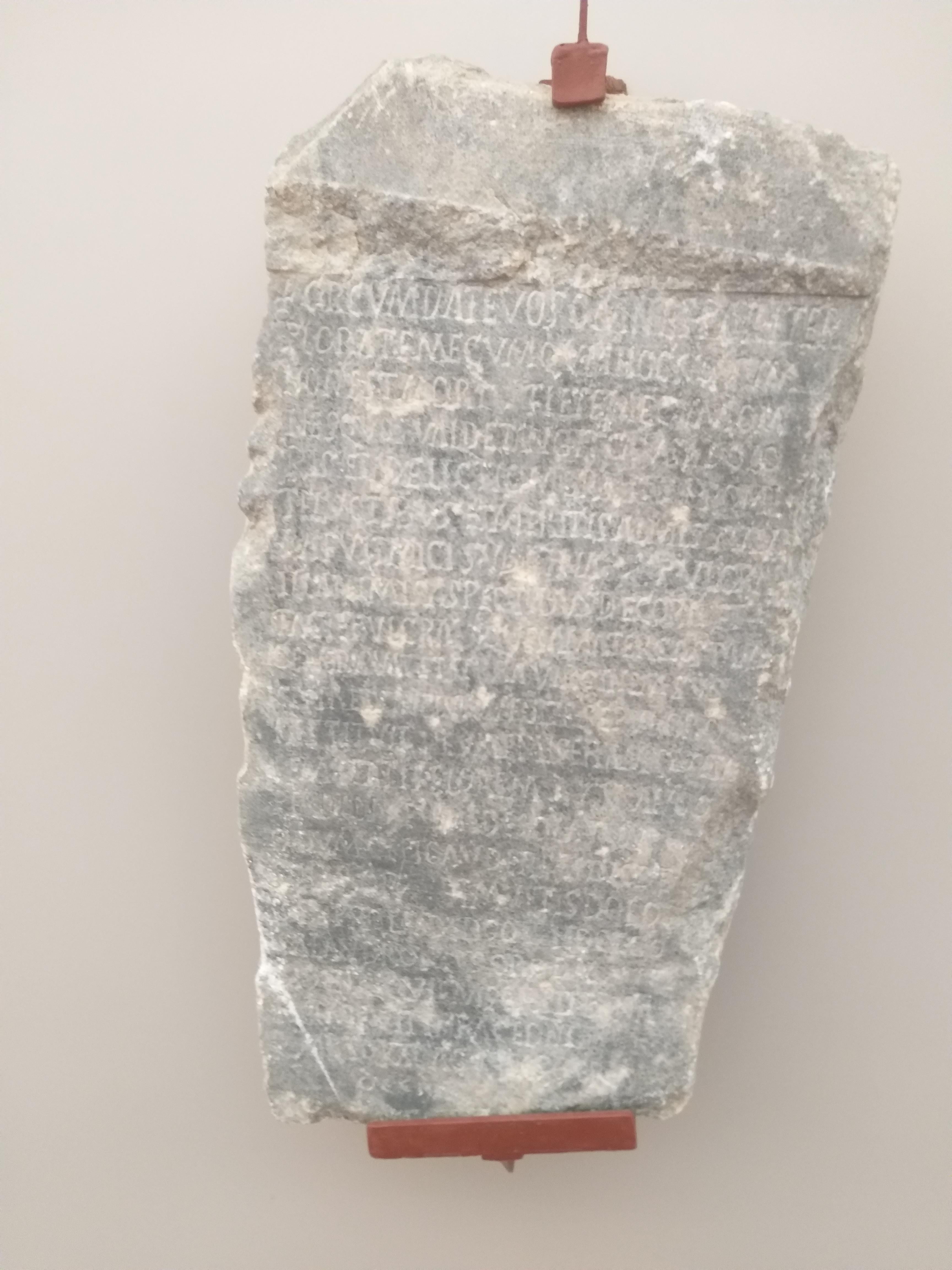
Visigoth-era funerary inscription, 665 C.E., outskirts of Beja (Pax Julia), Portugal. See comment translation [3456×4608] [OC]
by 69PepperoniPickles69

Visigoth-era funerary inscription, 665 C.E., outskirts of Beja (Pax Julia), Portugal. See comment translation [3456×4608] [OC]
by 69PepperoniPickles69
1 Comment
**other sources say 703 C.E.**
Found on the southern outskirts of modern-day Beja, apparently in 1958. (Modern city center coordinates 38.01729351839411ºN, 7.865433753856979ºW)
**Text** :
CIRCVMDATE VOS OMNES PARITER
PLORATE MECUM QUIA HOC NUVVM
NON EST MORI. FLET MECUM OM/NES
QVOS VALDE TANGIT CAVSA DOLO/RIS
ET ADFLICITO MORTIOS. PROMI/TE
LVCTIBVS ET MERITIS ALMIS MAV/RA FVIT
MICI SVBRINA. PVLCRA/ILLA NIMIS
ASPECTIBVS DECORE ET FACIE PVLCRA
QVEM [SIC] MATER CASTAM/ GENERAVIT
ET TERRA VIRGINEM SUS / CEPIT ET SINE
INIQVITATE SEPVLCRO / RESTITVIT. EV ME
MISERAMQVI TA/ LEM ETATIS FLOREM A
XV ANNO / PERDIDI. EV ME DESOLATVM
/ QUI DVM CEPI GAVDERE TVNC DE /
SOLABOR ET MVLTIS DOLO / RIB(U)S PRO
TE ADFLIGO MOCEGO [Also perhaps “Hoc ego”?] / CALANDRONIVS
ORDO D(OMINU)M VT TI / BI DET REQVIEM
D(OMI)NI / QVARTO KAL(ENDAS) AGVSTAS
ERA / D CC III
**My translation from musem translation to Portuguese**:
Come ye all close, and with me lament
for dying is not a new thing. Cry with me all
those with whose pain and affliction of [this?] death
are deeply affected. Remember with lamentations and holy
acts Maura, who was my niece. Of beautiful eyes and
countenance, her mother in chastity raised her. The
earth received her virgin, and without stain was laid
in the grave.
Woe to me, disgraced, who has lost such a rare flower
who was barely fifteen years old. Woe to me, disgraced,
which until joy I recover, will live in desolation
wounded because of you. Mocego [or: Therefore, I] Calandronius [name of uncle?]
I beseech the Lord to conceed you eternal rest.
She rested in the peace of the Lord the 29 of July 665.