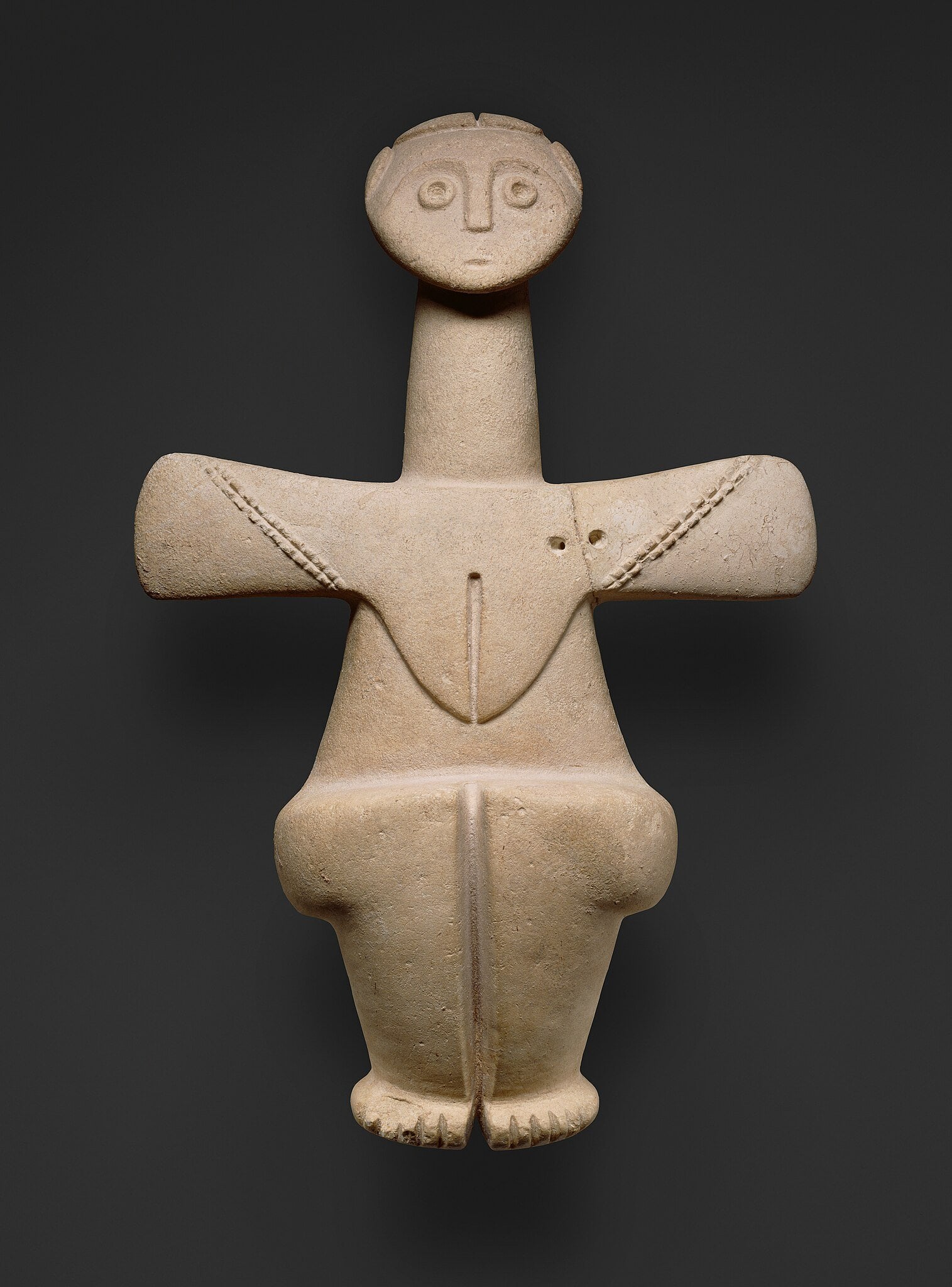
This limestone female figure is one of the largest examples of cruciform statues from the Chalcolithic period. Her flattened thighs appear to be squatting in a birthing position. Cyprus, 3000-2500BC, Getty Museum [1515×2048]
by Remote_Finish_9429

This limestone female figure is one of the largest examples of cruciform statues from the Chalcolithic period. Her flattened thighs appear to be squatting in a birthing position. Cyprus, 3000-2500BC, Getty Museum [1515×2048]
by Remote_Finish_9429
3 Comments
Dimensions: 39.1 × 26 × 42.1 cm (15 3/8 × 10 1/4 × 16 9/16 in.) The double-roped bands on the arms may represent some form of jewelry, perhaps bracelets. Ancient attachment holes for repairing the figure’s left arm are clearly visible. Over one hundred cruciform figures made in southwestern Cyprus in the period 3000-2500 B.C. are known. Found primarily in burials, almost all are considerably smaller in scale than this example. The size of this statue suggests that it was made as a cult image representing a fertility or mother goddess. The ancient repairs made to the figure’s left arm further attest to the importance of the object in antiquity.
His posture resembles a Cycladic idol
This is the ideal female form