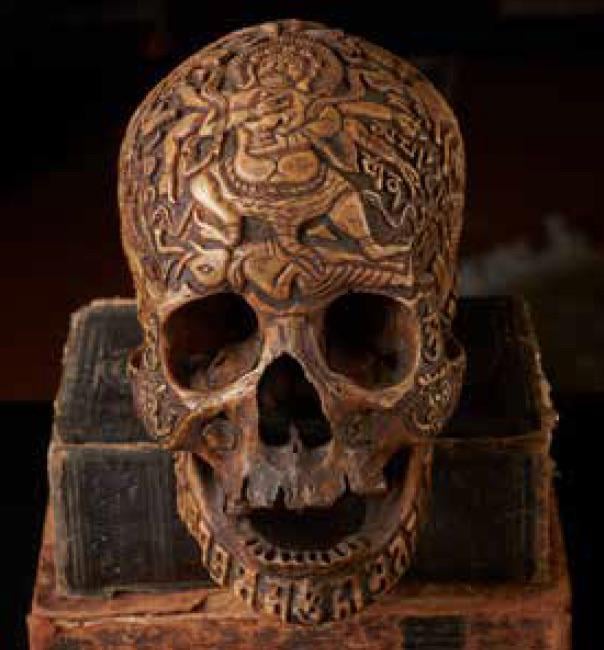
Carved Tibetan Yama Skull featured in the book “Skulls Portraits of the Dead.” [604 x 650]
by bozofire123

Carved Tibetan Yama Skull featured in the book “Skulls Portraits of the Dead.” [604 x 650]
by bozofire123
1 Comment
In Tibetan Buddhism, Yama, known as the Lord of Death, is a dharmapala or protector of the Dharma. Depictions of Yama often include intricate carvings and symbolic elements that convey profound spiritual meanings.  
Skulls hold a prominent place in Tibetan Buddhist iconography, symbolizing the impermanence of life and the cycle of death and rebirth. They are commonly incorporated into ritual objects and deity representations. For instance, wrathful deities like Yama are frequently depicted wearing crowns adorned with skulls. These crowns typically feature five skulls, representing the conquest over the five negative afflictions: anger, greed, pride, ignorance, and envy. This imagery signifies the transformation of these negative qualities into wisdom.   
Additionally, Yama is often portrayed with other symbolic attributes, such as a garland of severed heads and a third eye, emphasizing his role in confronting and transcending death. These elements are designed not to evoke fear but to serve as reminders of the transient nature of existence and the importance of spiritual practice in overcoming the cycle of samsara.
Source: “Skulls: Portraits of the Dead” by Paul Gambino & https://www.researchgate.net/publication/366445773_Lord_of_Death_Yogin_Demon_Tracing_the_Iconographic_Symbolism_of_Yama_from_the_Rig_Veda_into_Tibetan_Buddhism