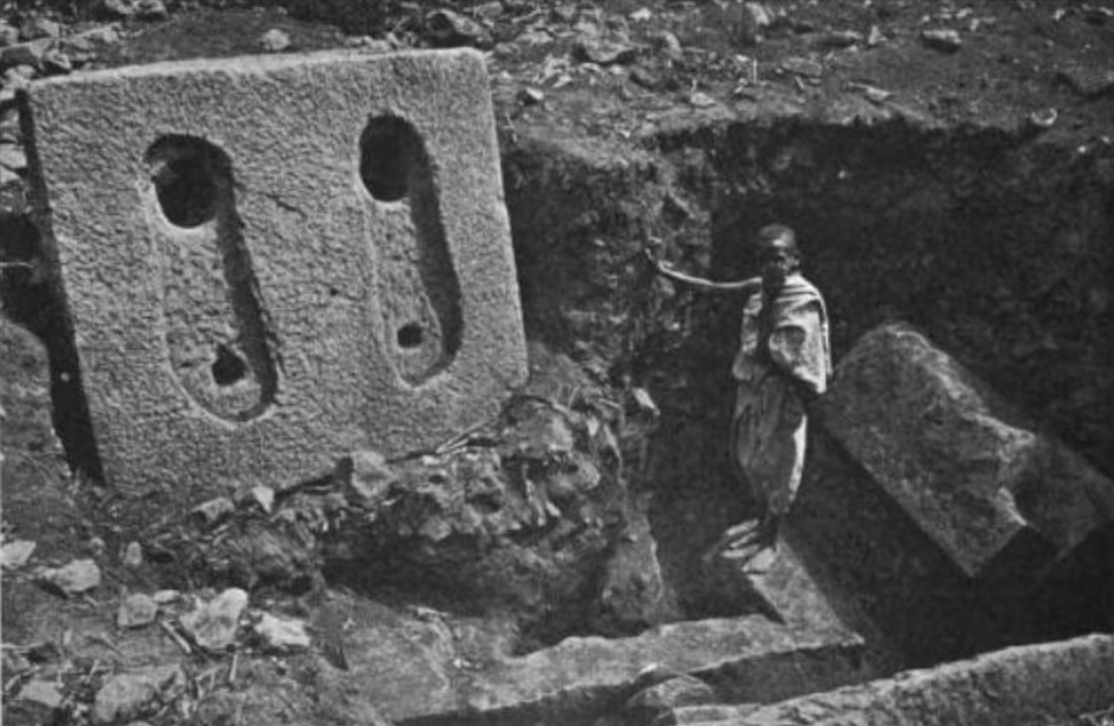
Base slab for a gigantic statue, discovered at Aksum, Ethiopia by a German Expedition in 1906. It bore two depressions, 5 cm deep and 92 cm long in the shape of human feet. It is estimated it was about 5.5-6 meters tall. [1114×726]
by distrait1

Base slab for a gigantic statue, discovered at Aksum, Ethiopia by a German Expedition in 1906. It bore two depressions, 5 cm deep and 92 cm long in the shape of human feet. It is estimated it was about 5.5-6 meters tall. [1114×726]
by distrait1
1 Comment
A dressed stone slab discovered by the DAE (Deutsche Aksum-Expedition) in 1906 near a palace complex in Aksum bore two massive foot-shaped depressions, likely for anchoring a metal statue. The feet were three-and-a-half times normal size, suggesting the statue if it was a full upright figure—stood between 5.5 and 6m tall. Making it one of the biggest metal statues of this age in the world. Despite multiple attempts to relocate the slab, it hasn’t been seen since 1906 after its discovery by the German Expedition, leaving behind one of the more mysteries of Aksumite architecture
[https://www.google.com/books/edition/Foundations_of_an_African_Civilisation/Q8_CAwAAQBAJ?hl=en&gbpv=1&dq=base+slab+for+a+gigantic+statue+discovered+at+aksum&pg=PA136&printsec=frontcover](https://www.google.com/books/edition/Foundations_of_an_African_Civilisation/Q8_CAwAAQBAJ?hl=en&gbpv=1&dq=base+slab+for+a+gigantic+statue+discovered+at+aksum&pg=PA136&printsec=frontcover)