
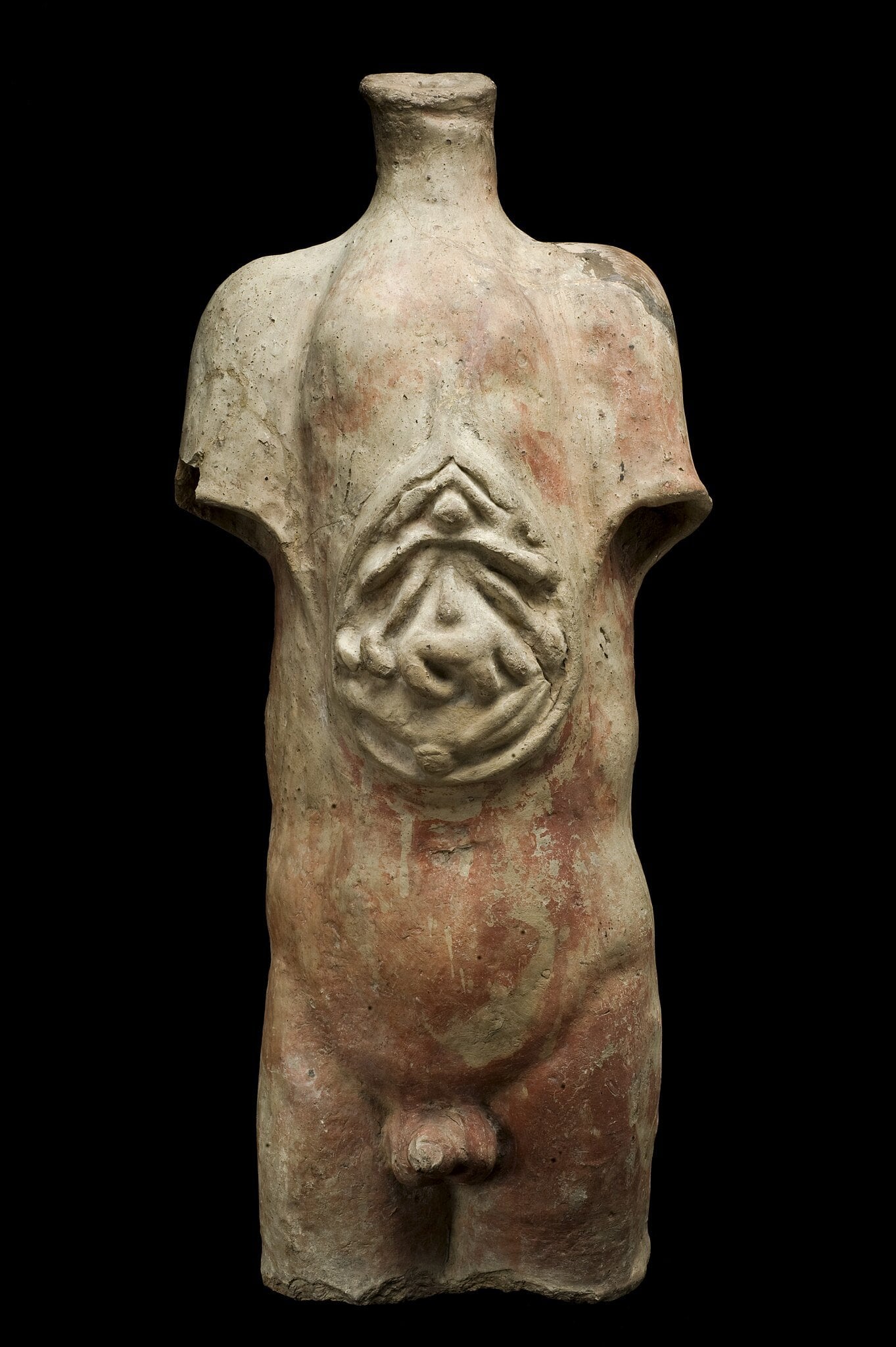
Terracotta torso showing the internal organs of the abdomen, intended either to indicate the part of the body that needed help or as thanks for a cure. Objects like this were left at healing sanctuaries and religious sites as offerings to gods such as Asklepios. 200BCE-200CE. Wellcome [1363×2048]
by Remote_Finish_9429
1 Comment
This votive was reputedly excavated from Isola Farnese, near Rome, Italy, sometime during 1871-1900. Made from bronze or terracotta, as in this case, a large range of different votive body parts were made and offered up in their thousands. Although it originated in earlier cultures, this practice became very popular in Roman Italy particularly between the 400s and 100s BCE.