
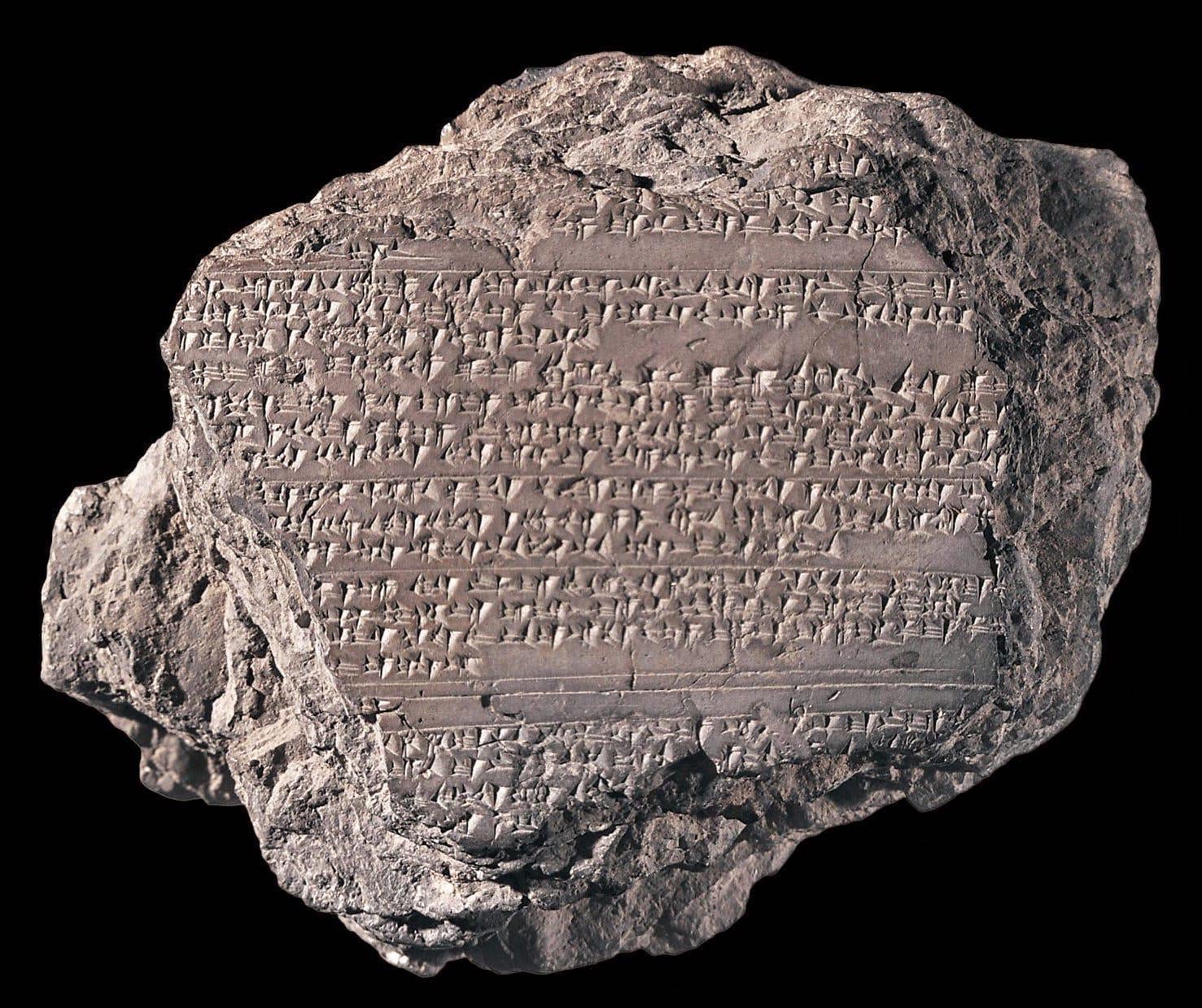
Hittite-language proclamation of King Anitta (r. c. 1740–25 BCE) of lost city Kuššara: Oldest known writing in any Indo-European language, Hittite belonging to the Anatolian branch thought to have split before the consequential Yamnaya culture spread late Proto-Indo-European far and wide [1477×1239]
by JaneOfKish
3 Comments
To add to the title, the proclamation of Anitta is attested on several tablets copied at different times.
This particular tablet contains not only the proclamation of Anitta but also (on the other side) a couple other historical texts from the Old Kingdom, most notably annals attributed to the Hittite king Ammuna. The tablet uses the New Hittite style of cuneiform and thus dates to ca. 1350-1200 BCE.
It turned out that Hittite has no connection with the Indo-European language.
I found the Translation of the text:
Anitta, Son of Pithana, King of Kussara, speak! He was dear to the Stormgod of Heaven, and when he was dear to the Stormgod of Heaven, the king of Nesa [verb broken off] to the king of Kussara. The king of Kussara, Pithana, came down out of the city in force, and he took the city of Nesa in the night by force. He took the King of Nesa captive, but he did not do any evil to the inhabitants of Nesa; instead, he made them mothers and fathers. After my father, Pithana, I suppresed a revolt in the same year. Whatever lands rose up in the direction of the sunrise, I defeated each of the aforementioned.
Previously, Uhna, the king of Zalpuwas, had removed our Sius from the city of Nesa to the city of Zalpuwas. But subsequently, I, Anittas, the Great King, brought our Sius back from Zalpuwas to Nesa. But Huzziyas, the king of Zalpuwas, I brought back alive to Nesa. The city of Hattusas [tablet broken] contrived. And I abandoned it. But afterwards, when it suffered famine, my goddess, Halmasuwiz, handed it over to me. And in the night I took it by force; and in its place, I sowed weeds. Whoever becomes king after me and settles Hattusas again, may the Stormgod of Heaven smite him!