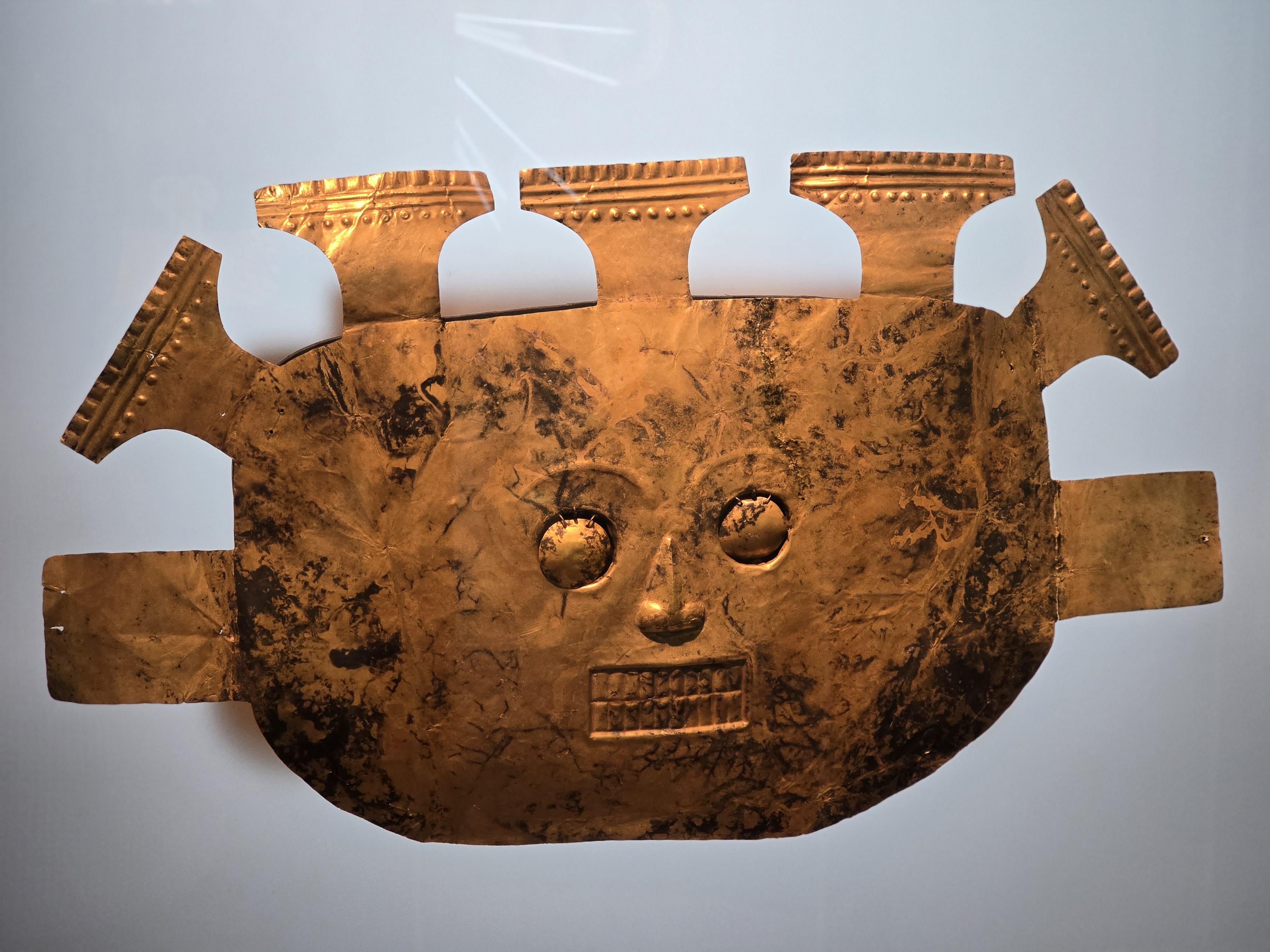
Mask. Malagana culture, Calima valley, Colombia, ca. 200 BC – 300 AD. Gold-copper alloy (tumbaga). Museum of Fine Arts, Houston collection [4000×3000] [OC]
by oldspice75

Mask. Malagana culture, Calima valley, Colombia, ca. 200 BC – 300 AD. Gold-copper alloy (tumbaga). Museum of Fine Arts, Houston collection [4000×3000] [OC]
by oldspice75
1 Comment
https://emuseum.mfah.org/objects/53831/funerary-mask
[display description](https://i.ibb.co/C55Y1C3c/20250117-175602.jpg)
[Mask
Calima, Malagana style, Calima Valley, Colombia, C. 200 BC-AD 300
Gold-copper alloy (tumbaga)
Gift of Alfred C. Glassell, Jr.,
2001.975
This burial mask resembles those discovered in tombs on the Hacienda Malagana in 1992, now at the Museo del Oro in Bogotá. Despite extensive looting of the Malagana site, which destroyed the cultural context, Colombian archaeolo- gists and the Museo del Oro have been able to determine that the deceased were buried with as many as three large sheet gold masks covering the face. Other esteemed items were found on and around the skeletons. Such regalia demonstrated an individual’s spiritual and social authority.
It is not clear whether the gold masks were used in life or made only as grave goods.]