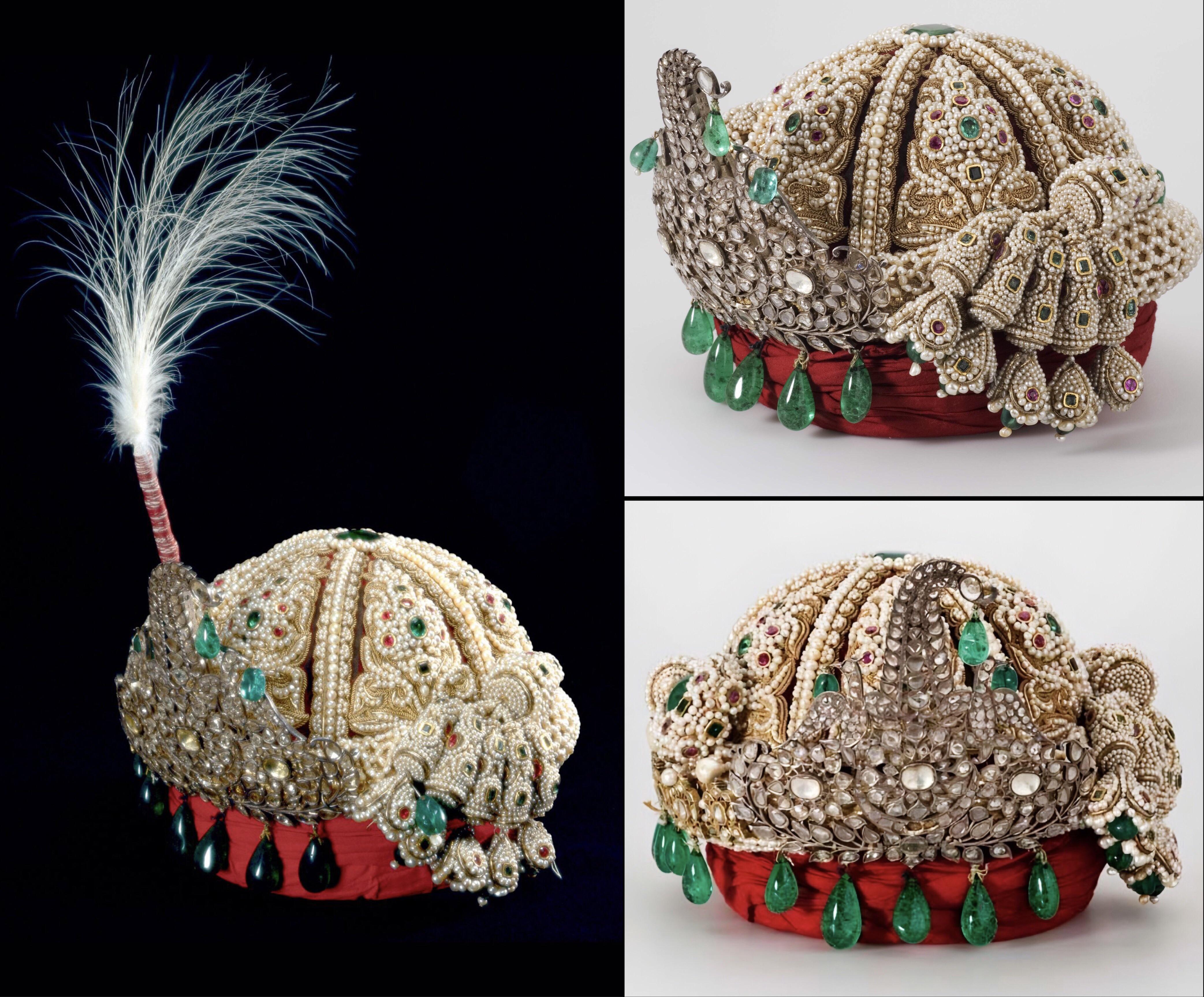
“Materials: diamonds, natural pearls, foiled rubies (genuine and synthetic) and emeralds, green glass; gold, enameled gold and silver mounts, gold thread and silver strips; core of wood or papier-mâché covered with maroon velvet; interior lined with linen, re-covered more recently with quilted cotton.
The combination of turban and crown symbolized the bond between religious and secular leadership in the Muslim world, especially on the Indian sub-continent, where the Mughal emperors and their princely vassals boasted of a long tradition of jewelled turbans. The present crown is similar to that worn by Sir Jang Bahadur, prime minister and commander-in-chief of Nepal from 1856 to 1877, and to others subsequently worn by the ruling family of the kingdom.” From [The Khalili Collections](https://www.khalilicollections.org/collections/islamic-art/khalili-collection-islamic-art-turban-crown-jly1071/)

1 Comment
“Materials: diamonds, natural pearls, foiled rubies (genuine and synthetic) and emeralds, green glass; gold, enameled gold and silver mounts, gold thread and silver strips; core of wood or papier-mâché covered with maroon velvet; interior lined with linen, re-covered more recently with quilted cotton.
The combination of turban and crown symbolized the bond between religious and secular leadership in the Muslim world, especially on the Indian sub-continent, where the Mughal emperors and their princely vassals boasted of a long tradition of jewelled turbans. The present crown is similar to that worn by Sir Jang Bahadur, prime minister and commander-in-chief of Nepal from 1856 to 1877, and to others subsequently worn by the ruling family of the kingdom.” From [The Khalili Collections](https://www.khalilicollections.org/collections/islamic-art/khalili-collection-islamic-art-turban-crown-jly1071/)