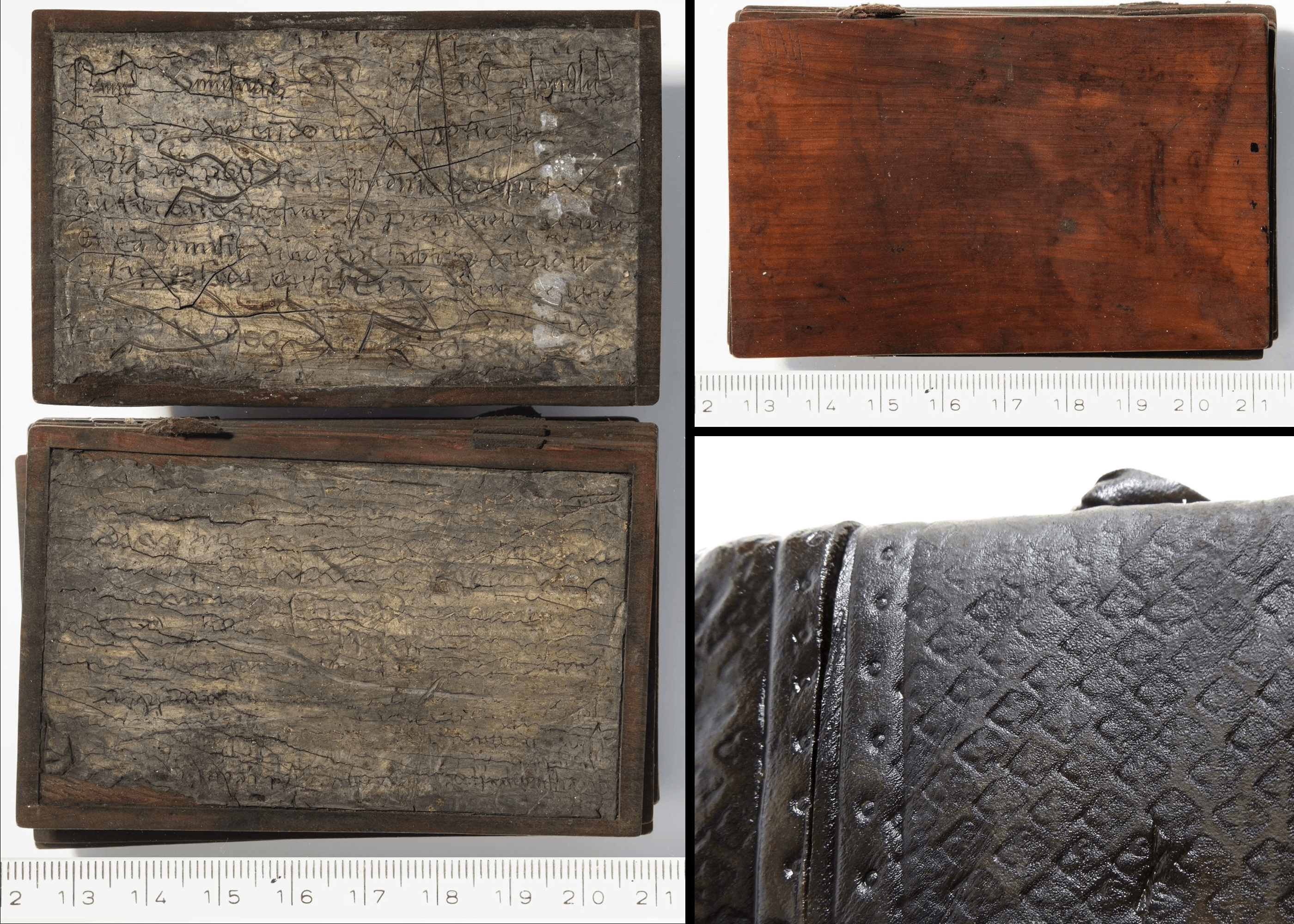
Found in excavated medieval latrine; leather case, wood cover and 10 pages coated with wax.
by SashSegal

Found in excavated medieval latrine; leather case, wood cover and 10 pages coated with wax.
by SashSegal
1 Comment
**Excavations in Paderborn, Germany, have uncovered a rare medieval notebook preserved for centuries inside a latrine.**
The discovery was made during construction work in the city centre, where archaeologists investigating buried remains found the small book among waste deposits dating to the 13th or 14th century.
According to the Regional Association of Westphalia-Lippe (LWL), the notebook survived in unusually good condition because of the damp environment inside the latrine. The object is made from leather, wood and wax and is now undergoing conservation work at the LWL laboratories in Münster.
Experts say finds of this type are extremely uncommon. Barbara Rüschoff-Parzinger, head of cultural affairs at the LWL, said no comparable discovery has been made elsewhere in North Rhine-Westphalia. “In no other case has an entire book survived in this way,” Rüschoff-Parzinger said.
The text scratched into the wax pages is written in Latin. Specialists hope modern imaging methods will eventually make the writing easier to read once conservation work is completed.
Archaeologists believe the notebook may have belonged to a merchant living in medieval Paderborn. Early interpretations suggest it may contain notes linked to trade or personal records.
Sveva Gai, city archaeologist for the LWL in Paderborn, said merchants at the time were among the few members of society able to read and write.
“The use of Latin also suggests the owner belonged to the upper social classes,” she said.
The notebook was found alongside other medieval objects recovered from the latrine, including wooden barrels, fragments of cloth, pottery vessels, wickerwork remains and a knife. These finds helped archaeologists date the deposit to around 700 to 800 years ago.
Why the notebook ended up at the bottom of the latrine remains unclear.
“It may simply have fallen in by accident,” Gai said.
[https://www.heritagedaily.com/2026/05/medieval-notebook-found-preserved-in-latrine/158064](https://www.heritagedaily.com/2026/05/medieval-notebook-found-preserved-in-latrine/158064)