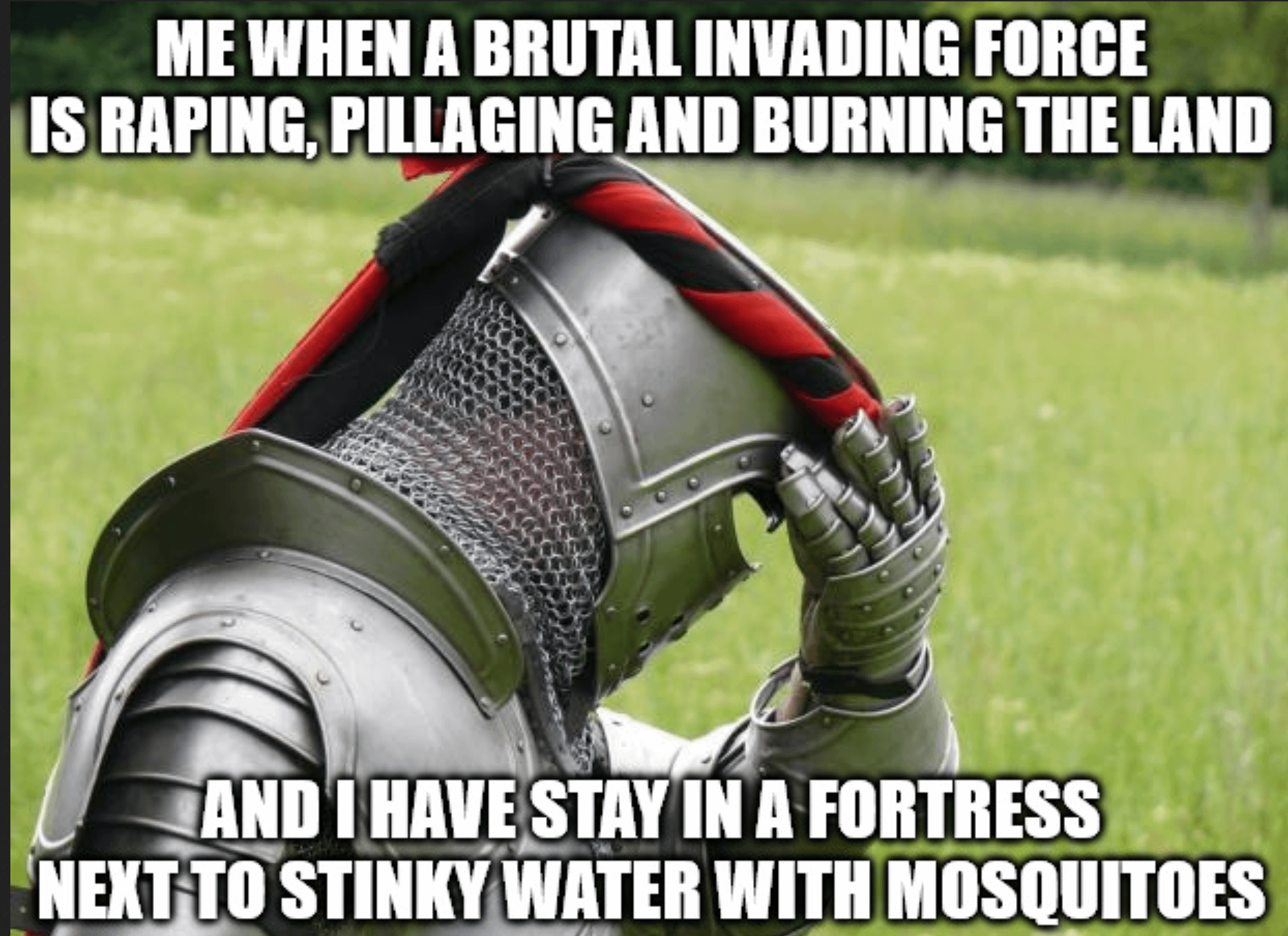
According to Redditors dying is preferable to stinky water and mosquitoes (medieval people did not know germ theory)
by TameTheAuroch

According to Redditors dying is preferable to stinky water and mosquitoes (medieval people did not know germ theory)
by TameTheAuroch
13 Comments
People in medieval times would often use a medical treatment where they would use leeches to suck out the “bad blood,” which obviously didn’t go well. So no matter what you do you will suffer badly in medieval times even with treatment available at that time.
Same as people saying “pest or cholera”.
Well, I gladly take vomiting and diarrhoea before certain death, thank you very much!
There’s never been a time people didn’t know there was some connection between stinky water and illness. The aversion itself is biological!
Most moats were dry because fortifications were usually built on elevated ground where filling the defensive trenches with water was simply not feasible. The lack of water is entirely unrelated to them not wanting it; having an elevated vantage point was just preferable to having water-filled trenches. Ideally, a castle would have both:
* No concept of germ theory: During most of human history, people did not understand germ theory, nor did they realize that stagnant water and mosquitoes spread disease.
* Different priorities: They did not give a shit about the minor annoyance of bug bites when defending against an invading army. Siege warfare was incredibly brutal; mosquitoes would have been the least of anyone’s worries. Assuming otherwise is a laughably modern, suburban-comfort take.
* Weaponized pollution: They cared so little about stagnant water, in fact, that they actively polluted their moats with sewage, dead animals, and other refuse to make them even more repulsive for an attacking army to cross (they did the same to dry moats, by the way).
* The physics of crossing: Wading or swimming through water is slower and much more exhausting than climbing through a dry moat. Most people at the time could not swim, and doing so while carrying weapons and equipment was incredibly difficult. While most foot soldiers were obviously not wearing plate armor or chainmail, those who did had zero chance of swimming. Even the rest would have worn rudimentary protective gear, such as boiled leather, which would act like a sponge and greatly hinder them in the water.
Some had fishes to eat the mosquitos
Because the mosquitos will probably kill you quicker than the enemy army will.
If you and your soldiers are in your fortress, no invading force is raping and pillaging. Because pillaging and raping means leaving your main Army and beeing vulnerable to your knights
That was one of the points of a fortress in medievale times. As long as the fortress stands you have to keep all your troops together (meaning no pillaging units, meaning no food) to siege and conquer it. Because of you don’t, the soldiers inside will come Out and destroy your army piece by piece
We underestimate how much medical knowledge civilisations picked up over time.
For example in ancient Greece there was knowledge of applying honey and alcohol to prevent wound infections, of washing and/or heat sterilising medical instruments, and a general understanding that dirty or diseased matter entering the body in any way will cause disease.
They might not understand exactly what the mechanism of action is, but if you have a vague understanding that things that are not clean getting into the body cause disease, you end up doing a lot of things right.
A lot of post-Roman civilisations ended up going backwards in terms of medicine.
This is beside the point but god damn his armor looks atrocious
Me who had already to stand in stinky water with mosquitos:
Erm, no?
This is my favorite trend in the subs right now
Is this an offshoot of the moat wars?
Getting killed sucks, but being besieged for months, or even years, sucks a whole lot too.