
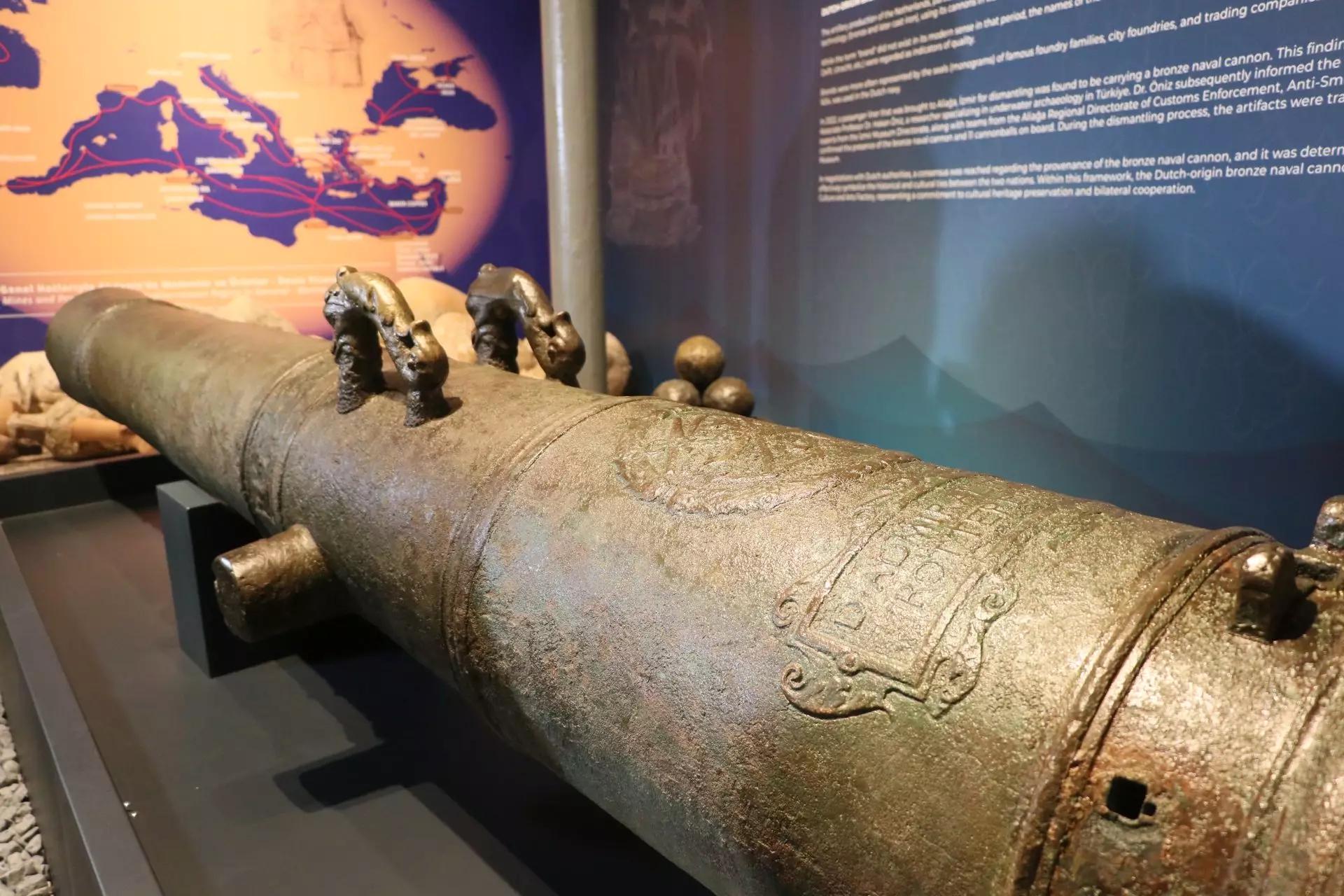
A 17th century bronze cannon made in the Netherlands and 11 cannon balls were discovered in a modern ship that was being dismantled in Izmir, Turkey. The cannon and balls have gone on display at the Izmir Culture and Arts Factory.
by SashSegal
A 17th century bronze cannon made in the Netherlands and 11 cannon balls were discovered in a modern ship that was being dismantled in Izmir, Turkey. The cannon and balls have gone on display at the Izmir Culture and Arts Factory.
by SashSegal
2 Comments
The modern ship had been transported to Izmir to be broken up for scrap. Workers found the cannon in the ship’s restaurant and notified cultural heritage authorities. Archaeologists from the Izmir Museum examined the cannon and determined that it was made in the Netherlands in the 17th century.
At that time, the Netherlands had a sophisticated, powerful navy and was at the forefront of European artillery production in cast bronze and later iron. Foundries in Rotterdam, Amsterdam, The Hague, Delft and Utrecht produced cannon for the Netherlands fleet and for export. The seals of their foundries on the barrel were valued as a mark of quality in their time, and today they identify the producers and year of production. The Izmir cannon bears the mark of the Ouderogge family foundry and dates it to 1634.
Once the origins were determined, Turkey’s cultural heritage ministry contacted their counterparts in the Netherlands to discuss whether the cannon and balls should be repatriated. The Netherlands decided they should remain in Turkey for conservation and exhibition.
[https://www.thehistoryblog.com/page/2](https://www.thehistoryblog.com/page/2)
Crazy how nobody paid enough attention at the cruise liner to notice that being left behind