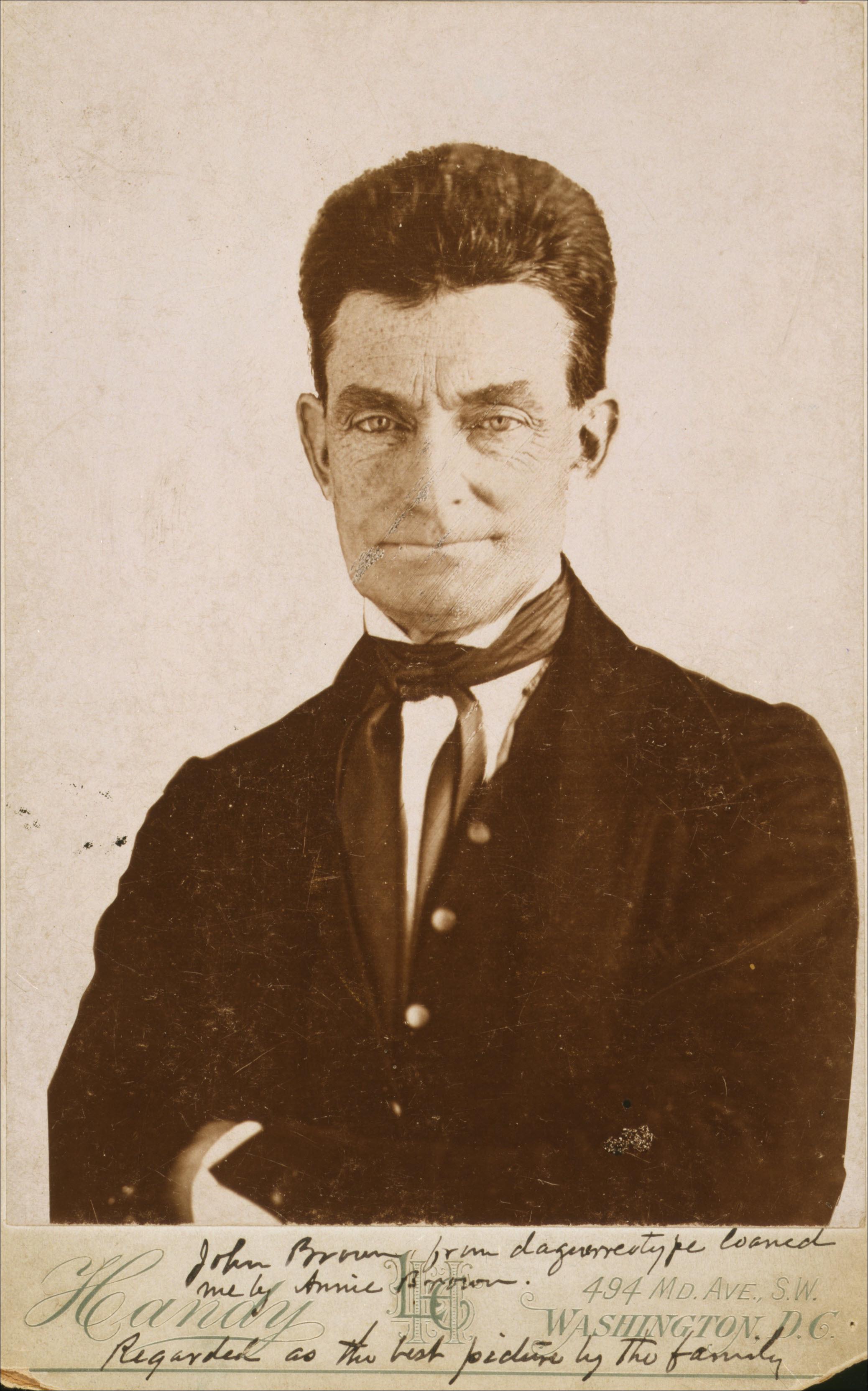
Library of Congress portrait of American abolitionist John Brown, whose religious fight against pro-slavery forces is often cited by historians as a primary catalyst for the American Civil War, 1850
Library of Congress portrait of American abolitionist John Brown, whose religious fight against pro-slavery forces is often cited by historians as a primary catalyst for the American Civil War, 1850
I would argue that southern states wanting to own people and treat them as property instead of people as the primary catalyst.
Betta_Check_Yosef on
John Brown did nothing wrong
TheHon-JudgeHolden on
Lol, he was a rebel to Federal authority, and suffered the same fate as many confederates did.
Good riddance to bad rubbish.
no_crust_buster on
One thing I have learned reading old books and articles from the 1800’s, is that abolitionists had a WIDE perspective towards Blacks as people and slaves. Some genuinely wanted to help them. Many just didn’t want the South to have tax-free labor. Others abolitionist cause slammed to a halt as soon as Northern troops occupied the South during reconstruction, feeling it was wasteful. But many did not want southern Blacks migrating up north. Others hated Black and didn’t see them as humans, but they somehow hated slavery and the South. And others became an abolitionist because it looked good on what we’d call today, a “resume.“
Today’s history portrays them as saints, but far from it. At least for a measure of them.
egoVirus on
One of my heroes. Fuck the confederacy, forever.
n_mcrae_1982 on
Don’t tell the current administration about him. They’ll remove the portrait for being too “woke”.

12 Comments
r/JohnBrownPosting
God Bless John Brown.
I would argue that southern states wanting to own people and treat them as property instead of people as the primary catalyst.
John Brown did nothing wrong
Lol, he was a rebel to Federal authority, and suffered the same fate as many confederates did.
Good riddance to bad rubbish.
One thing I have learned reading old books and articles from the 1800’s, is that abolitionists had a WIDE perspective towards Blacks as people and slaves. Some genuinely wanted to help them. Many just didn’t want the South to have tax-free labor. Others abolitionist cause slammed to a halt as soon as Northern troops occupied the South during reconstruction, feeling it was wasteful. But many did not want southern Blacks migrating up north. Others hated Black and didn’t see them as humans, but they somehow hated slavery and the South. And others became an abolitionist because it looked good on what we’d call today, a “resume.“
Today’s history portrays them as saints, but far from it. At least for a measure of them.
One of my heroes. Fuck the confederacy, forever.
Don’t tell the current administration about him. They’ll remove the portrait for being too “woke”.
Bleeding Kansas enters the chat…
American hero.
To have hair like that at his age man
