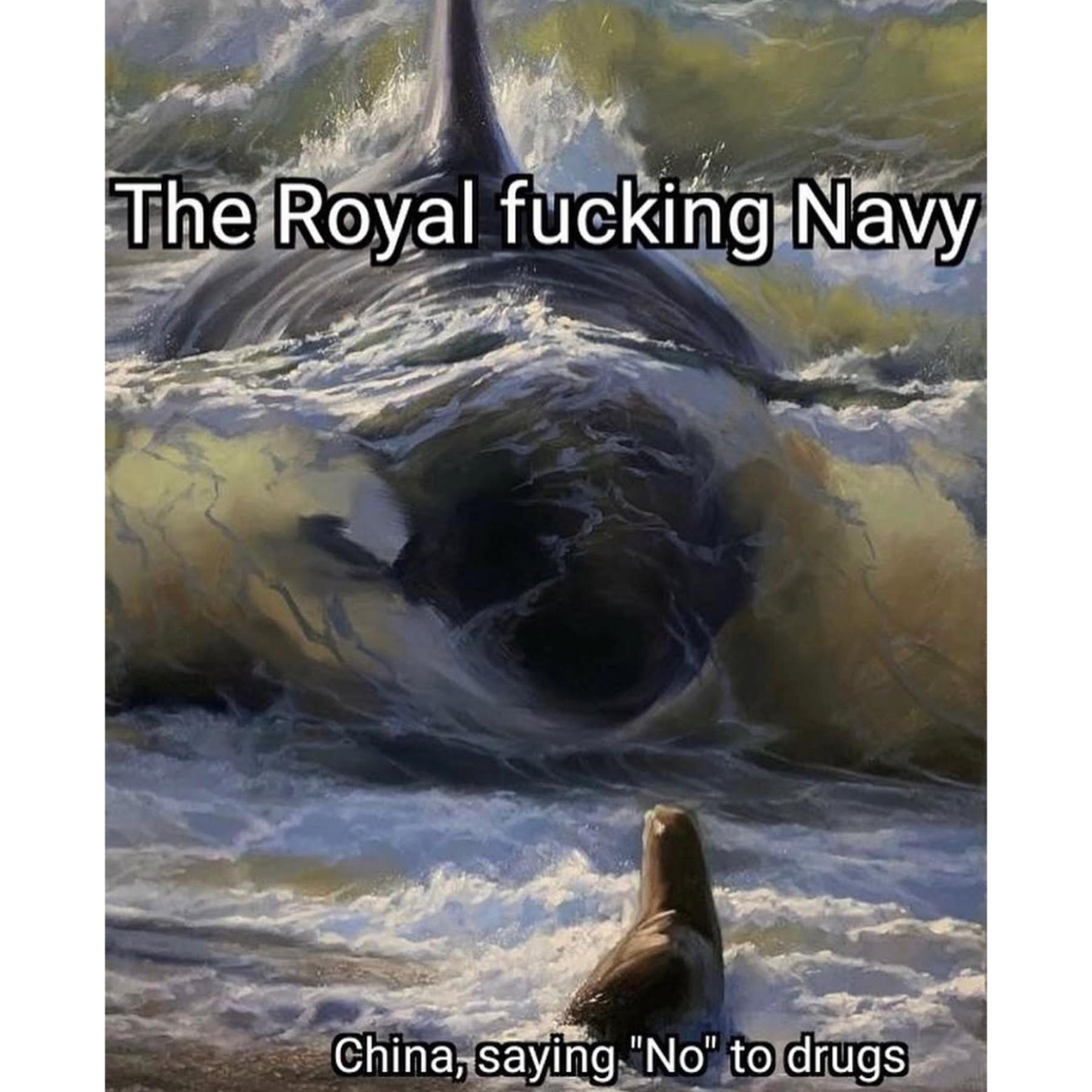
When you expect a sternly worded letter because of your anti-opium laws but receive early steam-powered vessels and a century of humiliation instead
by GCN_09

When you expect a sternly worded letter because of your anti-opium laws but receive early steam-powered vessels and a century of humiliation instead
by GCN_09
7 Comments
For decades before 1839, the British East India Company had been systematically flooding China with opium grown in India. Facing a massive trade deficit (China only wanted silver for its tea and silk), Britain found the perfect solution – get millions of Chinese addicted to cheap, highly potent opium.
By the 1830s, the drug was pouring into the country through smugglers, devastating society, draining silver reserves, and weakening the Qing state.
When commissioner Lin Zexu was appointed to finally stop the madness, he confiscated and publicly destroyed over 1,200 tons of British-owned opium.
Britain’s response was swift and proportionate, send the Royal Navy to teach China that saying “no” to them was simply not allowed.
The result was the treaty of Nanking (1842). Hong Kong was handed over to Britain, five treaty ports forced open, huge indemnities paid, and the beginning of China’s century of humiliation.
can’t wait for this meme format re the Israeli genocide
China was very prideful and just couldn’t see that the old ways couldn’t save them anymore
Also having a terrible fleet that was so bad it allowed a Pirate Confederation to be made that didn’t help
I joined the war on drugs, on the side of the drugs
On the flip, the Qing learned about Westphalian diplomacy.
Kind of funny because the U.S. did basically the same thing to Japan in 1853 with gunboat diplomacy, they didn’t want to trade and one of our ships anchored off shore like “knock knock y’all finna trade?” And forced them to open trade with us.
Ironically one of the, maybe the first iirc, engagements of the Opium War happened because the Chinese were trying to protect a British merchant ship (that wasn’t carrying opium) from the Royal Navy (which was trying to force British merchants away from Chinese waters).