The meeting began awkwardly. “The President doesn’t like Theodore Roosevelt and he was not one bit effusive in his greeting,” recorded Wilson aide Thomas Brahany. But Roosevelt was on a mission, and he attacked the president’s defenses with the full force of his exuberance-partly feigned, partly sincere. “Mr. President,” he declared, “what I have said and thought, and what others have said and thought, is all dust in a windy street, if we can now make your message good.” The message Roosevelt referred to was Wilson’s call for war, in which he had spoken of a struggle to make the world “safe for democracy.” Roosevelt had never doubted his rival’s facility with language; indeed, this was much of what made him distrust Wilson so. And now he had to concede the stirring character of this latest installment of the Wilsonian rhetoric. The question was—as it had always been with Wilson-would the language lead to action? “Of course,” Roosevelt continued (as he related it shortly afterward), “it amounts to nothing, if we cannot make it good. But, if we can translate it into fact, then it will rank as a great state paper, with the great state papers of Washington and Lincoln.”
Wilson was no more immune to flattery than most public figures (including Roosevelt), and between further compliments-of the president’s program for conscription, most notably-and personal charm, Roosevelt began to win the president over. “The interview lasted twenty-five minutes,” Brahany noted, “and before it closed the President had thawed out and was laughing and ‘talking back.’ They had a real good visit.” Amid the laughing, Roosevelt reiterated his proposal to raise a divi-sion. He explained that it was imperative for the American entry into the war to have an immediate impact. “I told him we should hit at once and hit hard,” he recounted. The next several months would be critical; American soldiers must get into the field as soon as possible. This was where the volunteers would come in. Roosevelt explained how he had already done much research and planning. The Allies had plenty of weapons; what they needed was men. A division of highly motivated volunteers, training with English and French rifles, could be ready for combat months before a larger expeditionary force of regular recruits.
Nor would the volunteers steal resources from the regular army. “I explained that all necessary expense could be provided out of private funds. I also explained to him that I would not take a man the draft might get.” This part of the offer piqued Wilson’s curiosity. “The fact that I proposed to use material that otherwise would be unavailable seemed new to him. He seemed interested and he asked many questions.” Wilson indeed was interested-although more in Roosevelt than in his military proposal. “Well, and how did the Colonel impress you?” asked secretary Joseph Tumulty, who himself had been thoroughly taken by Roosevelt. Roosevelt had clapped Tumulty on the back on the way out the door: “By Jove, Tumulty, you are a man after my own heart! Six children, eh? Well now, you get me across and I will put you on my staff, and you may tell Mrs. Tumulty that I will not allow them to place you at any point of danger.” Tumulty offered his own opinion of Roosevelt to Wilson: “I told the President of the very favorable impression the Colonel had made upon me by his buoyancy, charm of manner, and his great good nature.”
Wilson listened while his secretary rambled on, and then agreed. “Yes, he is a great big boy. I was, as formerly, charmed by his personality. There is a sweetness about him that is very compelling. You can’t resist the man. I can easily understand why his followers are so fond of him.” Roosevelt realized that he had scored a personal triumph. But he wondered what that meant in the present circumstances. “If any other man than he had talked to me as he did I would feel assured,” he said upon leaving the White House. “If I talked to another man as he talked to me it would mean that that man was going to get permission to fight. But I was talking to Mr. Wilson. His words may mean much; they may mean little.” In fact they meant little, as soon became evident. Neither Wilson and his advisers nor the careerists at the War Department were about to let Roosevelt steal their show, which they all knew he probably would if allowed into the field. The regular military men had long memories. They recollected what a pain Roosevelt had been in 1898 with his entourage of reporters and his constant carping about the deficiencies of the regular regiments compared to his volunteers, and they wouldn’t put up with the same sort of thing again if they didn’t absolutely have to.
In a reply to one of Roosevelt’s letters, in which the former Rough Rider alluded to his record during the Spanish war, Newton Baker remarked dryly, “The military record to which you call my attention is, of course, a part of the permanent records of this Department and is available, in detail, for consideration.” Between them, Wilson and the generals stymied Roosevelt’s desire to return to the battlefield. Roosevelt tried again and again, answering at length each objection the administration put forward. He pointed out that, military considerations apart, the swift arrival of volunteers at the front would have an immense and positive impact on the morale of the Allies. If the president doubted this, he should merely ask the Allies. The French in particular were clamoring for him. Clemenceau told Wilson that one American in particular could raise the spirits of French soldiers more than any other. “Send them Roosevelt,” the French premier implored. But Wilson stood firm. Although Congress authorized the president to raise volunteer divisions, it did not-despite Roosevelt’s earnest efforts with congressional sympathizers-require him to do so.
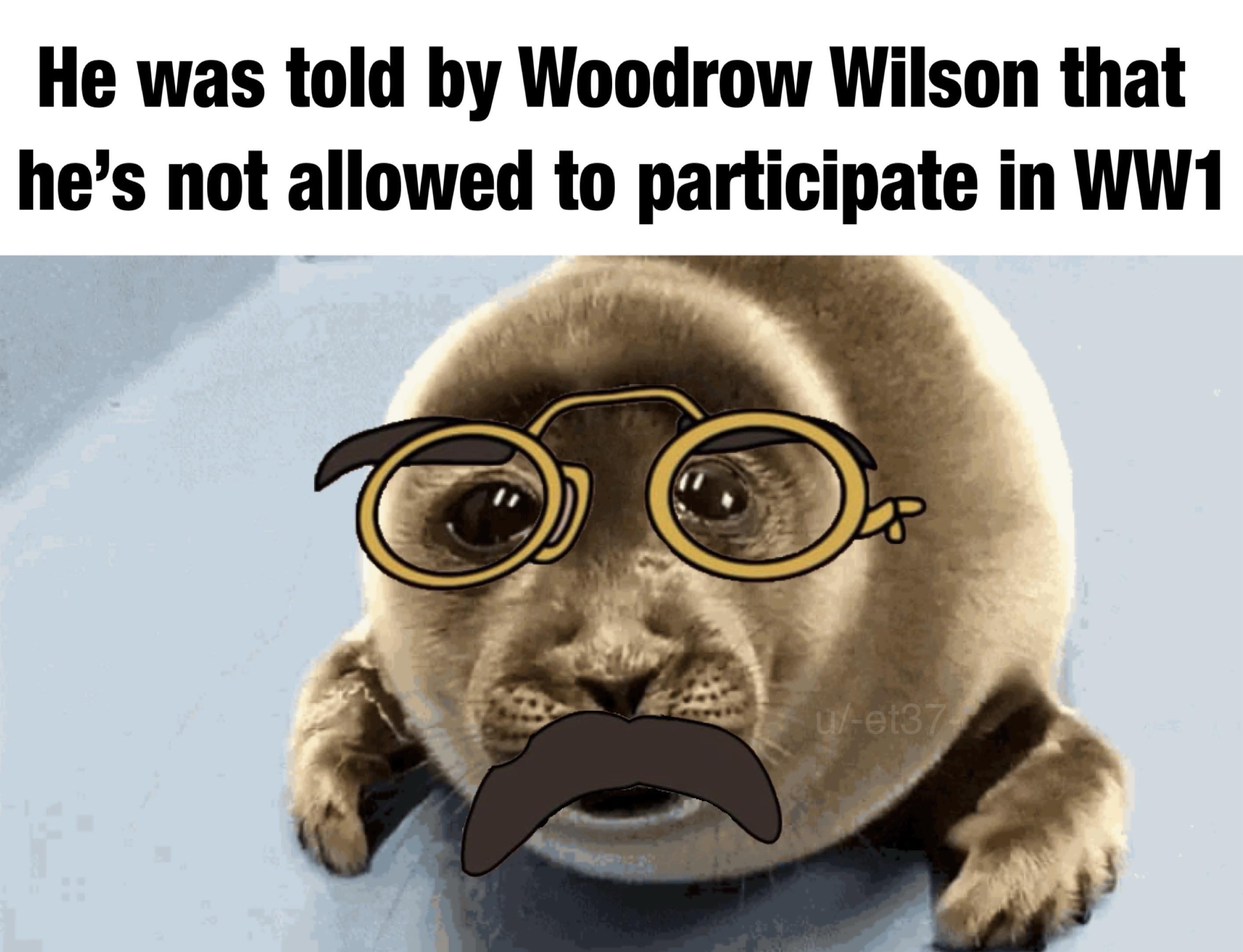
Once more Roosevelt felt obliged to choke down his loathing of Wilson and “respectfully ask permission” to raise his unit.
And once more Wilson refused. “It would be very agreeable to me,” the president announced, “to pay Mr. Roosevelt this compliment and the Allies the compliment of sending to their aid one of our most distinguished public men, an ex-President who has rendered many conspicuous public services and proved his gallantry in many striking ways. Politically, too, it would no doubt have a very fine effect and make a profound impression.” But military necessity forbade such a course. To raise volunteers would “seriously interfere” with the creation of a large and effective regular army and would contribute
“practically nothing” to the strength of the armies currently engaged against Germany. Roosevelt was left to gnash his teeth in fury at this final crushing of his hopes of returning to battle. “I would literally, and gladly, give my life to command a brigade of regulars under Pershing,” he wrote. He believed that overseas service might indeed finish him off. “It would have mattered very little whether or not I personally cracked—from pneumonia in the trenches, or shell fire, or exhaustion or anything else.” But such an end would mark a glorious finish to a life lived as well as he had been able to live it. “If I should die tomorrow,” he mused, “I would be more than content to have as my epitaph, and my only epitaph, ‘Roosevelt to France.'”
Source: T.R., The Last Romantic, pages 781-784
An8thOfFeanor on
Teddy would start a war with Heaven if he could lead the charge on the pearly gates.

2 Comments
(Very long write-up)
The meeting began awkwardly. “The President doesn’t like Theodore Roosevelt and he was not one bit effusive in his greeting,” recorded Wilson aide Thomas Brahany. But Roosevelt was on a mission, and he attacked the president’s defenses with the full force of his exuberance-partly feigned, partly sincere. “Mr. President,” he declared, “what I have said and thought, and what others have said and thought, is all dust in a windy street, if we can now make your message good.” The message Roosevelt referred to was Wilson’s call for war, in which he had spoken of a struggle to make the world “safe for democracy.” Roosevelt had never doubted his rival’s facility with language; indeed, this was much of what made him distrust Wilson so. And now he had to concede the stirring character of this latest installment of the Wilsonian rhetoric. The question was—as it had always been with Wilson-would the language lead to action? “Of course,” Roosevelt continued (as he related it shortly afterward), “it amounts to nothing, if we cannot make it good. But, if we can translate it into fact, then it will rank as a great state paper, with the great state papers of Washington and Lincoln.”
Wilson was no more immune to flattery than most public figures (including Roosevelt), and between further compliments-of the president’s program for conscription, most notably-and personal charm, Roosevelt began to win the president over. “The interview lasted twenty-five minutes,” Brahany noted, “and before it closed the President had thawed out and was laughing and ‘talking back.’ They had a real good visit.” Amid the laughing, Roosevelt reiterated his proposal to raise a divi-sion. He explained that it was imperative for the American entry into the war to have an immediate impact. “I told him we should hit at once and hit hard,” he recounted. The next several months would be critical; American soldiers must get into the field as soon as possible. This was where the volunteers would come in. Roosevelt explained how he had already done much research and planning. The Allies had plenty of weapons; what they needed was men. A division of highly motivated volunteers, training with English and French rifles, could be ready for combat months before a larger expeditionary force of regular recruits.
Nor would the volunteers steal resources from the regular army. “I explained that all necessary expense could be provided out of private funds. I also explained to him that I would not take a man the draft might get.” This part of the offer piqued Wilson’s curiosity. “The fact that I proposed to use material that otherwise would be unavailable seemed new to him. He seemed interested and he asked many questions.” Wilson indeed was interested-although more in Roosevelt than in his military proposal. “Well, and how did the Colonel impress you?” asked secretary Joseph Tumulty, who himself had been thoroughly taken by Roosevelt. Roosevelt had clapped Tumulty on the back on the way out the door: “By Jove, Tumulty, you are a man after my own heart! Six children, eh? Well now, you get me across and I will put you on my staff, and you may tell Mrs. Tumulty that I will not allow them to place you at any point of danger.” Tumulty offered his own opinion of Roosevelt to Wilson: “I told the President of the very favorable impression the Colonel had made upon me by his buoyancy, charm of manner, and his great good nature.”
Wilson listened while his secretary rambled on, and then agreed. “Yes, he is a great big boy. I was, as formerly, charmed by his personality. There is a sweetness about him that is very compelling. You can’t resist the man. I can easily understand why his followers are so fond of him.” Roosevelt realized that he had scored a personal triumph. But he wondered what that meant in the present circumstances. “If any other man than he had talked to me as he did I would feel assured,” he said upon leaving the White House. “If I talked to another man as he talked to me it would mean that that man was going to get permission to fight. But I was talking to Mr. Wilson. His words may mean much; they may mean little.” In fact they meant little, as soon became evident. Neither Wilson and his advisers nor the careerists at the War Department were about to let Roosevelt steal their show, which they all knew he probably would if allowed into the field. The regular military men had long memories. They recollected what a pain Roosevelt had been in 1898 with his entourage of reporters and his constant carping about the deficiencies of the regular regiments compared to his volunteers, and they wouldn’t put up with the same sort of thing again if they didn’t absolutely have to.
In a reply to one of Roosevelt’s letters, in which the former Rough Rider alluded to his record during the Spanish war, Newton Baker remarked dryly, “The military record to which you call my attention is, of course, a part of the permanent records of this Department and is available, in detail, for consideration.” Between them, Wilson and the generals stymied Roosevelt’s desire to return to the battlefield. Roosevelt tried again and again, answering at length each objection the administration put forward. He pointed out that, military considerations apart, the swift arrival of volunteers at the front would have an immense and positive impact on the morale of the Allies. If the president doubted this, he should merely ask the Allies. The French in particular were clamoring for him. Clemenceau told Wilson that one American in particular could raise the spirits of French soldiers more than any other. “Send them Roosevelt,” the French premier implored. But Wilson stood firm. Although Congress authorized the president to raise volunteer divisions, it did not-despite Roosevelt’s earnest efforts with congressional sympathizers-require him to do so.
Once more Roosevelt felt obliged to choke down his loathing of Wilson and “respectfully ask permission” to raise his unit.
And once more Wilson refused. “It would be very agreeable to me,” the president announced, “to pay Mr. Roosevelt this compliment and the Allies the compliment of sending to their aid one of our most distinguished public men, an ex-President who has rendered many conspicuous public services and proved his gallantry in many striking ways. Politically, too, it would no doubt have a very fine effect and make a profound impression.” But military necessity forbade such a course. To raise volunteers would “seriously interfere” with the creation of a large and effective regular army and would contribute
“practically nothing” to the strength of the armies currently engaged against Germany. Roosevelt was left to gnash his teeth in fury at this final crushing of his hopes of returning to battle. “I would literally, and gladly, give my life to command a brigade of regulars under Pershing,” he wrote. He believed that overseas service might indeed finish him off. “It would have mattered very little whether or not I personally cracked—from pneumonia in the trenches, or shell fire, or exhaustion or anything else.” But such an end would mark a glorious finish to a life lived as well as he had been able to live it. “If I should die tomorrow,” he mused, “I would be more than content to have as my epitaph, and my only epitaph, ‘Roosevelt to France.'”
Source: T.R., The Last Romantic, pages 781-784
Teddy would start a war with Heaven if he could lead the charge on the pearly gates.