“Unlike most prisons of the era, which were typically situated underground, the Piombi was located in the attic of the Doge’s Palace. The name Piombi derives from the Italian word piombo, meaning lead, referencing the lead plates that lined the roof above the prison cells. This unique location provided extreme conditions—sweltering heat in the summer and frigid cold in the winter—making it both secure and challenging for its occupants.
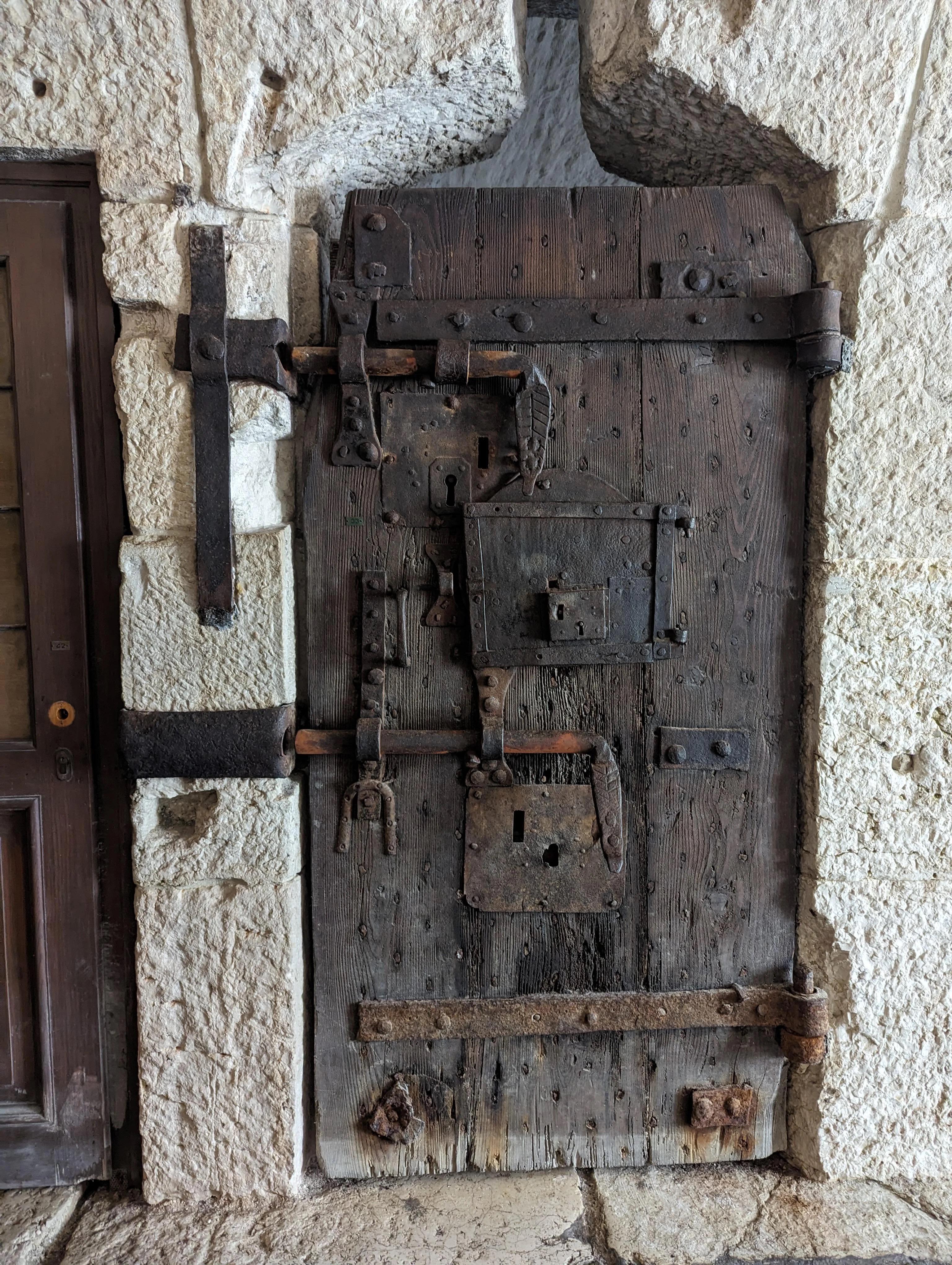
One of the standout features of the Piombi is its original prison door. Despite its utilitarian purpose, the door showcases the Renaissance commitment to craftsmanship. Made from sturdy wood reinforced with iron plates, the door features intricate ironwork, including deadbolt handles shaped like leaves. These delicate flourishes demonstrate that even in grim contexts like prisons, Venetian artisans did not compromise on beauty and detail.
The Piombi consisted of six small cells, separated by wooden partitions strengthened with iron plates to ensure maximum security. Two staircases provided access to the prison: one from the Sala dei Tre Capi (Hall of the Three Chiefs) and the other from the Sala degli Inquisitori di Stato (Hall of the State Inquisitors). This layout reflects the interconnected nature of Venice’s administrative and judicial systems, as prisoners could be brought directly from interrogation rooms to their cells.
Throughout its history, the Piombi housed numerous notable prisoners, including political dissidents, heretics, and individuals accused of crimes against the state. Two of its most famous inmates were:
Giacomo Casanova: The infamous adventurer and writer, Casanova, was imprisoned in the Piombi in 1755 for heresy and libertinism. His dramatic escape in 1756, detailed in his autobiography The Story of My Life, is a tale of cunning and perseverance that has become legendary.
Was there a plate or something meant to cover the top portion of the doorway where it narrows into a slit like that? Never seen a doorway shaped that way.
Silver-Amphibian7650 on
Wish we could see inside the cell.
jewella1213 on
Very cool 👍, I remember that Casanova was imprisoned there but not the scientist.

5 Comments
“Unlike most prisons of the era, which were typically situated underground, the Piombi was located in the attic of the Doge’s Palace. The name Piombi derives from the Italian word piombo, meaning lead, referencing the lead plates that lined the roof above the prison cells. This unique location provided extreme conditions—sweltering heat in the summer and frigid cold in the winter—making it both secure and challenging for its occupants.
One of the standout features of the Piombi is its original prison door. Despite its utilitarian purpose, the door showcases the Renaissance commitment to craftsmanship. Made from sturdy wood reinforced with iron plates, the door features intricate ironwork, including deadbolt handles shaped like leaves. These delicate flourishes demonstrate that even in grim contexts like prisons, Venetian artisans did not compromise on beauty and detail.
The Piombi consisted of six small cells, separated by wooden partitions strengthened with iron plates to ensure maximum security. Two staircases provided access to the prison: one from the Sala dei Tre Capi (Hall of the Three Chiefs) and the other from the Sala degli Inquisitori di Stato (Hall of the State Inquisitors). This layout reflects the interconnected nature of Venice’s administrative and judicial systems, as prisoners could be brought directly from interrogation rooms to their cells.
Throughout its history, the Piombi housed numerous notable prisoners, including political dissidents, heretics, and individuals accused of crimes against the state. Two of its most famous inmates were:
Giacomo Casanova: The infamous adventurer and writer, Casanova, was imprisoned in the Piombi in 1755 for heresy and libertinism. His dramatic escape in 1756, detailed in his autobiography The Story of My Life, is a tale of cunning and perseverance that has become legendary.
Paolo Antonio Foscarini: A philosopher and scientist, Foscarini was imprisoned for supporting the controversial Copernican model of the solar system, which clashed with religious doctrines of the time. His case highlights the tension between science and orthodoxy in the Renaissance.” From [history magazine](https://archeology.dalatcamping.net/the-remarkable-prison-door-of-the-doges-palace-a-glimpse-into-venices-past/)
Awesome! Missed that when i was there🙈
Was there a plate or something meant to cover the top portion of the doorway where it narrows into a slit like that? Never seen a doorway shaped that way.
Wish we could see inside the cell.
Very cool 👍, I remember that Casanova was imprisoned there but not the scientist.