
On Easter Sunday, 1478, a conspiracy quietly backed by Pope Sixtus IV sought to break the Medici grip on Florence.
During Easter Mass inside the Cathedral of Santa Maria del Fiore, beneath Brunelleschi’s dome, Francesco de' Pazzi and Bernardo Baroncelli attacked Giuliano de' Medici. They stabbed him to death, Pazzi so frenzied he stabbed himself in the process.
Near the altar, two priests went for Lorenzo de' Medici, 29 and head of the family. He twisted at the last second; the blade only grazed his neck. Baroncelli moved to finish the job, but Lorenzo’s friend Francesco Nori stepped in and took the fatal blow.
At the same time across the city, Archbishop Francesco Salviati tried to seize the Palazzo della Signoria with mercenaries. He failed, part nerves, part farce (his men ended up trapped behind a door that only opened from the outside).
The alarm bells rang. Crowds filled the Piazza. Jacopo de' Pazzi rode in with armed men shouting “Popolo e libertà!”—the people and freedom.
The people weren’t buying it. The Medici were still popular. Loyalists moved quickly. Salviati’s mercenaries were killed. Rumors spread that Lorenzo was dead—until he appeared on a balcony at the Palazzo Medici, pale, neck bandaged, but unmistakably alive.
The crowd roared. He told them the Pazzi had struck. The state would handle it. There was no need for panic.
Florence did not calm down. It erupted. Mobs armed themselves and went hunting. Francesco de’ Pazzi was dragged from his bed, naked and wounded, and hanged from the Palazzo della Signoria. Salviati followed. In total, around eighty conspirators and allies were killed.
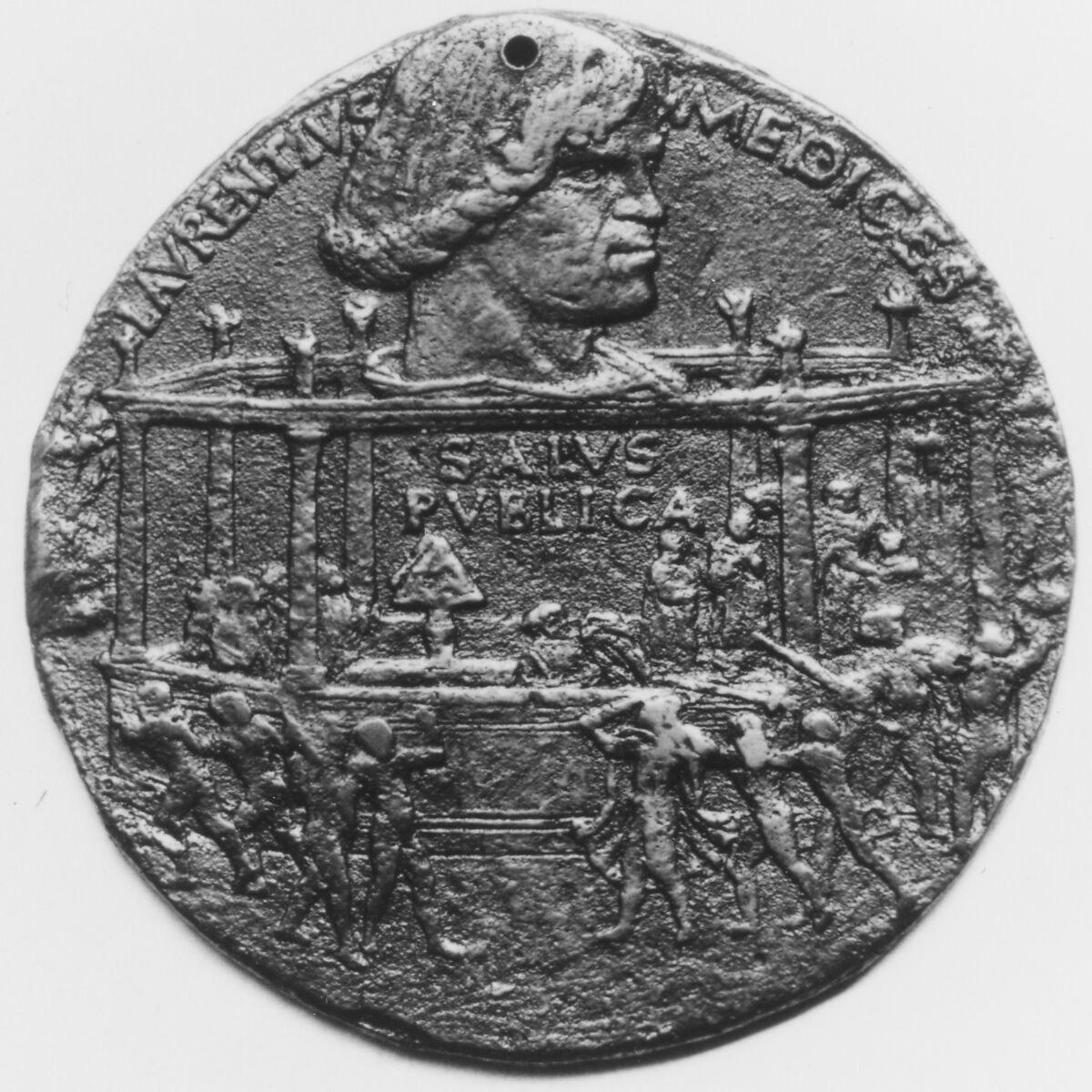
Lorenzo made the lesson permanent: works of art were commissioned to commemorate the event.
One side, labeled Public Grief, shows Lorenzo above the murder of his younger brother, Giuliano. The reverse renders the same events in a classicizing style, Lorenzo draped like a figure from antiquity, the attackers nude, the violence transformed into something almost mythic. It is propaganda as much as commemoration, turning a brutal, chaotic day into something timeless, almost heroic. If interested, I explore the event and Renaissance Florence here: https://open.substack.com/pub/aid2000/p/hare-brained-history-vol-82-the-pazzi?r=4mmzre&utm\_medium=ios
by aid2000iscool
1 Comment
Is that Worf, Son of Mogh on the top?