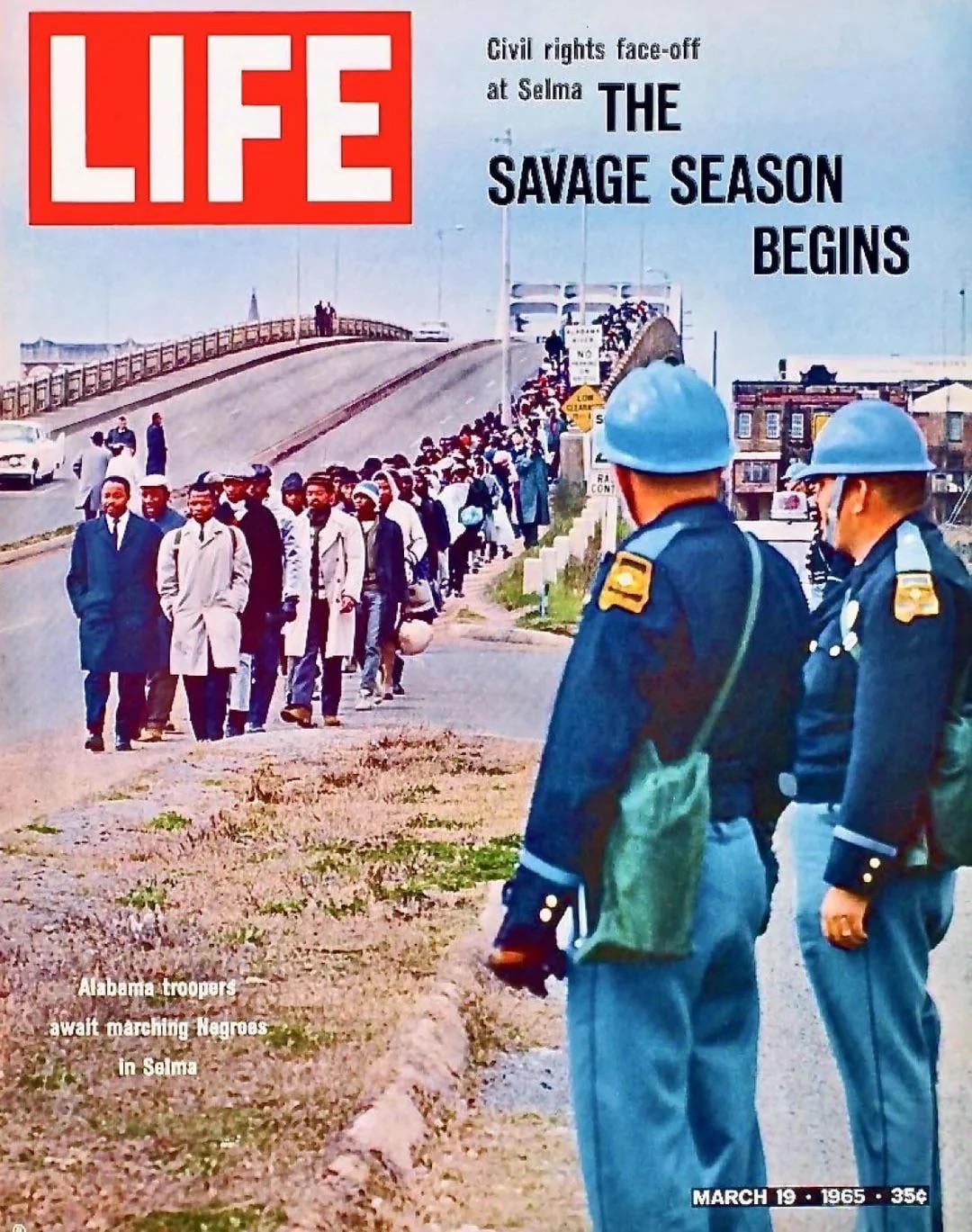
The police are getting ready to riot to keep people from exercising their constitutional right to assemble.
philonius on
The what season?
rosebud52 on
I believe that’s the late great John Lewis in the white coat. What a shameful time in our history.
Unco_Slam on
They’re just standing there…MENANCINGLY!
PrettyYoungTiger on
We’re such a demoralized society now that I wonder if we have what it takes to march like this.
Jeff_NZ on
In early 1965, Black citizens in places like Selma were being blocked from voting through literacy tests, intimidation, and local officials refusing registration. Despite being a legal right, very few were actually able to vote.
Civil rights groups organised marches to demand federal protection. On March 7, during the Selma to Montgomery marches, peaceful protesters were stopped at the Edmund Pettus Bridge and attacked by Alabama state troopers. This became known as Bloody Sunday. The violence was filmed and broadcast across the United States.
Public reaction shifted quickly. The images made it harder to ignore what was happening in the South and increased pressure on the federal government to act.
Within months, the Voting Rights Act of 1965 was passed. It removed discriminatory voting barriers and placed federal oversight on states with a history of suppression.
The marches did not end the struggle, but they forced a legal change that significantly increased Black voter registration across the South.

6 Comments
The police are getting ready to riot to keep people from exercising their constitutional right to assemble.
The what season?
I believe that’s the late great John Lewis in the white coat. What a shameful time in our history.
They’re just standing there…MENANCINGLY!
We’re such a demoralized society now that I wonder if we have what it takes to march like this.
In early 1965, Black citizens in places like Selma were being blocked from voting through literacy tests, intimidation, and local officials refusing registration. Despite being a legal right, very few were actually able to vote.
Civil rights groups organised marches to demand federal protection. On March 7, during the Selma to Montgomery marches, peaceful protesters were stopped at the Edmund Pettus Bridge and attacked by Alabama state troopers. This became known as Bloody Sunday. The violence was filmed and broadcast across the United States.
Public reaction shifted quickly. The images made it harder to ignore what was happening in the South and increased pressure on the federal government to act.
Within months, the Voting Rights Act of 1965 was passed. It removed discriminatory voting barriers and placed federal oversight on states with a history of suppression.
The marches did not end the struggle, but they forced a legal change that significantly increased Black voter registration across the South.