
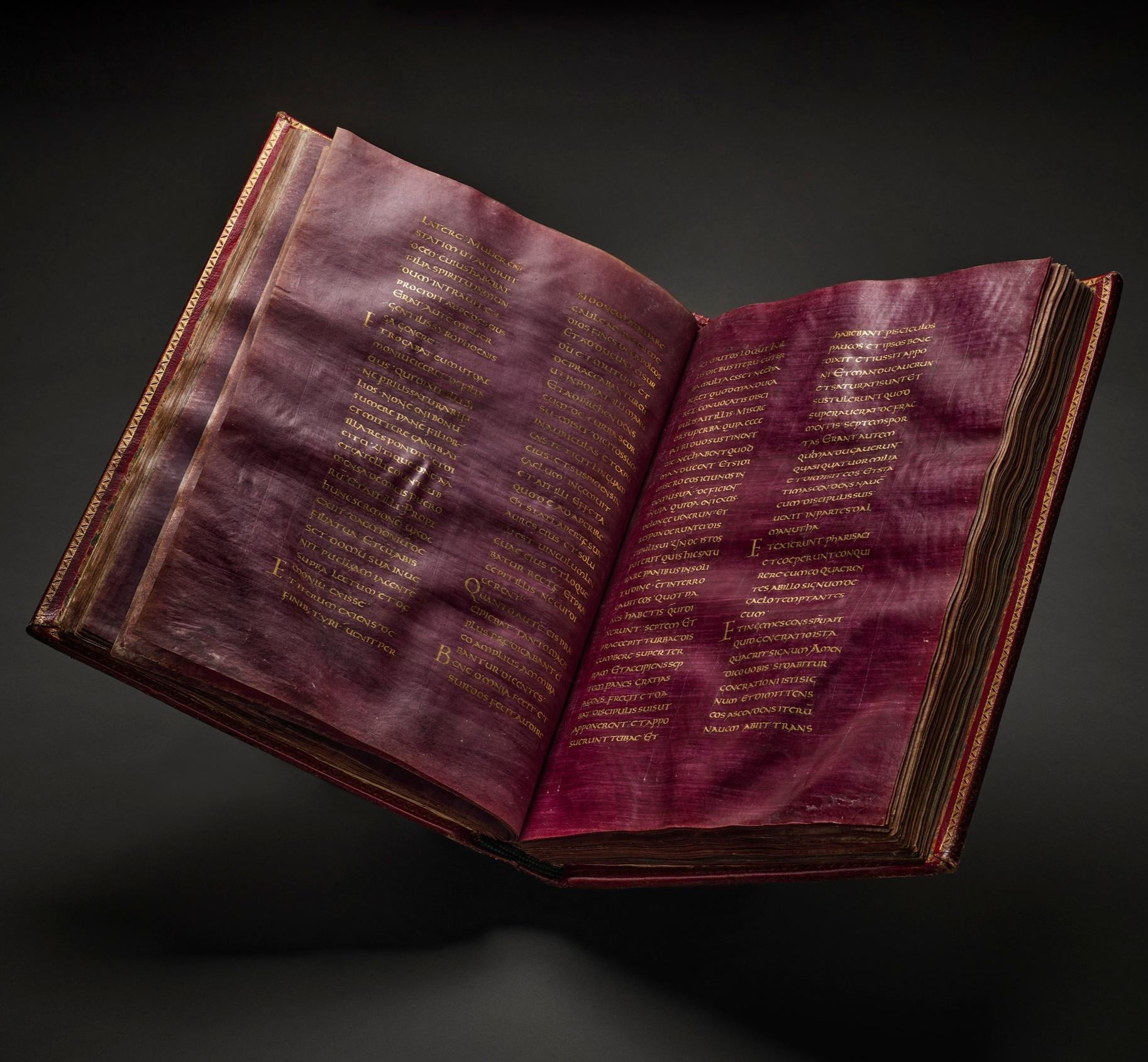
This 1000-year-old manuscript was created by about 16 scribes in a Benedictine abbey in Trier, Germany. They used gold ink to copy the text of the Gospels onto parchment that had been dyed with a plant-based purple pigment. Now housed at the Morgan Library & Museum in New York [1826×1690]
by Fuckoff555
19 Comments
We used to make things with aura
Ridiculously Fly.
This is Art.
Shoutout to the bozos that made this joint possible.
This seems very unique even amongst medieval manuscripts – which are unique by nature. I wonder which way the manuscript took from Trier to New York…
Coincidentally, purple and gold were my high school team colours. I always thought it looked tacky. But this book is beautiful. I’d like to see it in person.
Can’t even imagine the time it takes to make something like this
Damn that goes hard!
What is the name of the language scribed? Anyone
Beautiful 😻
[deleted]
Whoa. So beautiful. A bit of [digging](https://www.themorgan.org/exhibitions/online/bookmans-paradise/golden-gospels-henry-viii) reveals that this stunning color was derived from lichen! The dye is called orchil:
*Orchil (also spelled archil or orseille) is* *a historic purple or violet dye derived from various lichen species, particularly* [*Roccella*](https://www.google.com/search?q=Roccella&oq=orchil&gs_lcrp=EgZjaHJvbWUyCQgAEEUYORiABDIHCAEQLhiABDINCAIQLhivARjHARiABDIOCAMQLhgKGAsYsQMYgAQyBwgEEC4YgAQyBwgFEAAYgAQyEQgGEC4YChgLGK8BGMcBGIAEMgcIBxAAGIAEMg4ICBAAGAoYCxixAxiABDIHCAkQABiABNIBCDE0MjlqMGo3qAIAsAIA&sourceid=chrome&ie=UTF-8&ved=2ahUKEwin5Lav_fySAxUi18kDHekyKVIQgK4QegYIAQgAEAQ)****[*Dendrographa*](https://www.google.com/search?q=Dendrographa&oq=orchil&gs_lcrp=EgZjaHJvbWUyCQgAEEUYORiABDIHCAEQLhiABDINCAIQLhivARjHARiABDIOCAMQLhgKGAsYsQMYgAQyBwgEEC4YgAQyBwgFEAAYgAQyEQgGEC4YChgLGK8BGMcBGIAEMgcIBxAAGIAEMg4ICBAAGAoYCxixAxiABDIHCAkQABiABNIBCDE0MjlqMGo3qAIAsAIA&sourceid=chrome&ie=UTF-8&ved=2ahUKEwin5Lav_fySAxUi18kDHekyKVIQgK4QegYIAQgAEAU)*, and* [*Lecanora*](https://www.google.com/search?q=Lecanora&oq=orchil&gs_lcrp=EgZjaHJvbWUyCQgAEEUYORiABDIHCAEQLhiABDINCAIQLhivARjHARiABDIOCAMQLhgKGAsYsQMYgAQyBwgEEC4YgAQyBwgFEAAYgAQyEQgGEC4YChgLGK8BGMcBGIAEMgcIBxAAGIAEMg4ICBAAGAoYCxixAxiABDIHCAkQABiABNIBCDE0MjlqMGo3qAIAsAIA&sourceid=chrome&ie=UTF-8&ved=2ahUKEwin5Lav_fySAxUi18kDHekyKVIQgK4QegYIAQgAEAY)*. Known as “the poor person’s purple” it was widely used from antiquity through the 19th century as a more affordable substitute for Tyrian purple. The dye requires a lengthy fermentation process, traditionally involving ammonia from stale urine, to transform lichen compounds into vibrant colors for wool, silk, and parchment.* [Google AI]
Switching to night mode, the old-school way
I do a little calligraphy as a bit of a hobby. Um, how many spelling mistakes are there?
My uncle is a Benedictine monk and I’ve always been confused why he hasn’t made any cool books. He makes honey, and I guess that’s fine. But like he could copy the bible down onto plant based purple parchment with gold ink couldn’t he?
$96,000 used, good condition, on Amazon.
At least one dude had purple hands for a while fucking year because of that thing.
I wonder if it was common to use gold ink on purple parchment in Germany? I know a lot of early Buddhist sutra copies have this (gold ink on purple dyed paper), but I’ve never heard of it for Christian gospels
How do you turn gold into ink?
Dark mode beta
Holy shit the writing is even legible.