
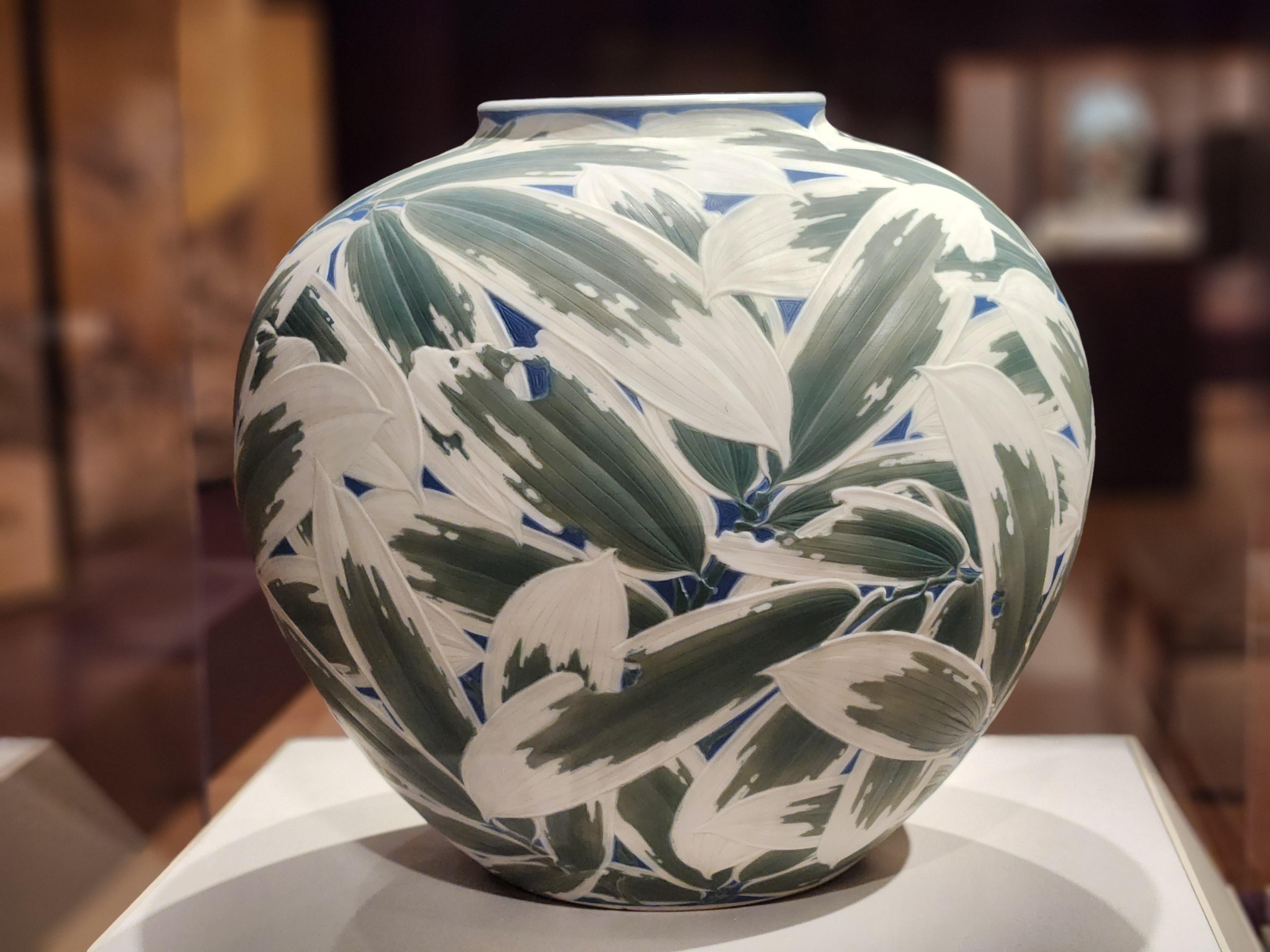
Vase with low-relief decoration of bamboo leaves by Itaya Hazan, Japan, ca. 1915. Porcelain, colored slip, overglaze enamel. Loaned to the Asia Society Museum from the Walters Art Museum [4000×3000] [OC]
by oldspice75
Vase with low-relief decoration of bamboo leaves by Itaya Hazan, Japan, ca. 1915. Porcelain, colored slip, overglaze enamel. Loaned to the Asia Society Museum from the Walters Art Museum [4000×3000] [OC]
by oldspice75
1 Comment
https://art.thewalters.org/object/49.2281/
[display description, Asia Society Museum loan](https://i.ibb.co/TDKJDJ4d/20231020-161352.jpg)
[Itaya Hazan (1872-1963) Vase with Low-
Relief Decoration of Bamboo Leaves, ca. 1915
Pigmented porcelain body with celadon green and lapis lazuli
The Walters Art Museum, Baltimore, Acquired by Henry Walters, 49.2281
Itaya is credited with transforming the Japanese ceramic tradition, incorporating modern elements of Art Nouveau and Japonisme into his work, which exhibit carefully carved designs and masterful use of colored glazes. With this example, he carefully incised and carved layers of overlapping bamboo leaves, articulating even the striated veining and twisting stems in shallow yet distinct relief, partially painted green and set against a deep blue background. The many layers of leaves also reflect Itaya’s remarkable ability to create a sense of depth on the surface of this vessel, which is arguably the most important Japanese studio ceramic in the United States and the only known example of his work in an American public collection. For his artistic innovations Itaya was designated with the status of Imperial Craftsman (Teishitsu gigei-in), and in 1954 was awarded an Order of Cultural Merit (Bunka kunshō), the first ceramicist to receive the honor.]