
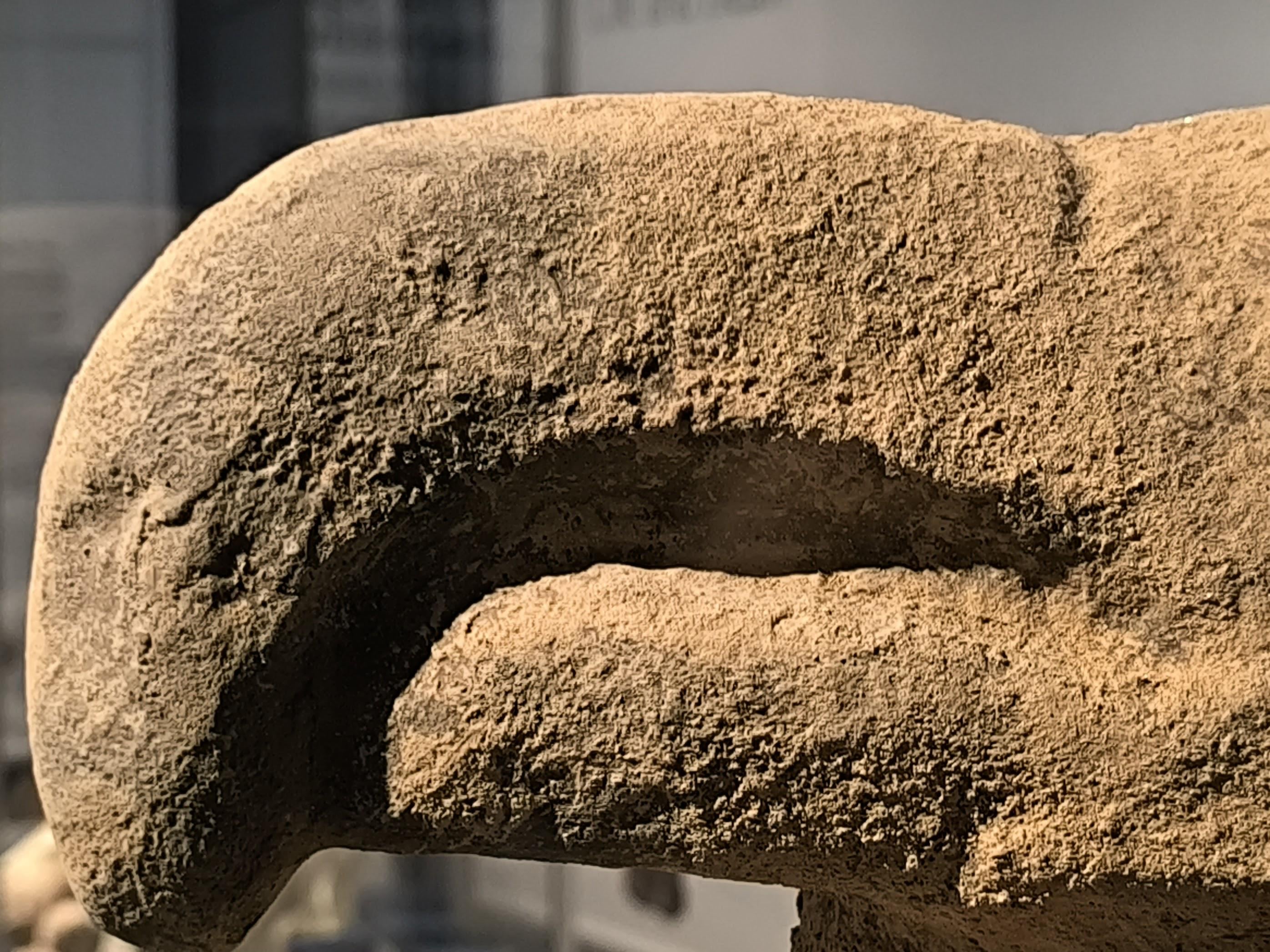
So this vulture statue by itself is quite famous. But what was going on around the beak particularly caught my attention. The level of detail! Someone had taken pains to sand the beak a little extra, such that the beak has a distinctly different texture than the rest of the bird's face. Wonder if it was even painted a darker colour.
The entire statue is about 2 to 2.5 feet tall. [Album of full sized bird here, since this sub doesn't allow multiple pictures]
~11,000 years, folks! Hunter-gatherers just at the cusp of the invention of a sedentary mode of existence, of agriculture and its spread Eastward. A monumentally important turning point in human history. Interestingly, einkorn wheat, the oldest domesticated crop, has its genetic origins just 30kms from Göbekli Tepe.
Walking around the exhibit, you realize the connection these people had with animals, and their centrality in the psyches of hunter-gatherers. Practically every item had an animal in it. Crocodiles, foxes (or wolves?), boars, storks, crabs, bulls, snakes, turtles. They had essentially recreated the environment they lived in. As comparison, in Mesopotamian artwork, crops, plants and rivers take this central position.
Even within this menagerie the vulture, one got the impression, played a particularly significant role in their religion (assuming these representations, and the place itself had religious connotations). Examples: this jade vulture pendant, and a photograph of the Vulture Stone which has its own lore (plenty of results for this on Google, and see also this post in ArtefactPorn from about an year ago).
Some of the smaller jade pendants, I cannot for the life of me imagine how people without access to metal tools could possibly make. They were about an inch or less wide, with minute details. And made by people who hadn't figured out mud huts (AFAIK), but had huge, decorated stone monuments.
"Fascinating" doesn't even begin to cut it when it comes to this culture.
by molly_jolly