
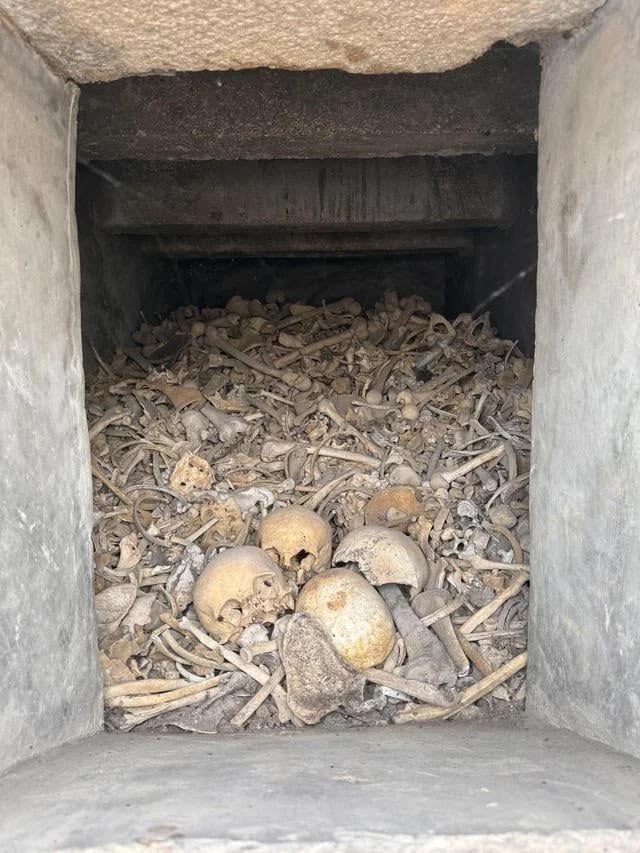
The Battle of Verdun began on February 21st, 1916, as a German attempt to cull the French Army. What followed was ten months of near-continuous combat over a small stretch of hills and forts along the Meuse. Villages like Fleury and forts like Douaumont and Vaux were reduced to rubble, taken and retaken at enormous cost. By the time the fighting ended in December, the front lines were almost exactly where they had been when the battle began.
Verdun was predominantly an artillery battle. Millions of shells turned forests into splintered graveyards and open fields into cratered wastelands. Movement by day was often impossible; men advanced at night, fought in shattered trenches and underground corridors, and endured conditions defined as much by exhaustion, thirst, and suffocation as by bullets and bayonets. The French rotated two-thirds of their army through the battle, making Verdun a shared national experience in a way few other battles were.
Casualty estimates vary, but roughly 700,000 men were killed, wounded, or missing over 302 days. Strategically, the battle changed little. Symbolically, Verdun became shorthand for industrialized slaughter on the Western Front. If interested, I write about the battle here: https://open.substack.com/pub/aid2000/p/hare-brained-history-volume-69-the?r=4mmzre&utm\\\_medium=ios
by aid2000iscool
2 Comments
Before picture: Young men marching off to glory
For context, this picture is one of many windows that go whole length of the building